Maiden
What you need to sow
Come out of hiding. Something new begins the moment you let yourself be seen.
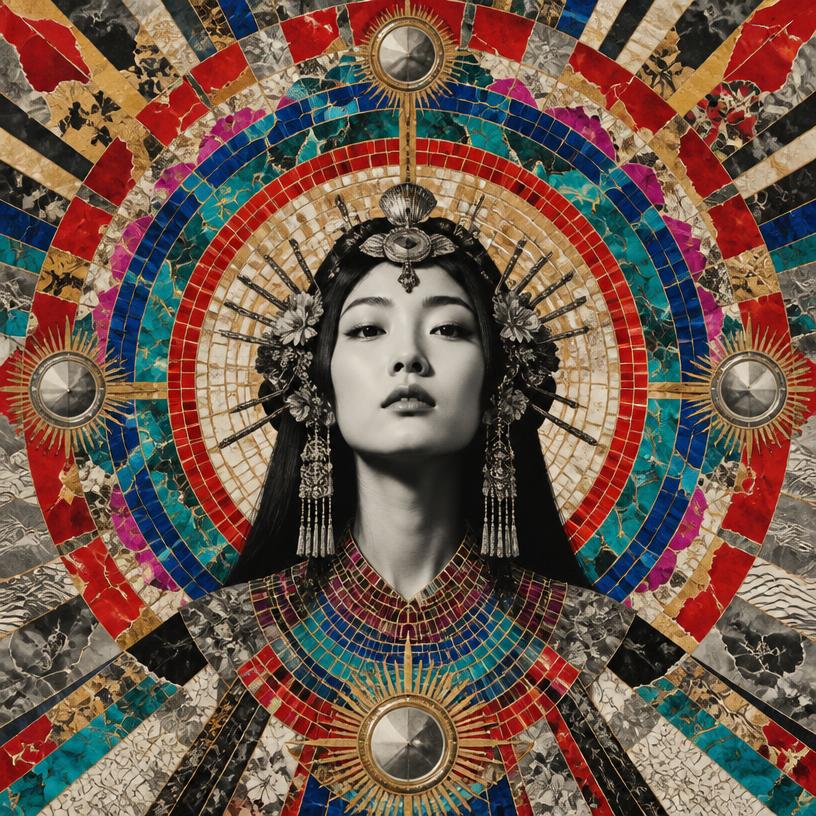
Japan / Shinto
Great Illuminating Heaven
Japan, Kojiki and Nihon Shoki (8th century CE) through living Shinto practice
Her story
goddess · Japan, Kojiki and Nihon Shoki (8th century CE) through living Shinto practice
The sun kami of Shinto, enshrined at Ise, Amaterasu withdrew into a cave after being shamed by her brother, and the world went dark. The gods lured her out with laughter, dancing and a mirror in which she glimpsed her own radiance.
Her drawing-out is the founding myth of Japanese performance: Ame-no-Uzume's raucous dance on an overturned tub, the gods' laughter, and curiosity strong enough to move a grieving god. The Inner Shrine at Ise has been ritually rebuilt from fresh timber roughly every twenty years for over a millennium — her holiness renewed rather than preserved.
In the oracle
What you need to sow
Come out of hiding. Something new begins the moment you let yourself be seen.
What you need to grow
Nurture your own light with kindness. Withdrawal is allowed; permanent exile is not.
What you need to know
Know your worth without a witness. The mirror only showed what was already burning.