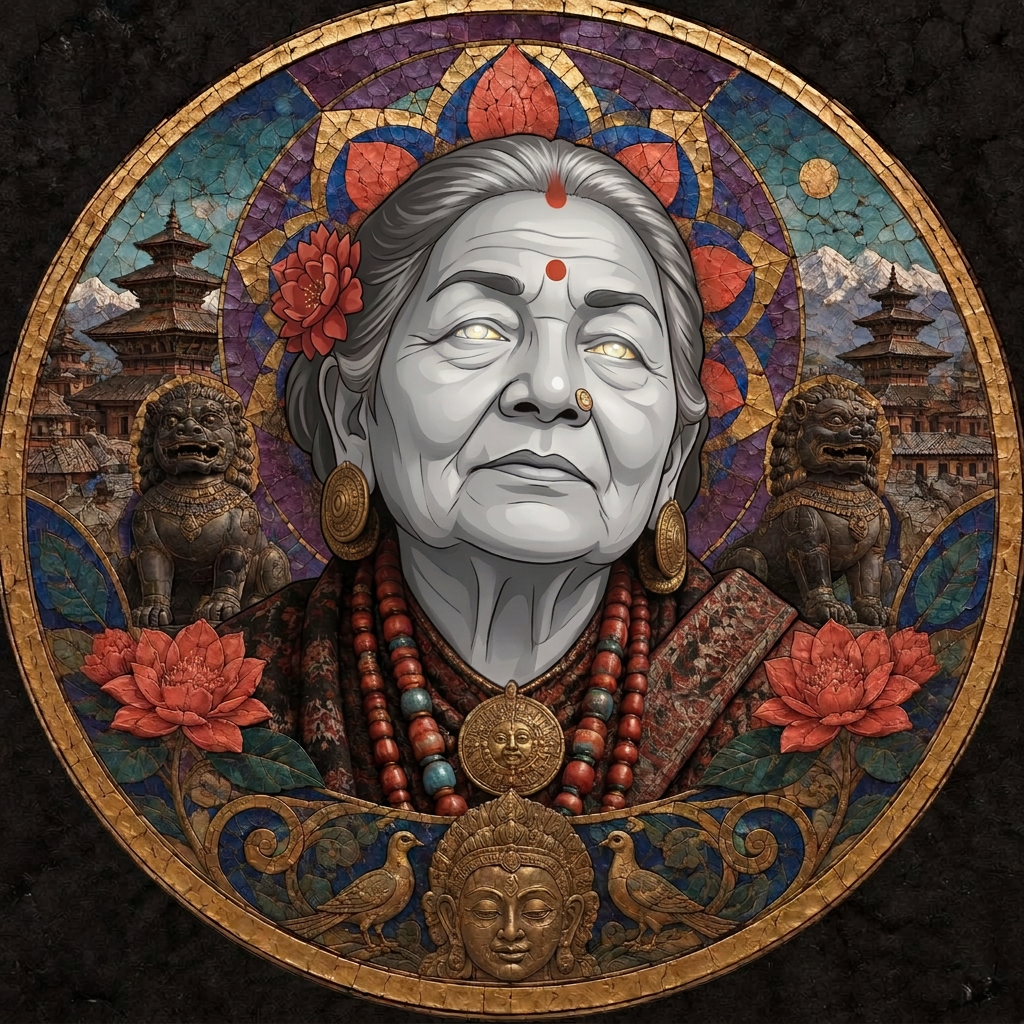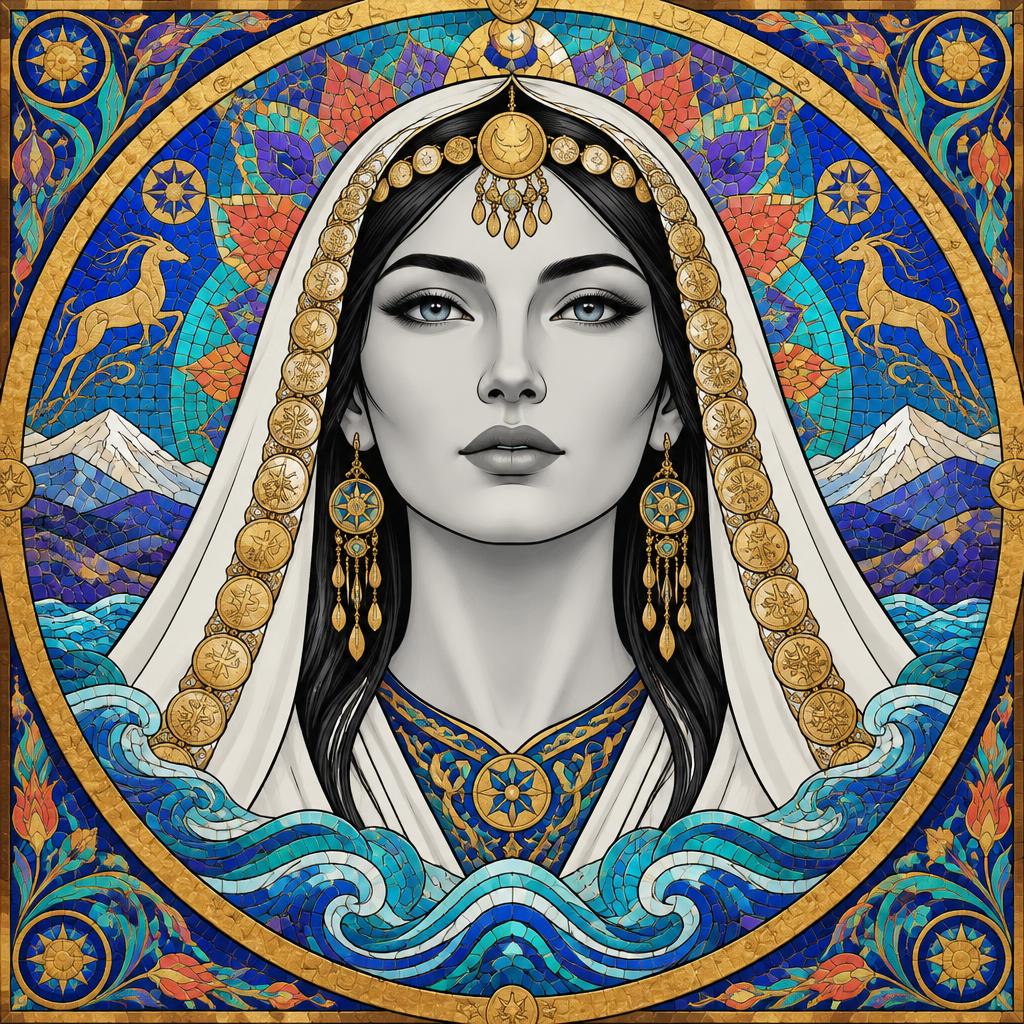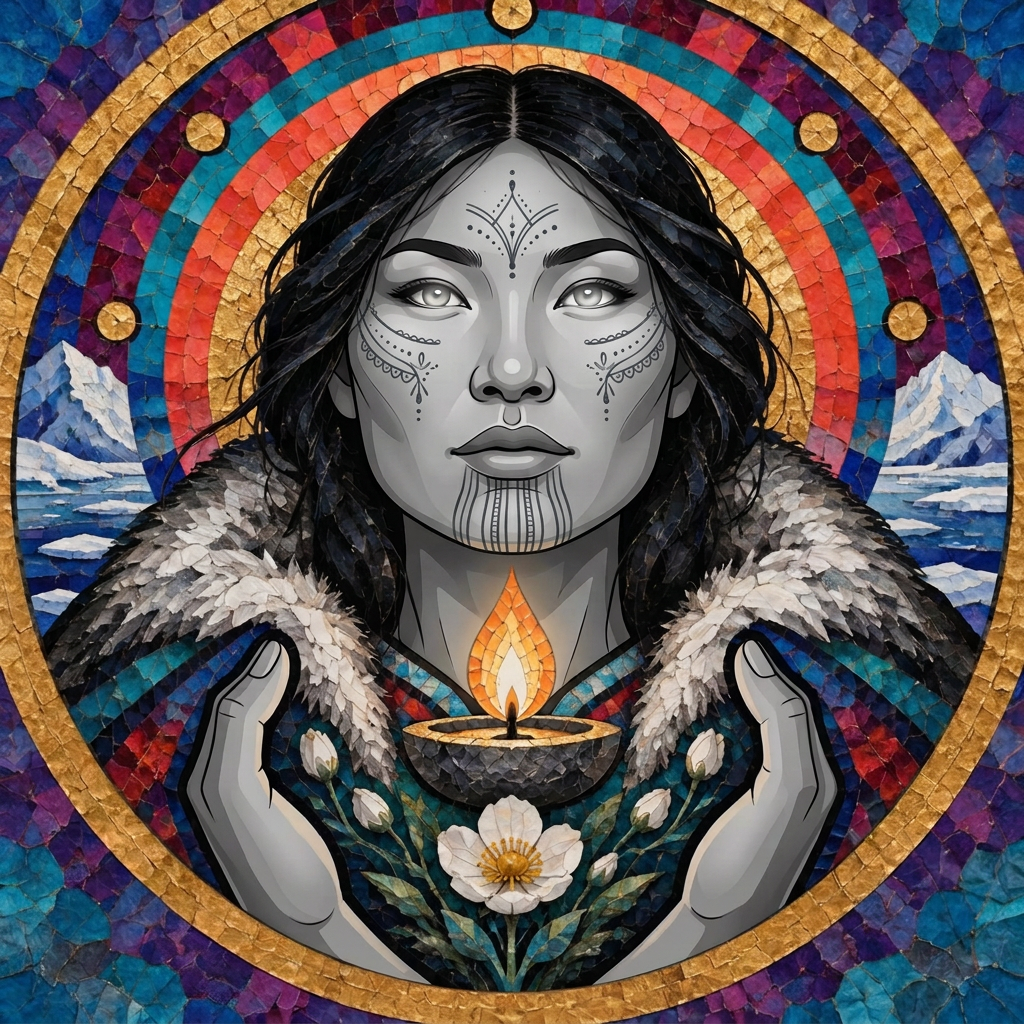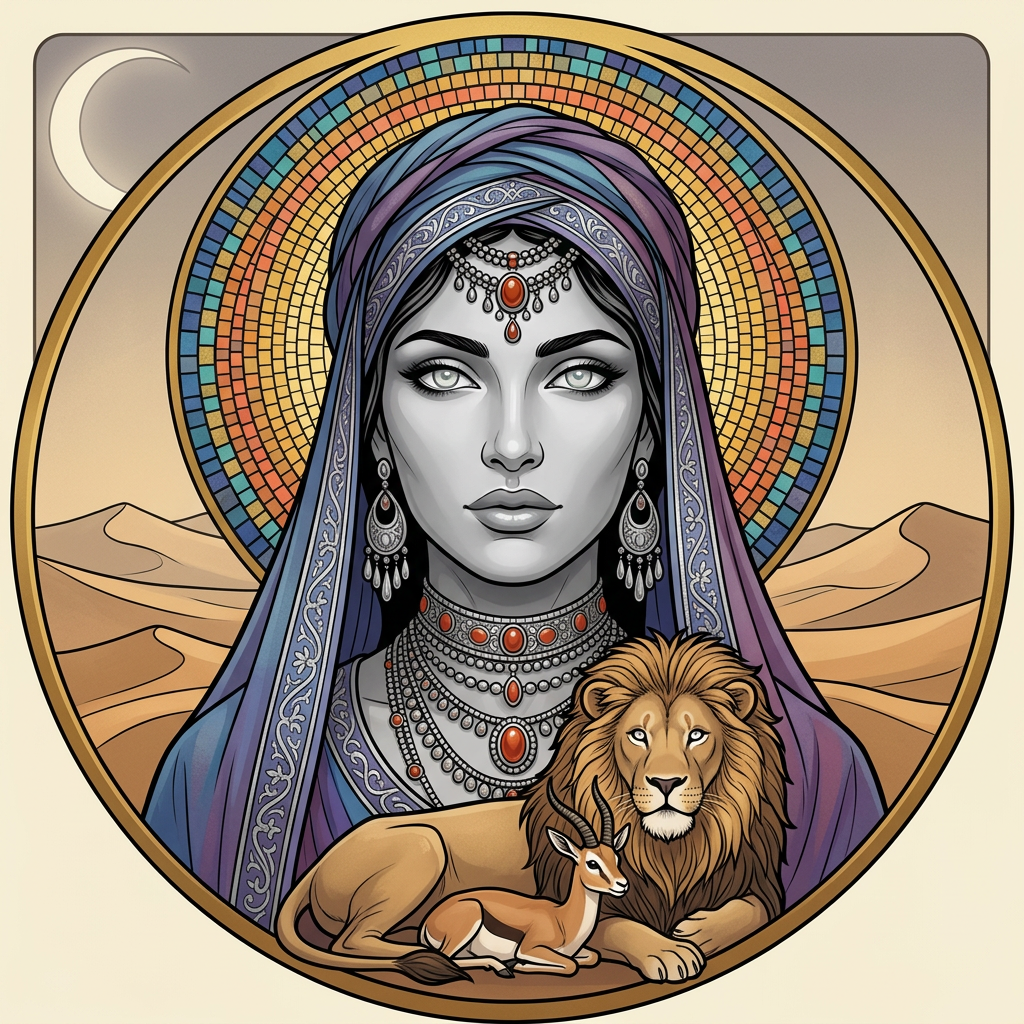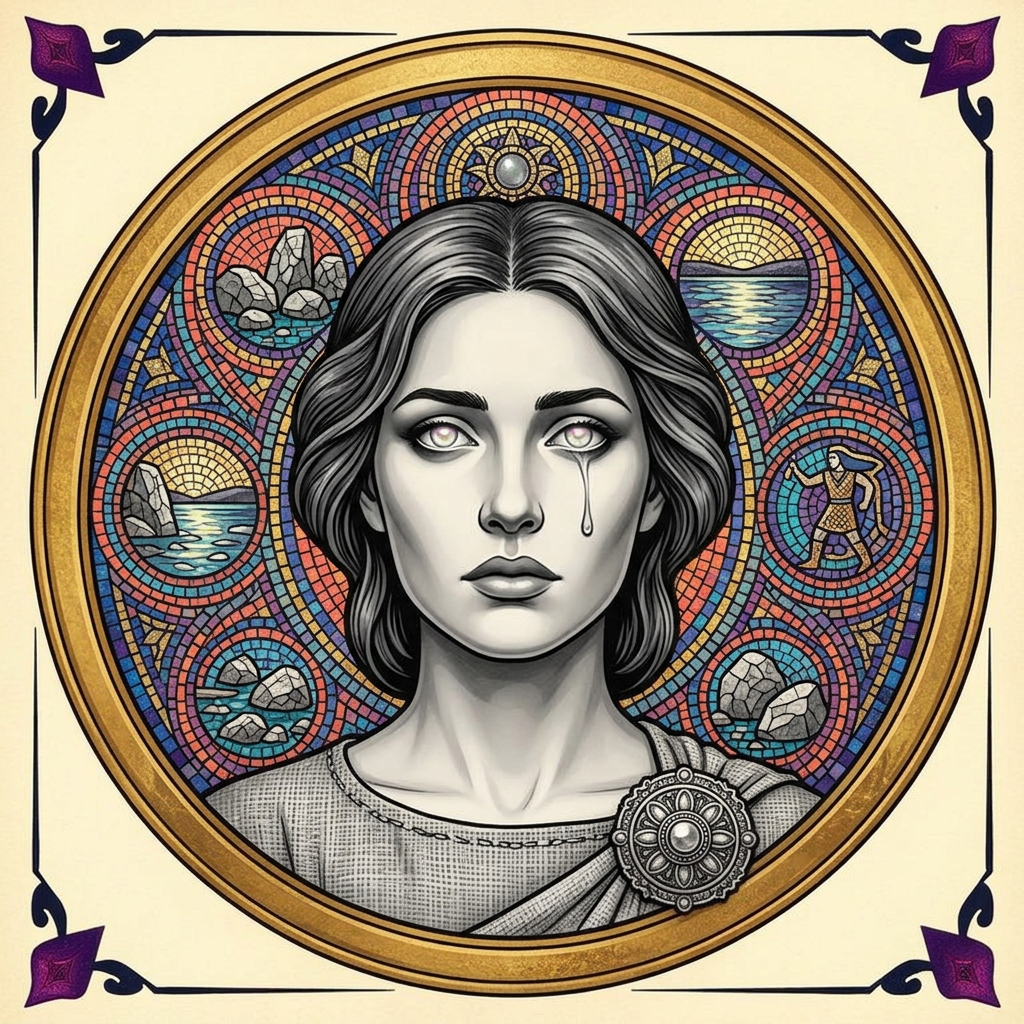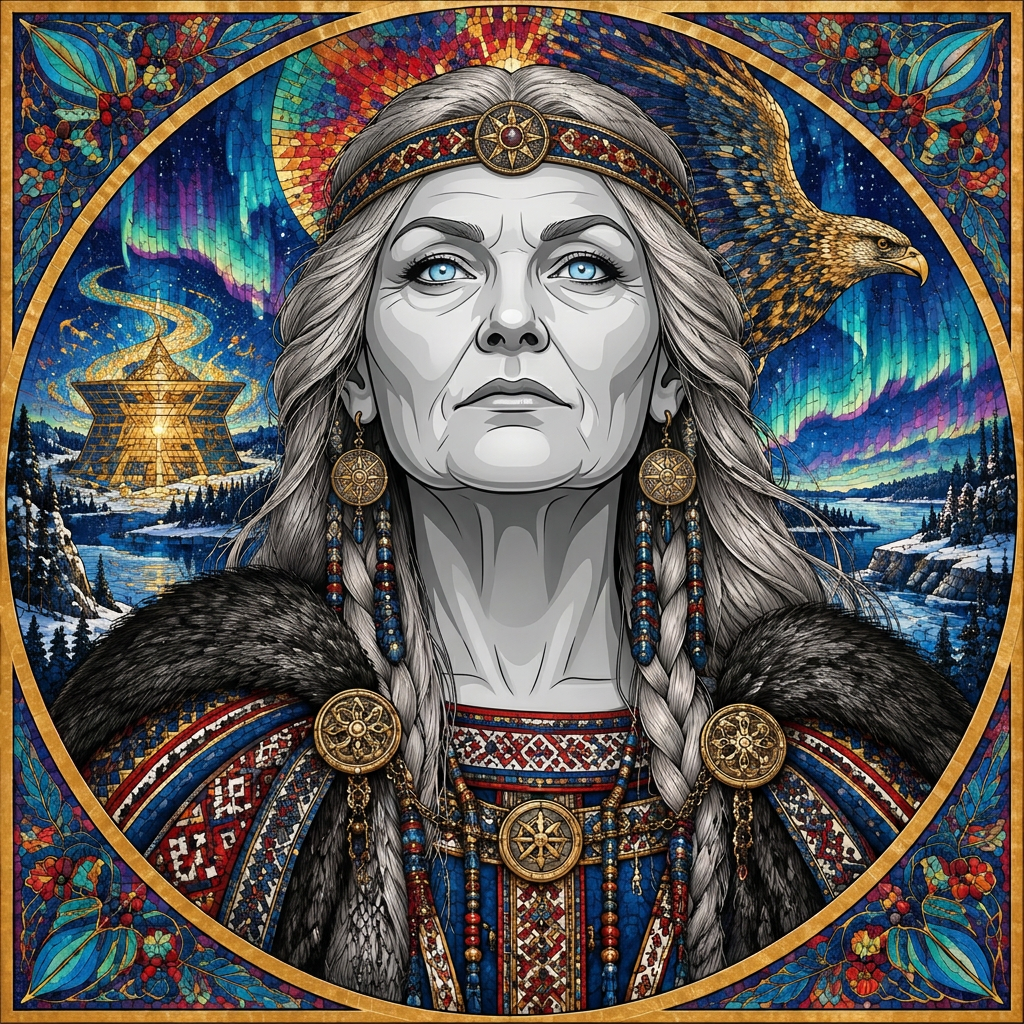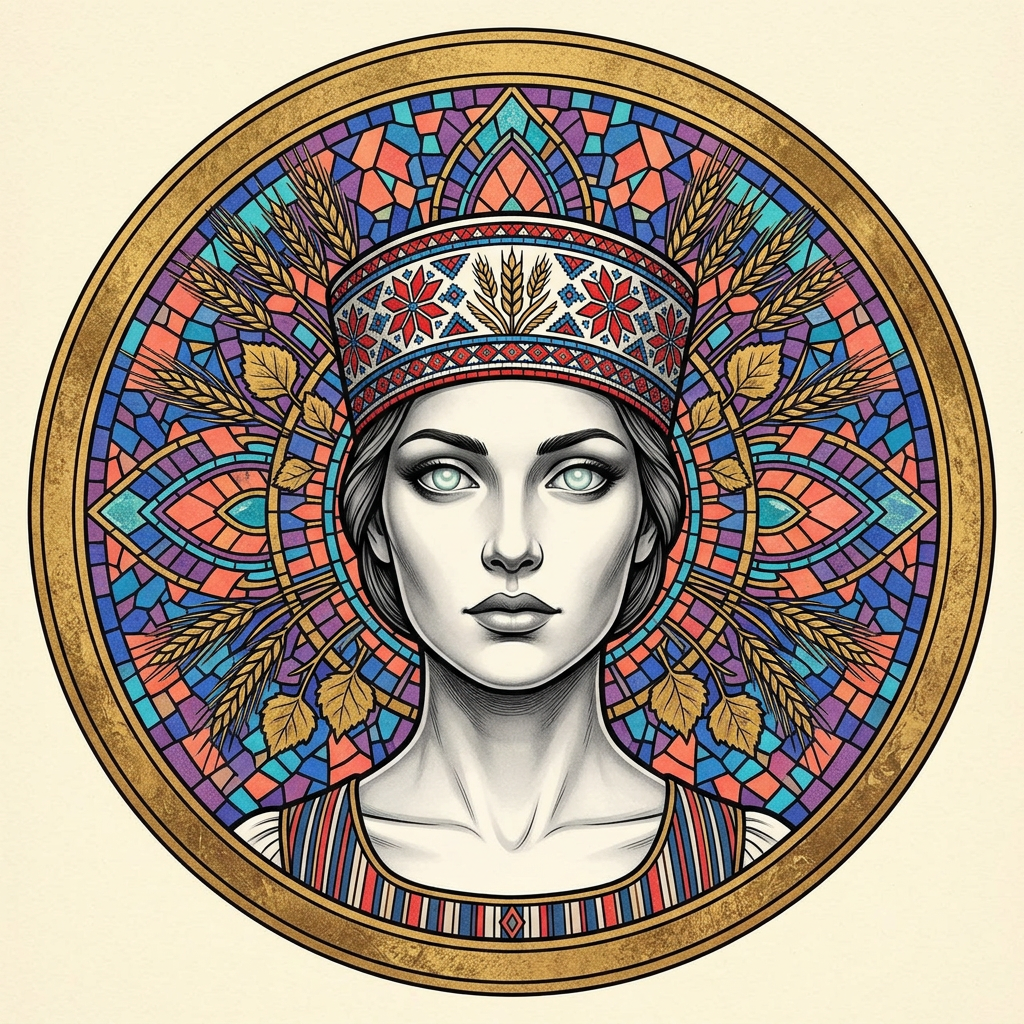
The Whole Deck
Goddesses
93 goddesses across 72 cultures — domains, symbols and a fragment of lore for each.
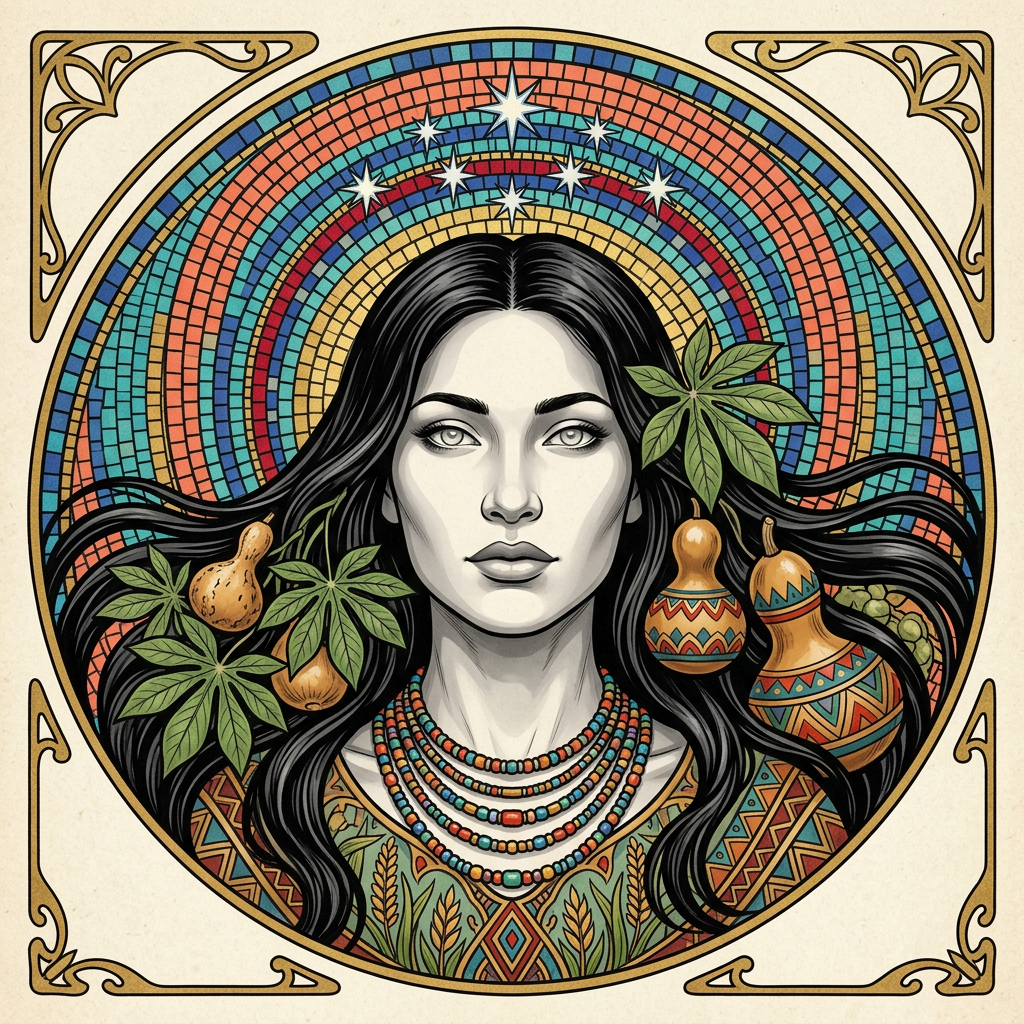
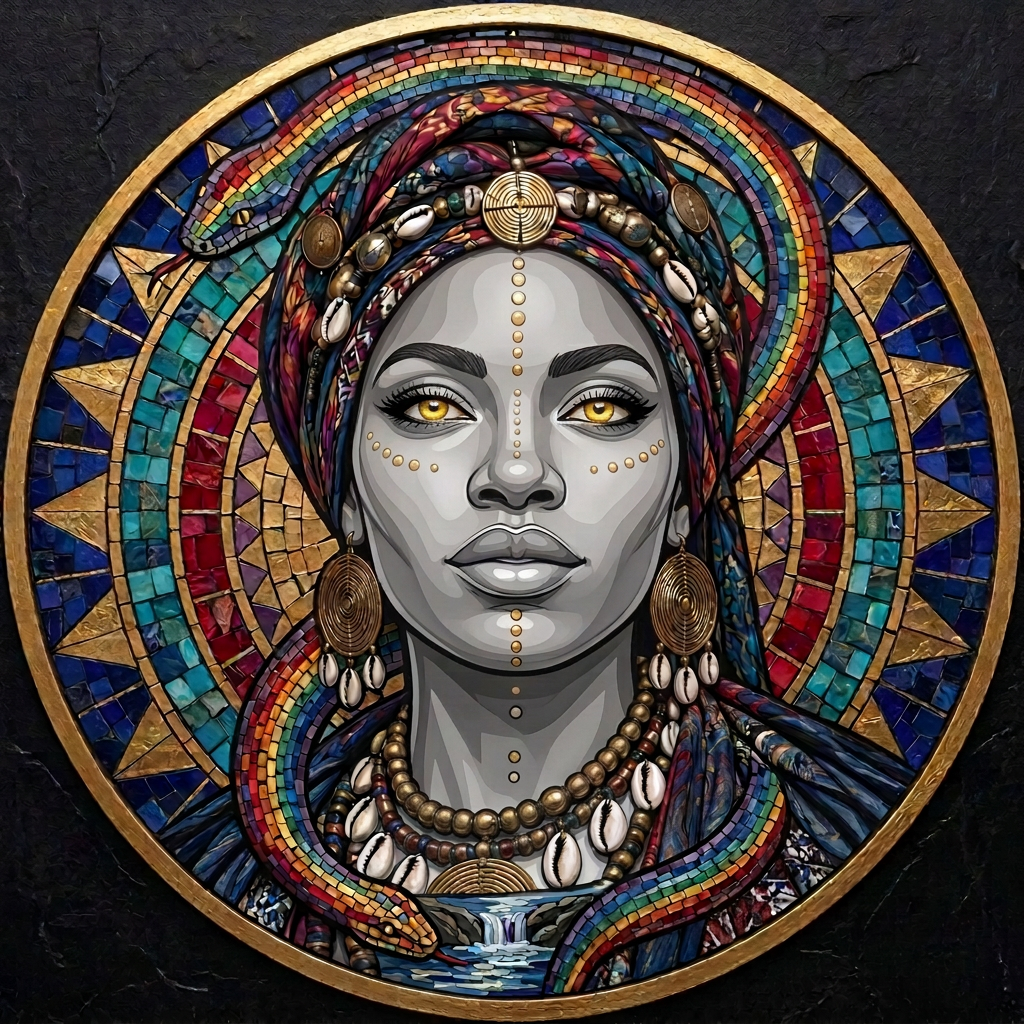
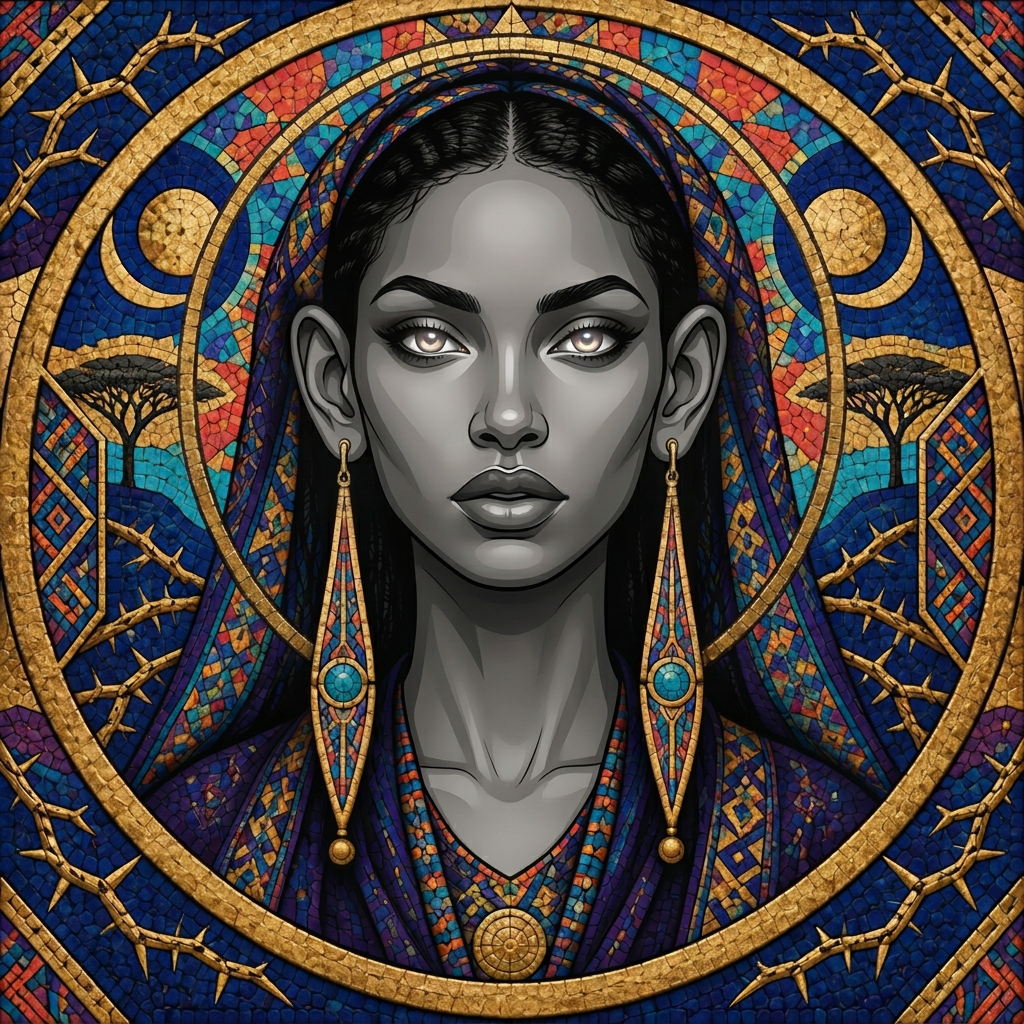
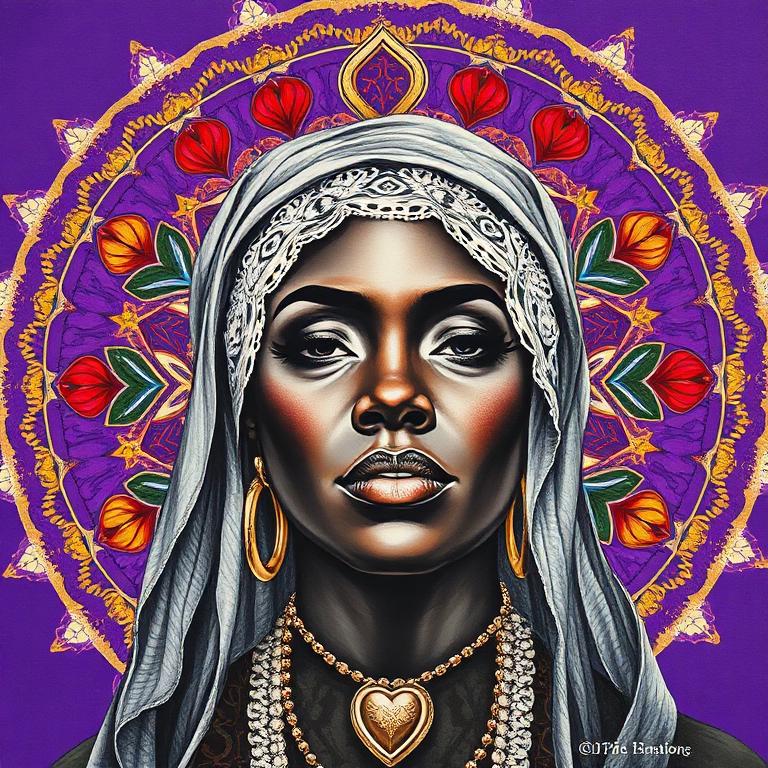
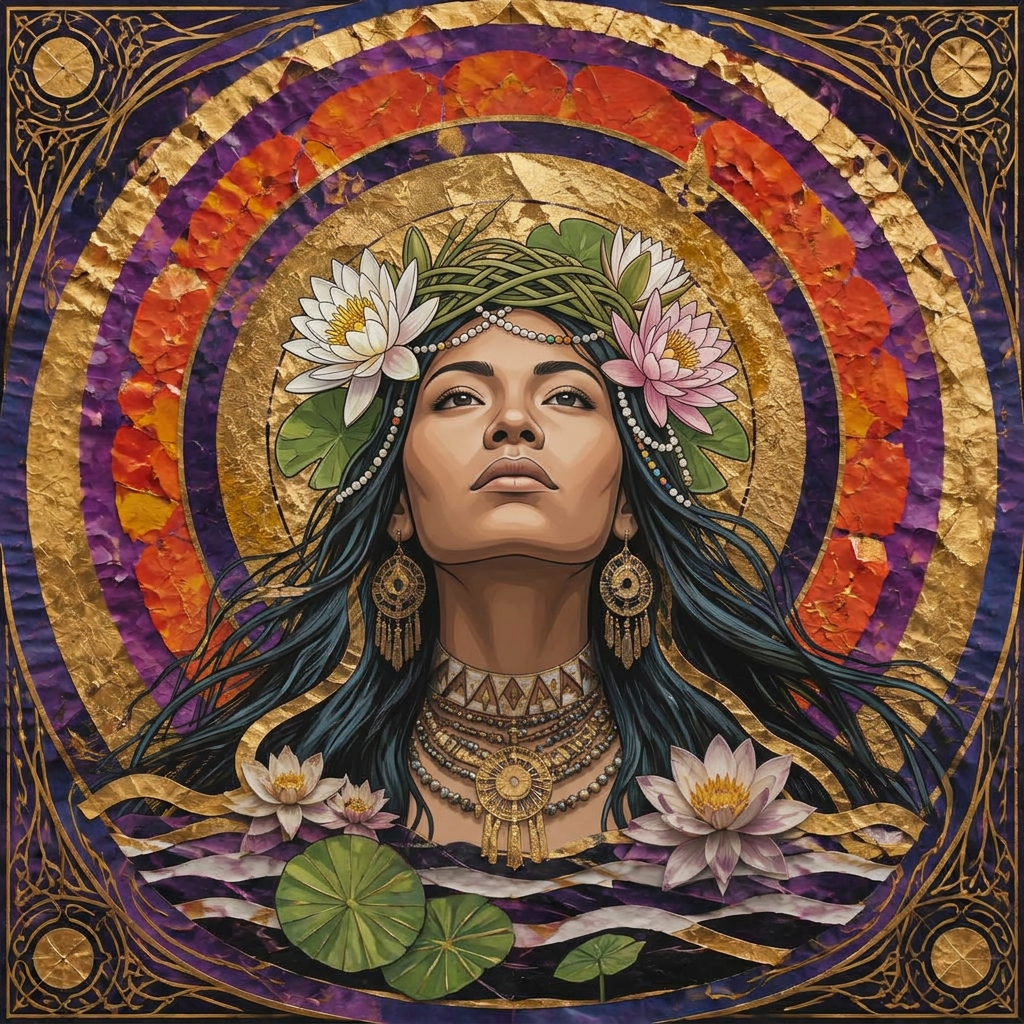
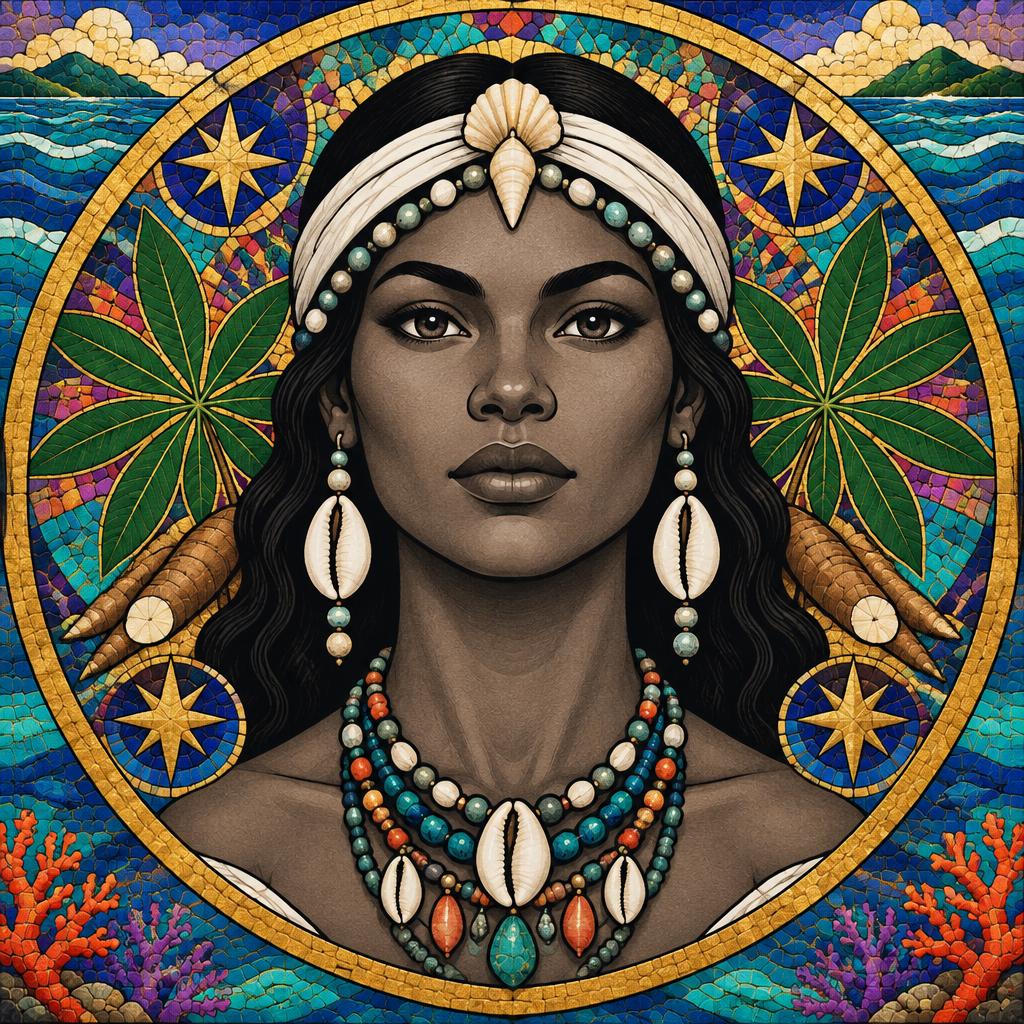
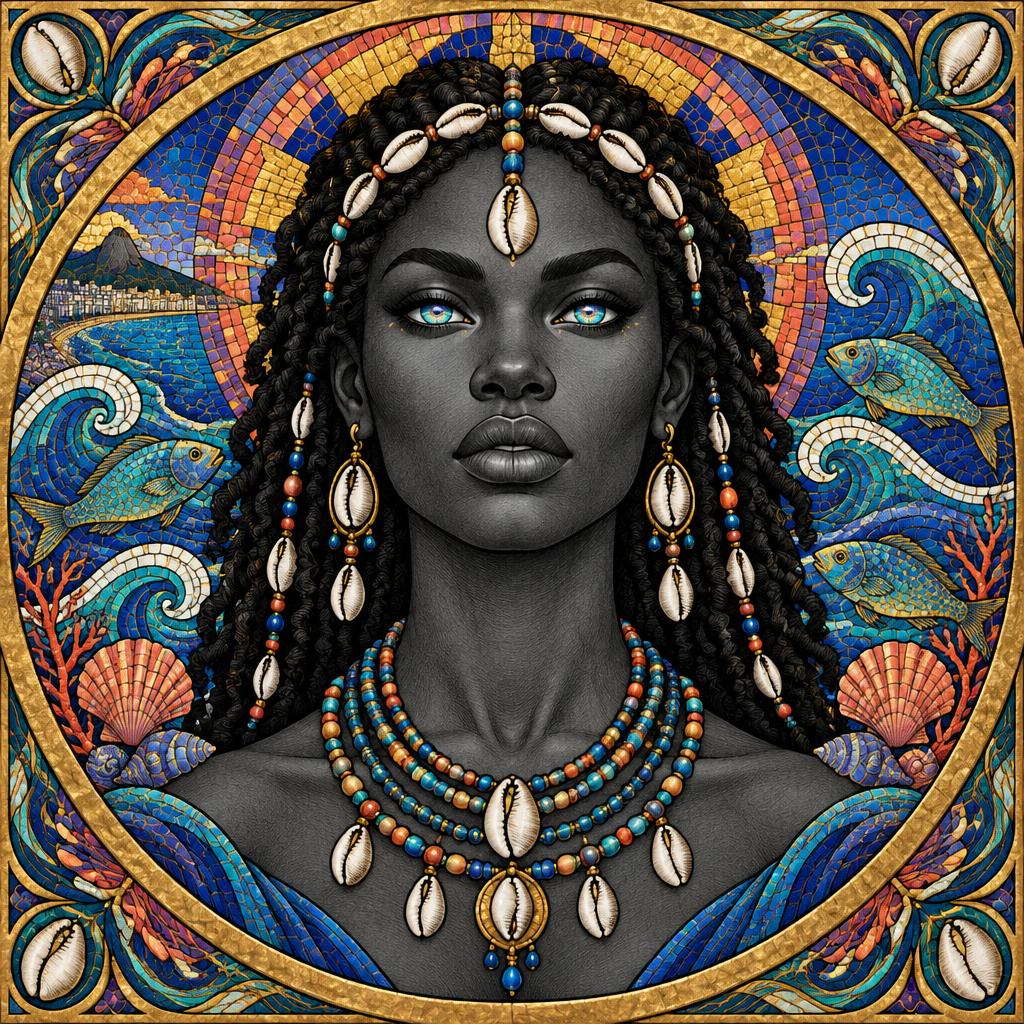
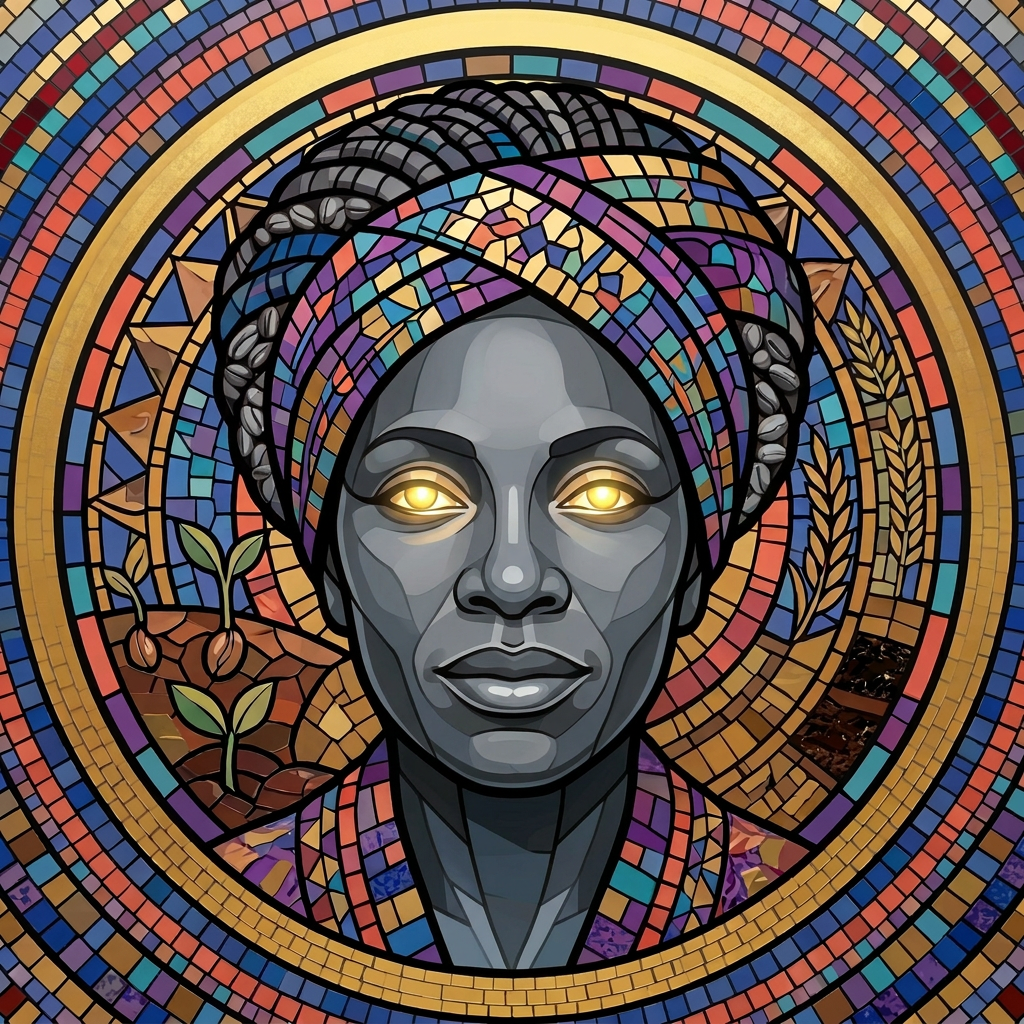
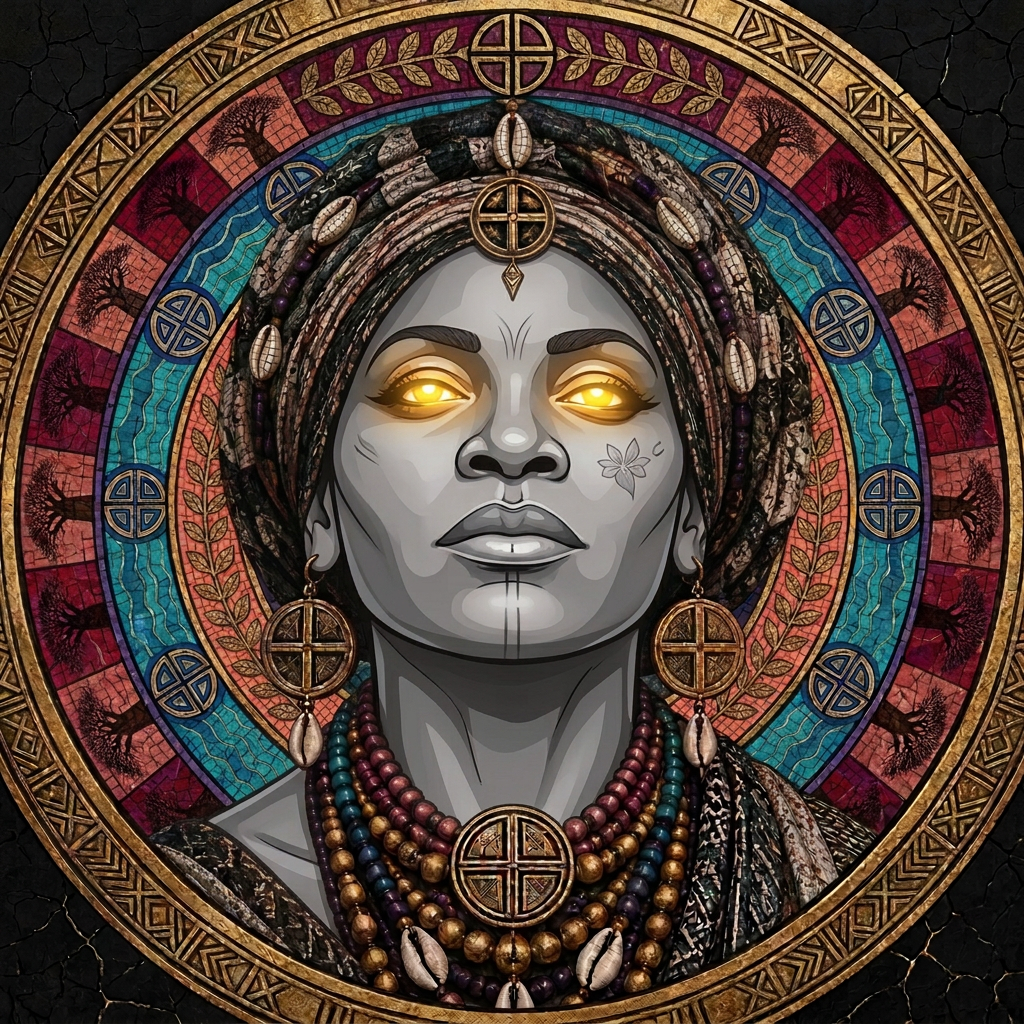
Ala
Igbo / West African
Ala, Earth and Law, Womb of the Ancestors
Domains
EarthMorality and lawFertilityThe deadJudgmentSymbols
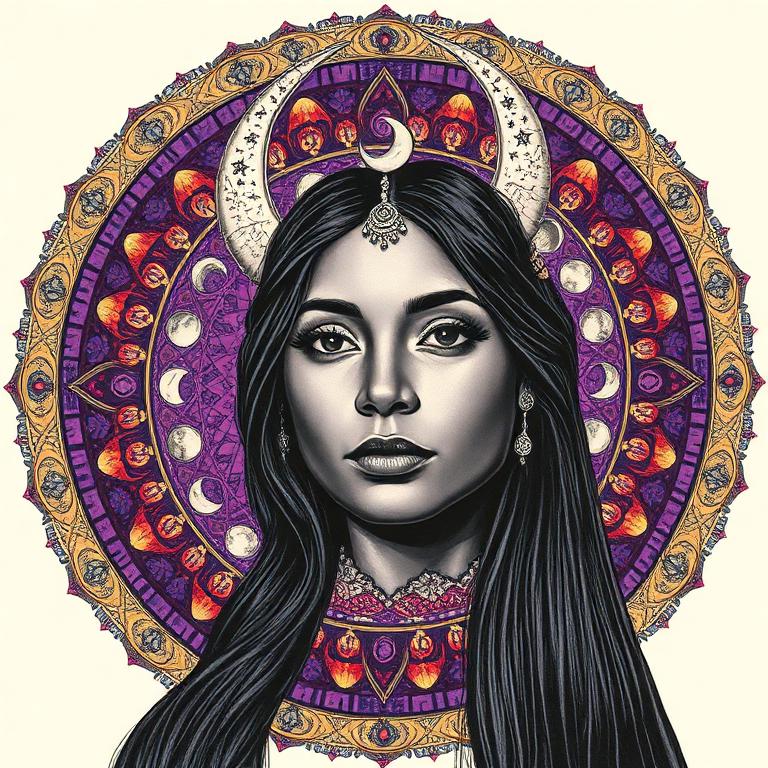
Crescent moon · Yam vines · Python · Mbari house · Sculpted clay figures
Lore
Her justice is not negotiable and not cruel: it is structural. Land disputes, murder, broken kinship duties all become her business, because harming people is harming the ground they stand on. …
Igboland, southeastern Nigeria; living tradition

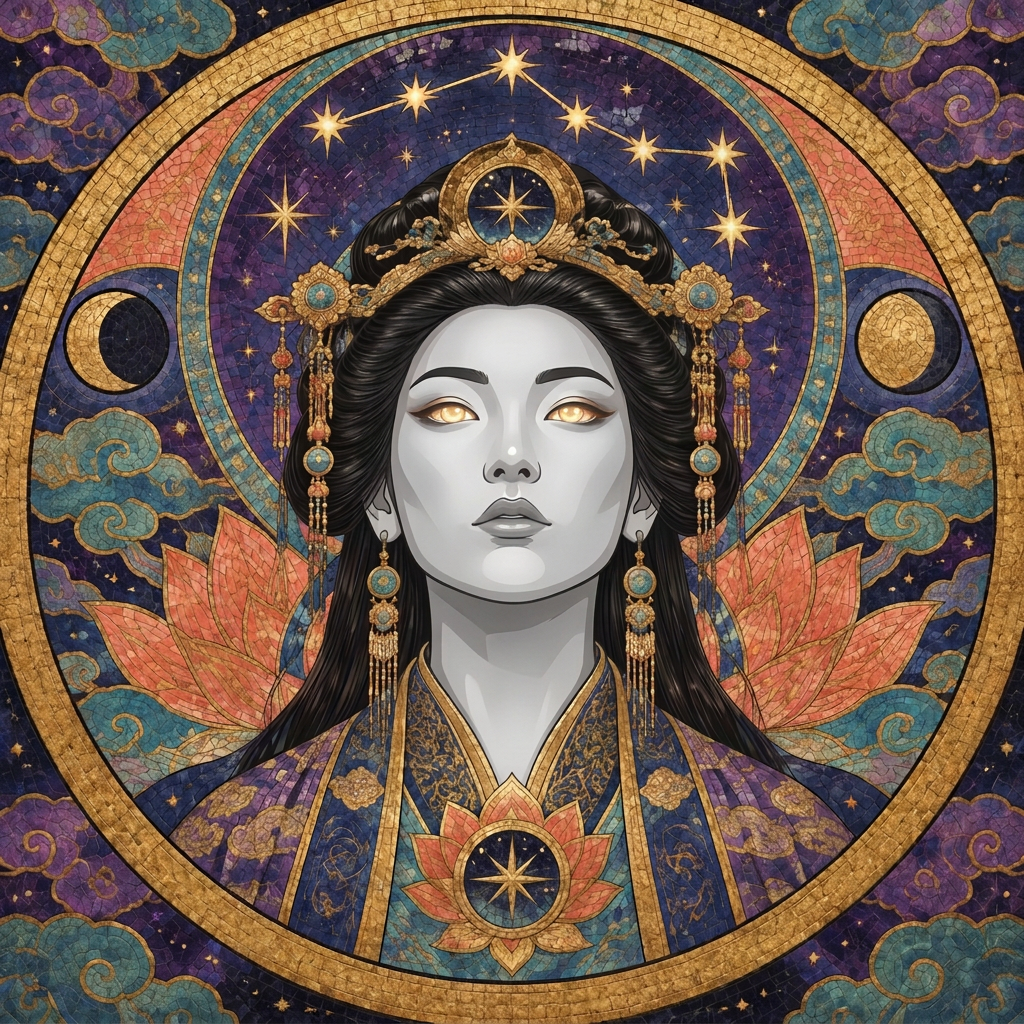
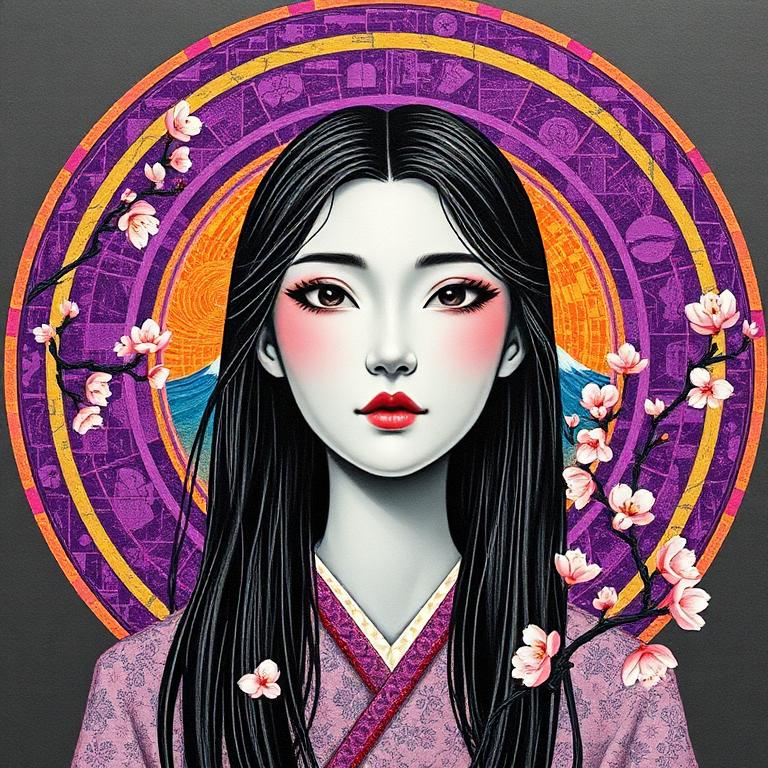
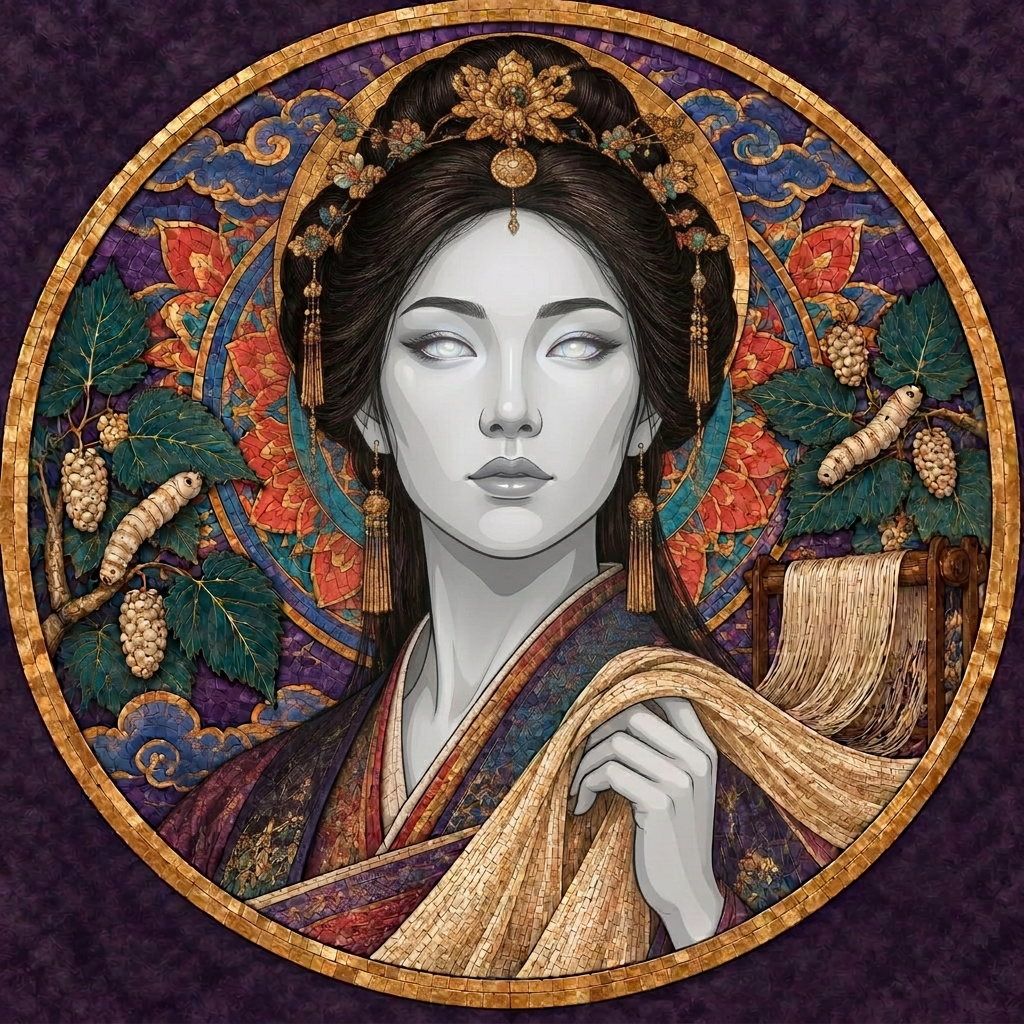
Amaterasu
Japan / Shinto
Great Illuminating Heaven
Domains
The sunVisibility and honourWeavingImperial lineageRenewalSymbols
Bronze mirror (Yata no Kagami) · Rice · Rooster · Sacred rope (shimenawa) · Sunrise
Lore
Her drawing-out is the founding myth of Japanese performance: Ame-no-Uzume's raucous dance on an overturned tub, the gods' laughter, and curiosity strong enough to move a grieving god. The Inner Shrine at Ise has been ritually rebuilt from fresh timber roughly every twenty years for over a millennium — her holiness renewed rather than preserved.
Japan, Kojiki and Nihon Shoki (8th century CE) through living Shinto practice

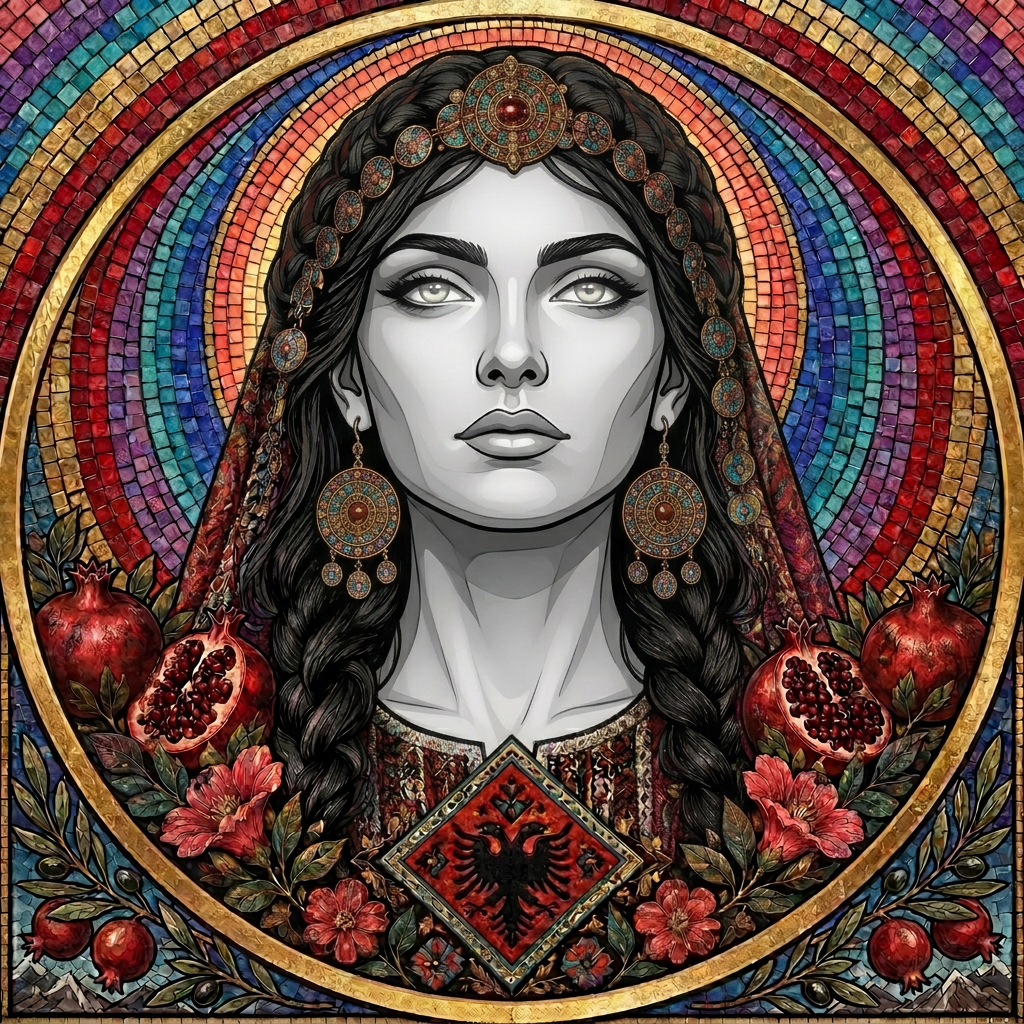
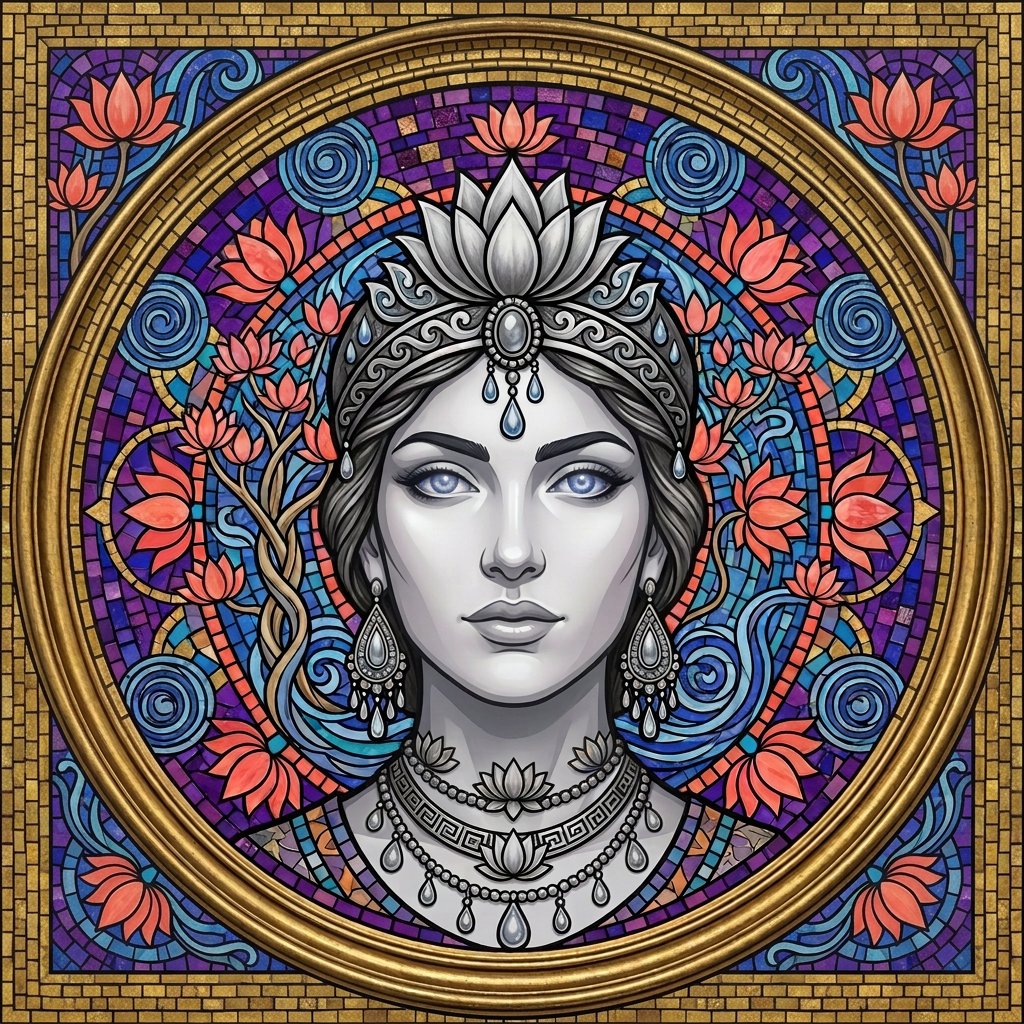
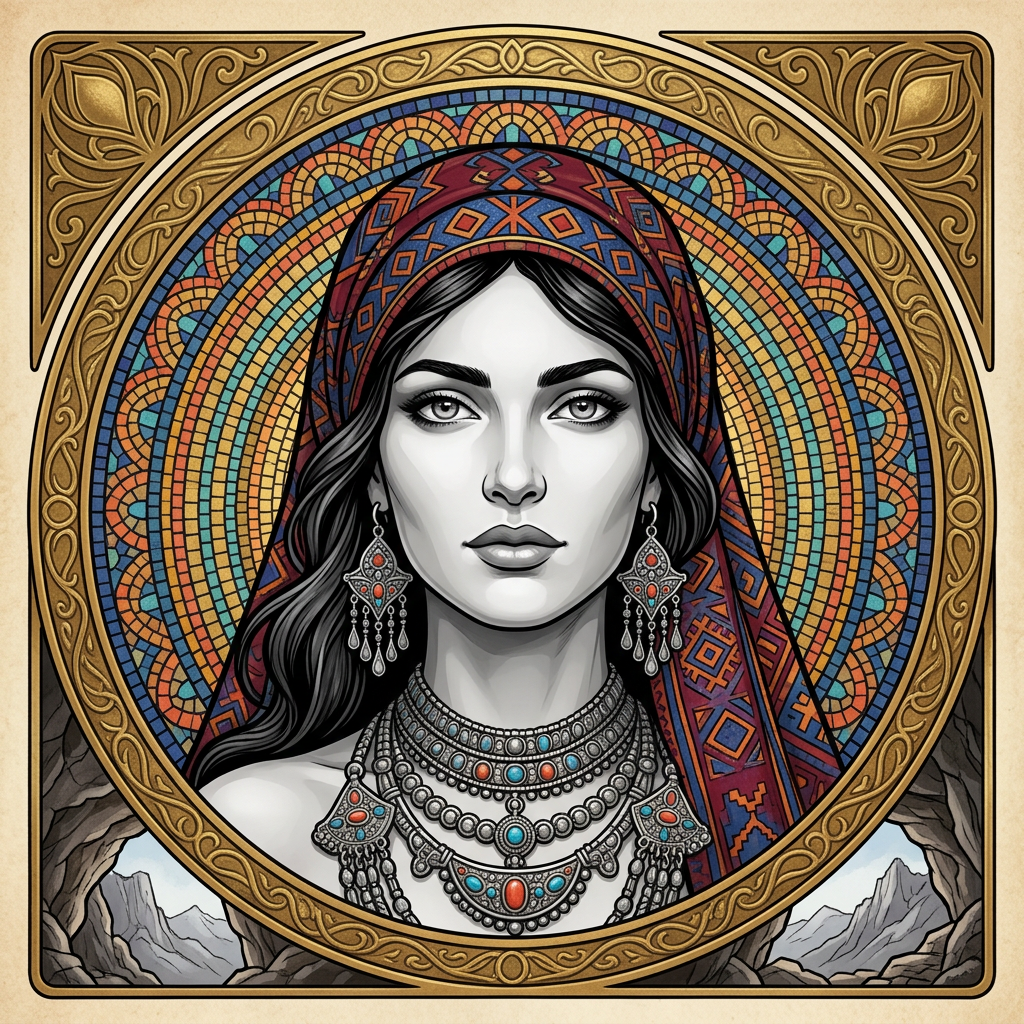
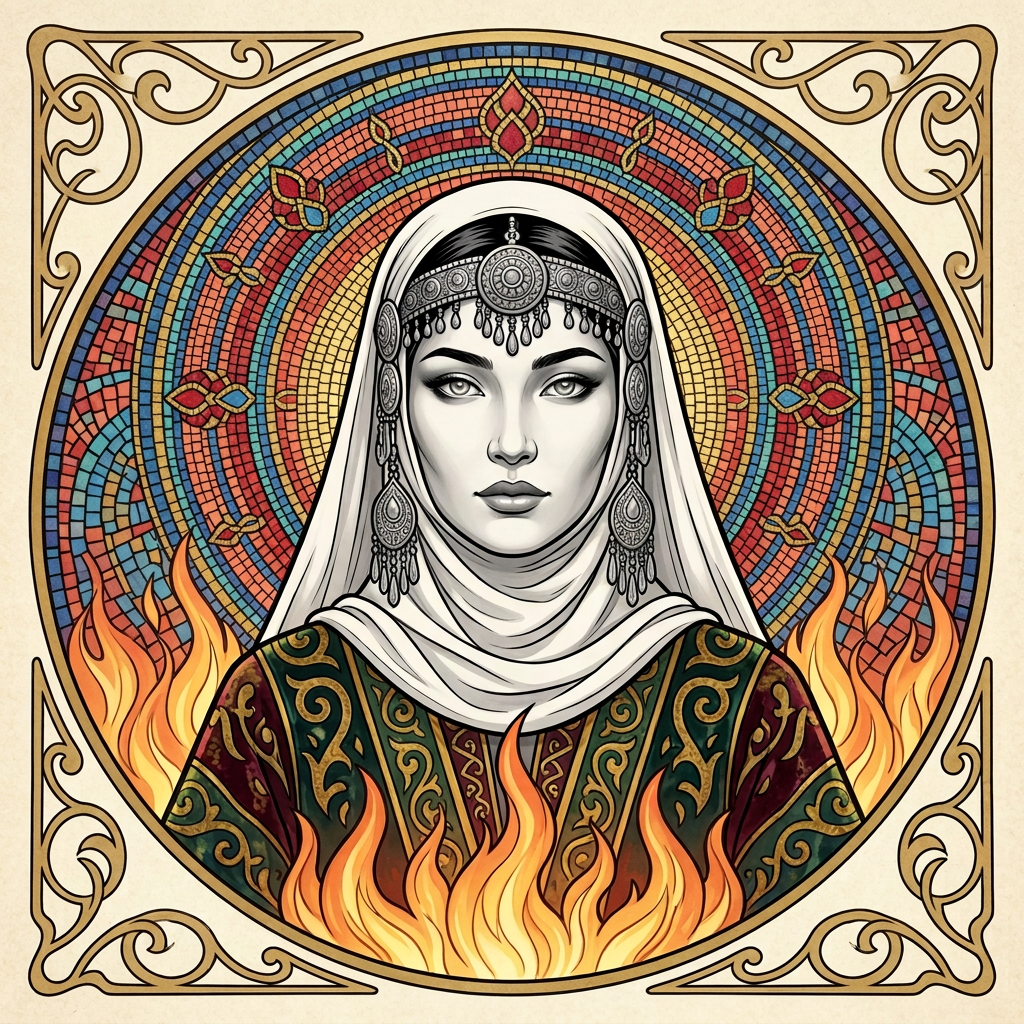
Anahita
Persia / Iran
Lady of the Waters, Strong and Immaculate
Domains
WatersPurityValour in battleFertilityRoyal legitimacySymbols
Flowing water · Beaded golden crown · Chariot · Beaver-fur cloak · Pomegranate
Lore
Warriors and young women prayed to the same goddess for opposite-seeming things — victory and a good marriage — because she governs vitality itself, not a narrow department. Her worship survived regime changes across a thousand years, and her ruined temples still sit at Kangavar and Bishapur. …
Iran, Achaemenid period (c. 500 BCE) through Sasanian times; temples at Bishapur and Kangavar

Aphrodite
Greek
Foam-Born, Lady of Golden Desire
Domains
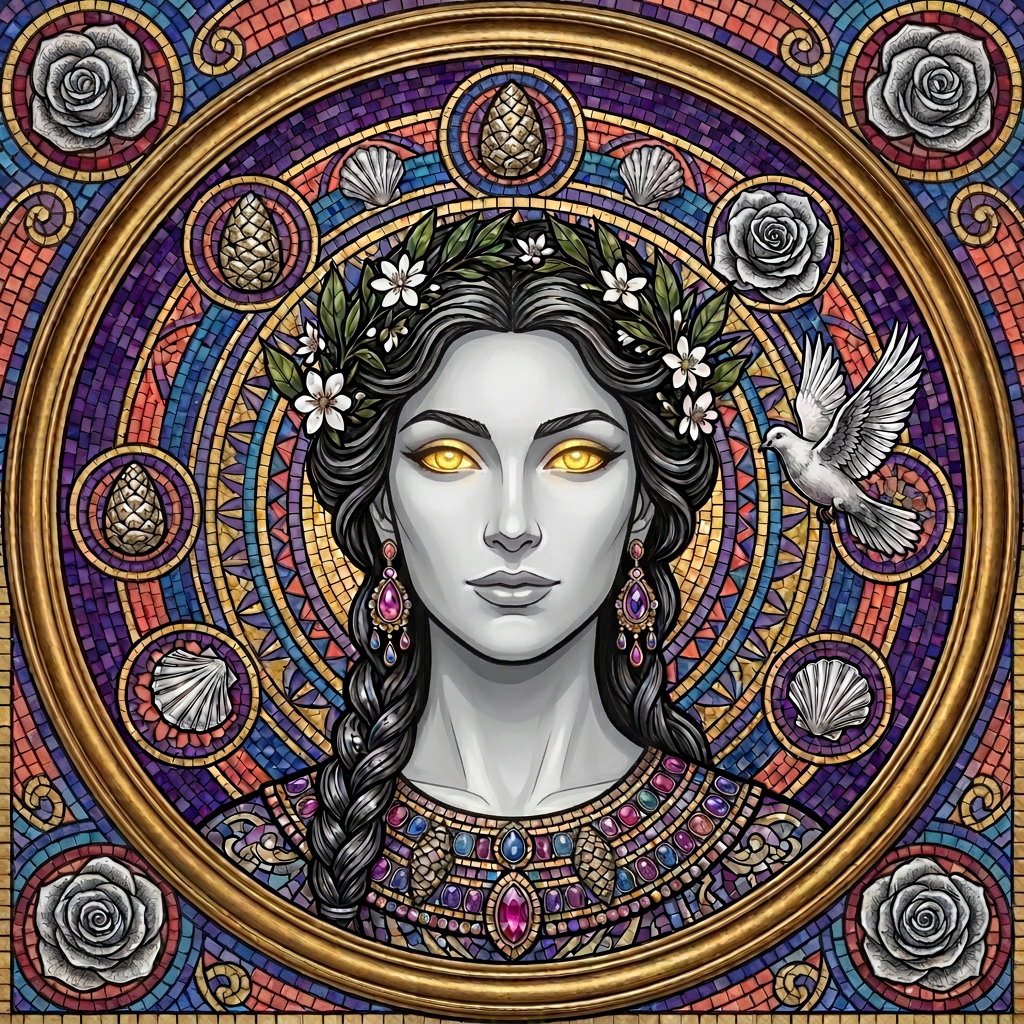
LoveBeautyDesirePersuasionThe seaSymbols
Scallop shell · Dove · Rose · Mirror · Myrtle
Lore
Her power is that nobody consents to it. Gods, mortals and beasts alike are moved, and the myths track what that does: ships launched, marriages broken, unlikely joys. …
Greece and Cyprus, c. 8th century BCE onward

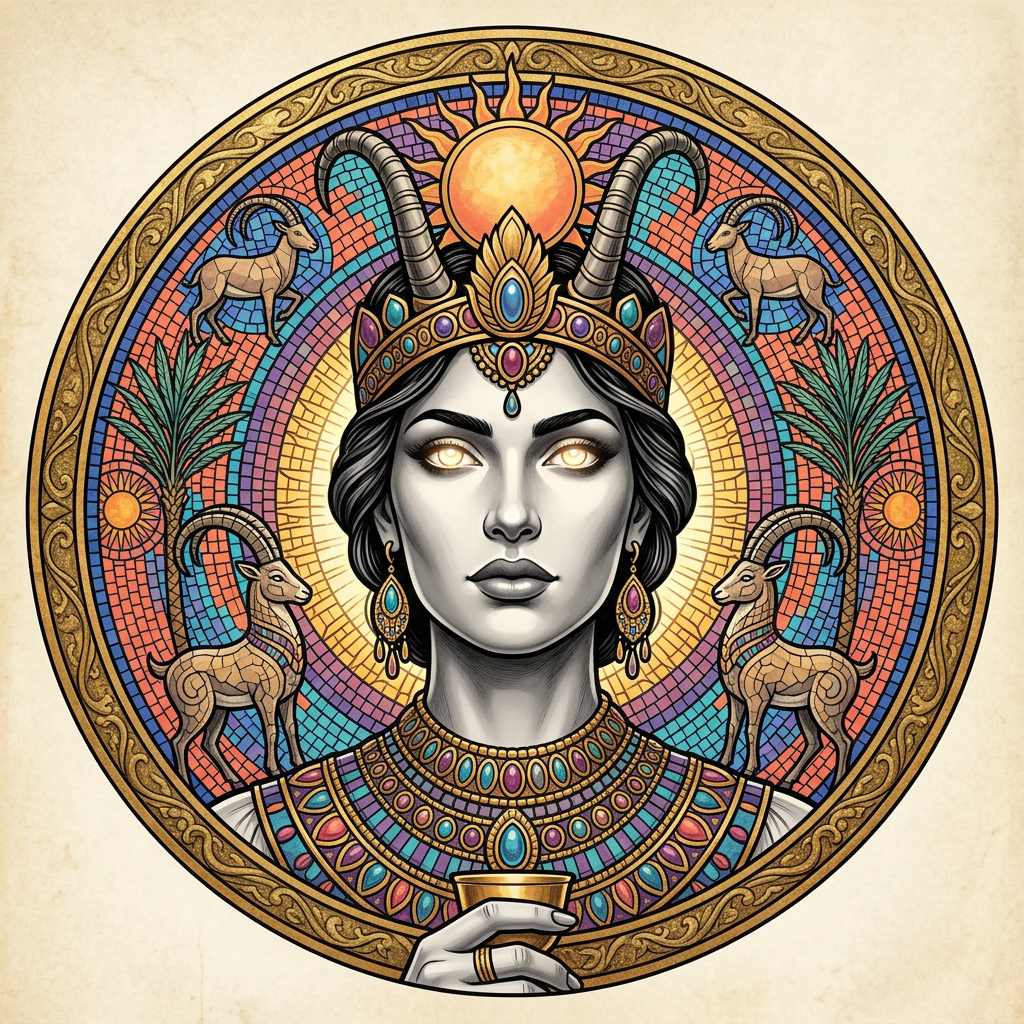
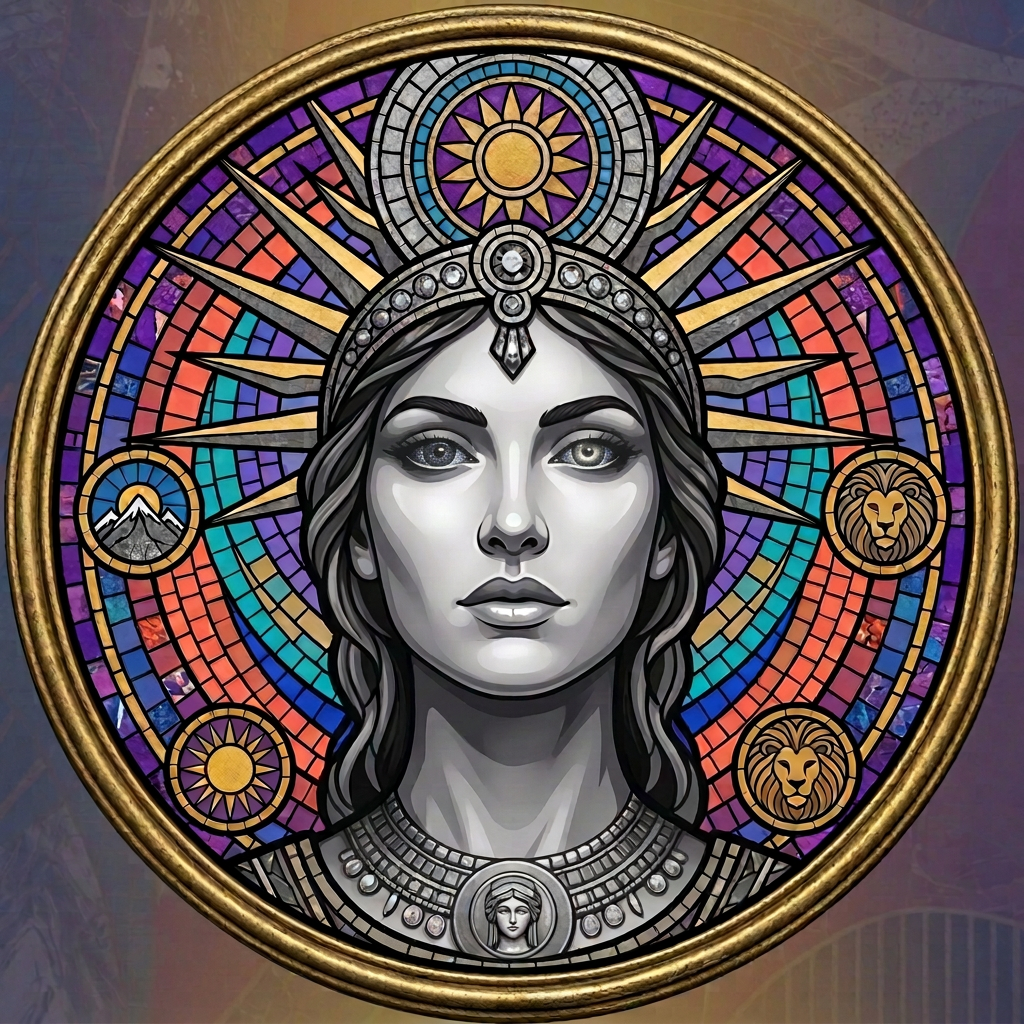
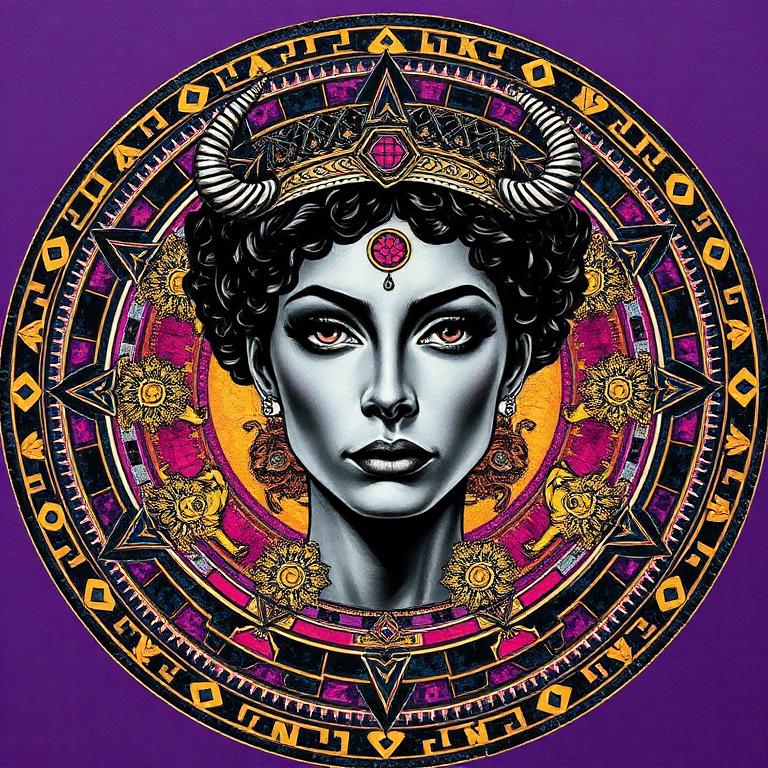
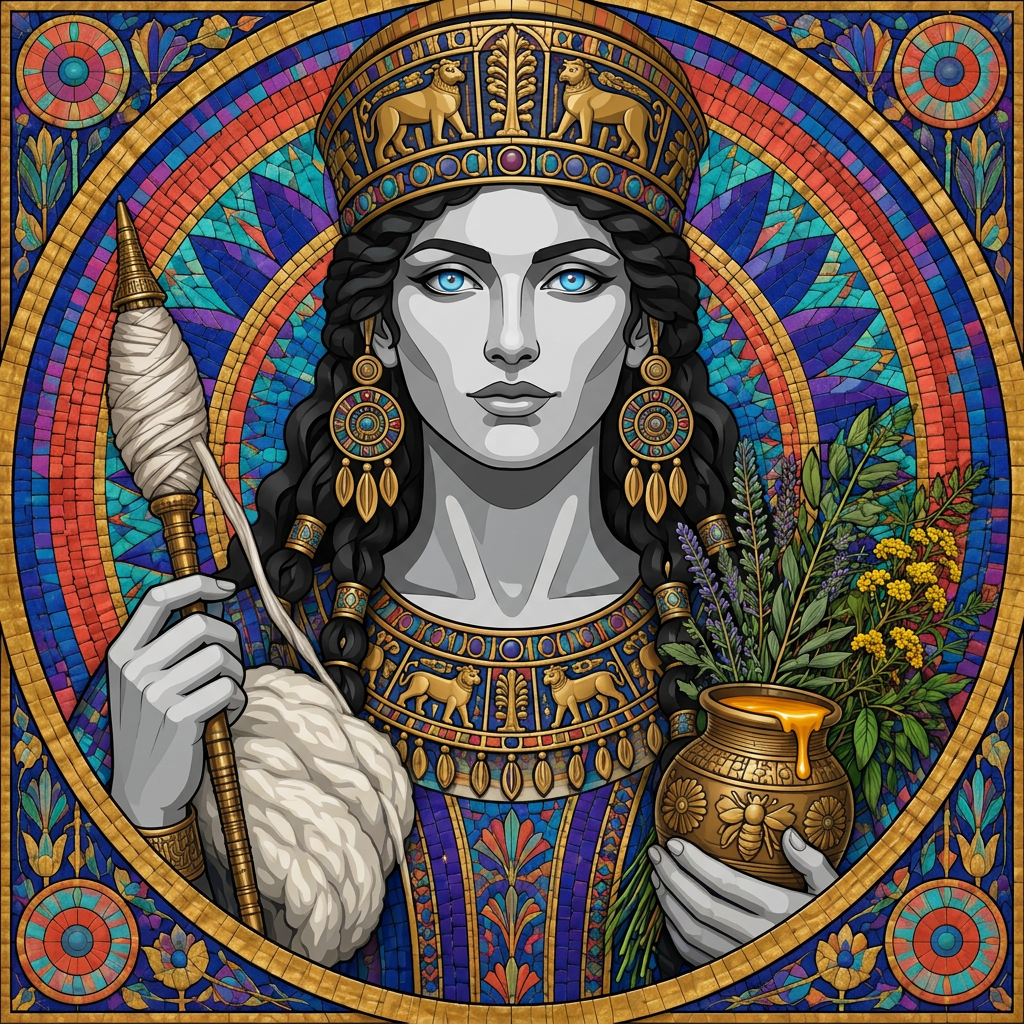
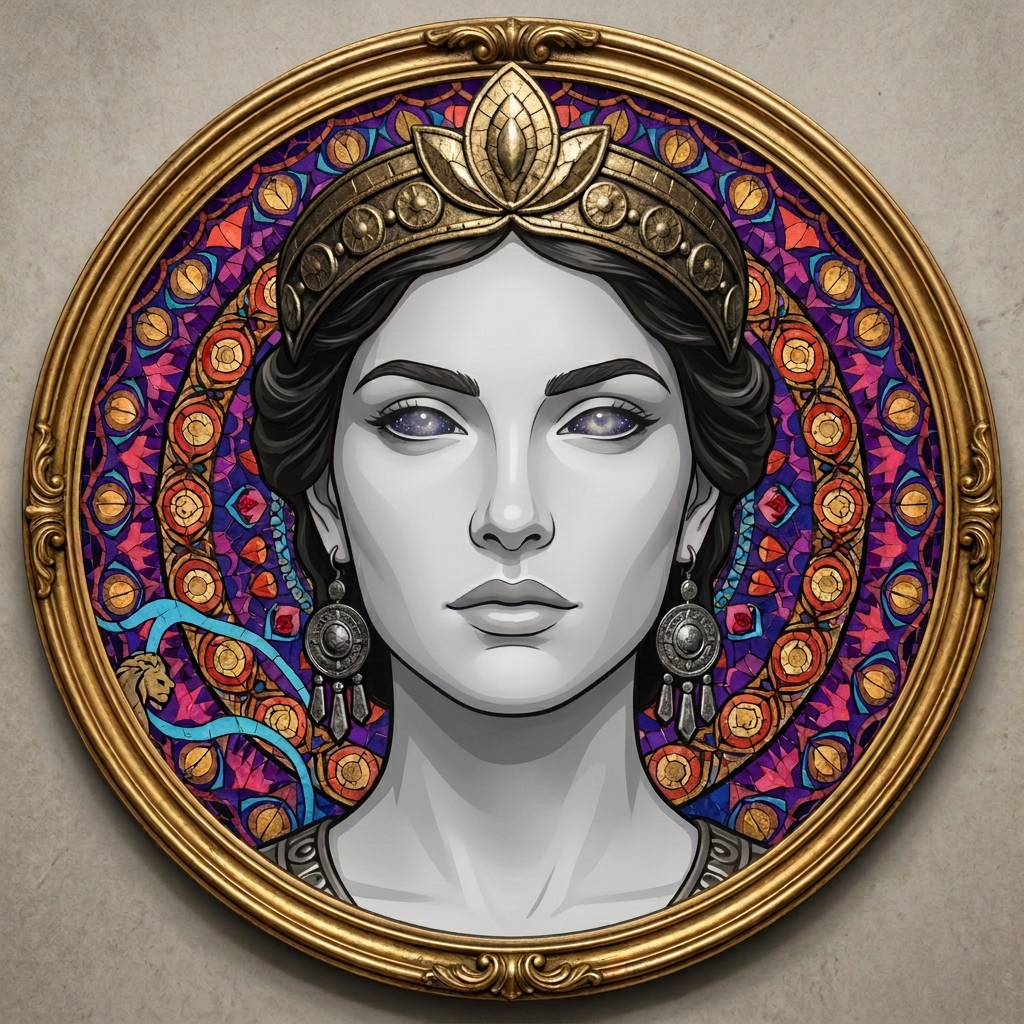
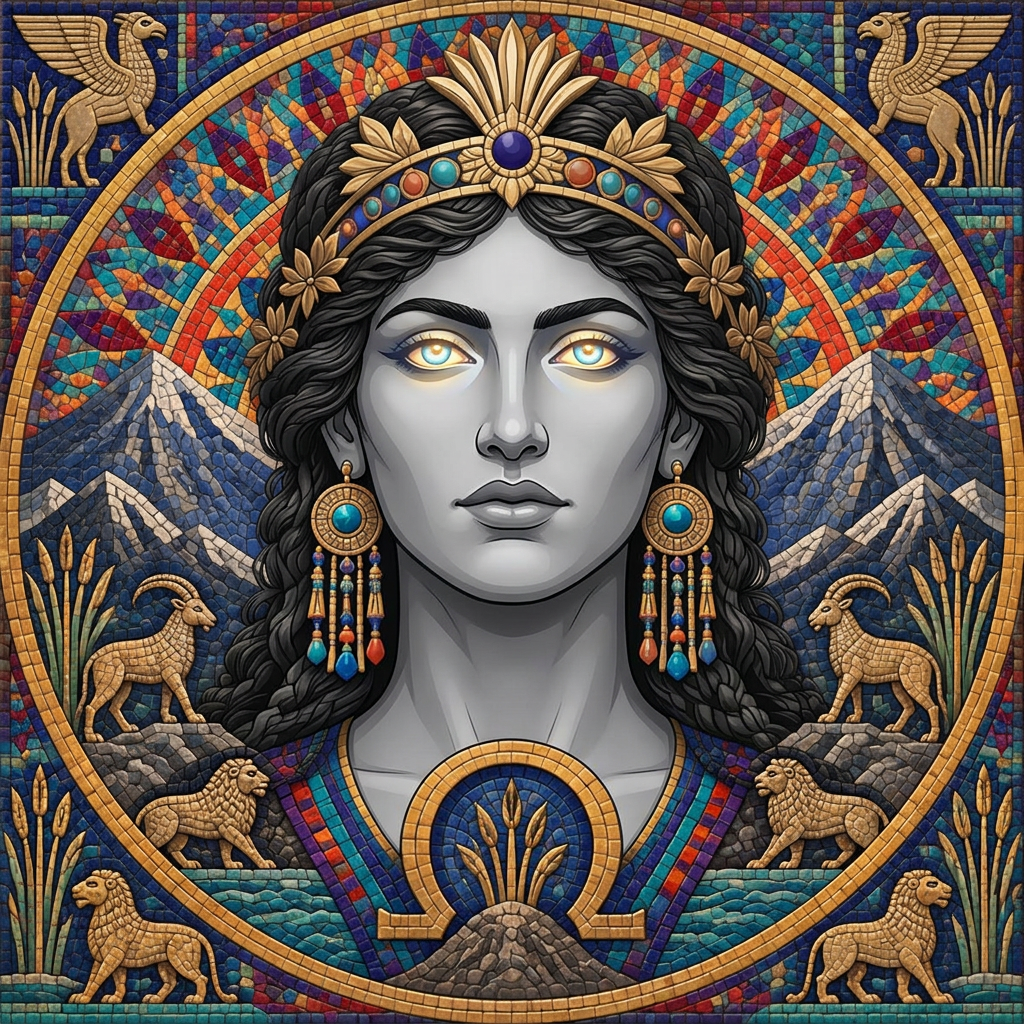
Arinniti
Turkey / Hittite Anatolia
Sun Goddess of Arinna, Queen of the Land
Domains
The sunKingship and justiceState authorityOrderProtection of the landSymbols
Winged sun disc · Polos crown · Gold rosette · Lions · Royal seal
Lore
Hittite kings called themselves her steward, not her equal, and every treaty was sworn under her sun. Her cult city Arinna has never been securely located, so the greatest goddess of an empire is known largely through the letters of a queen who wrote to her as one woman to another.
Hittite Anatolia (central Turkey), c. 1700–1180 BCE

Artemis
Ancient Greece
Lady of the Wild, Mistress of Arrows
Domains
WildernessThe huntThe moonGirlhoodChildbirthSovereignty of selfSymbols
Silver bow · Crescent moon · Deer · Cypress · Hunting dogs
Lore
Actaeon saw her bathing and was turned to a stag torn apart by his own dogs — the story is less about modesty than about consent: what belongs to her is not available to be taken. Her arrows are swift and her mercy is exact.
Greece, Archaic period through Roman era

Asase Yaa
Akan / West African
Old Mother Earth, Thursday's Ground
Domains
EarthTruth and oathsFarmingAncestorsRestSymbols
Soil · Yam · Adinkra symbols · Libation of palm wine · Thursday
Lore
Oaths sworn on her are the heaviest available; farmers ask her permission before breaking ground, and the dead are given back to her. Her most striking rule is the fallow day: an entire agricultural society stopping once a week not for a god in the sky but for the exhausted ground under their feet.
Akan states of Ghana and Côte d'Ivoire; living tradition

Ashi
Zoroastrian Iran
Reward, Daughter of Wisdom
Domains
Reward and fortuneMeritProsperityConsequenceRight livingSymbols
Gold coins · Sacred fire · Veil · Full storehouse · Balanced scales
Lore
The striking part of her hymn is who she refuses. She will not enter the house of the childless, the very old or the very young — not from cruelty, but because her gifts require a life with capacity to receive them. …
Zoroastrian Iran; hymned in the Avesta, honoured in Zoroastrian communities today

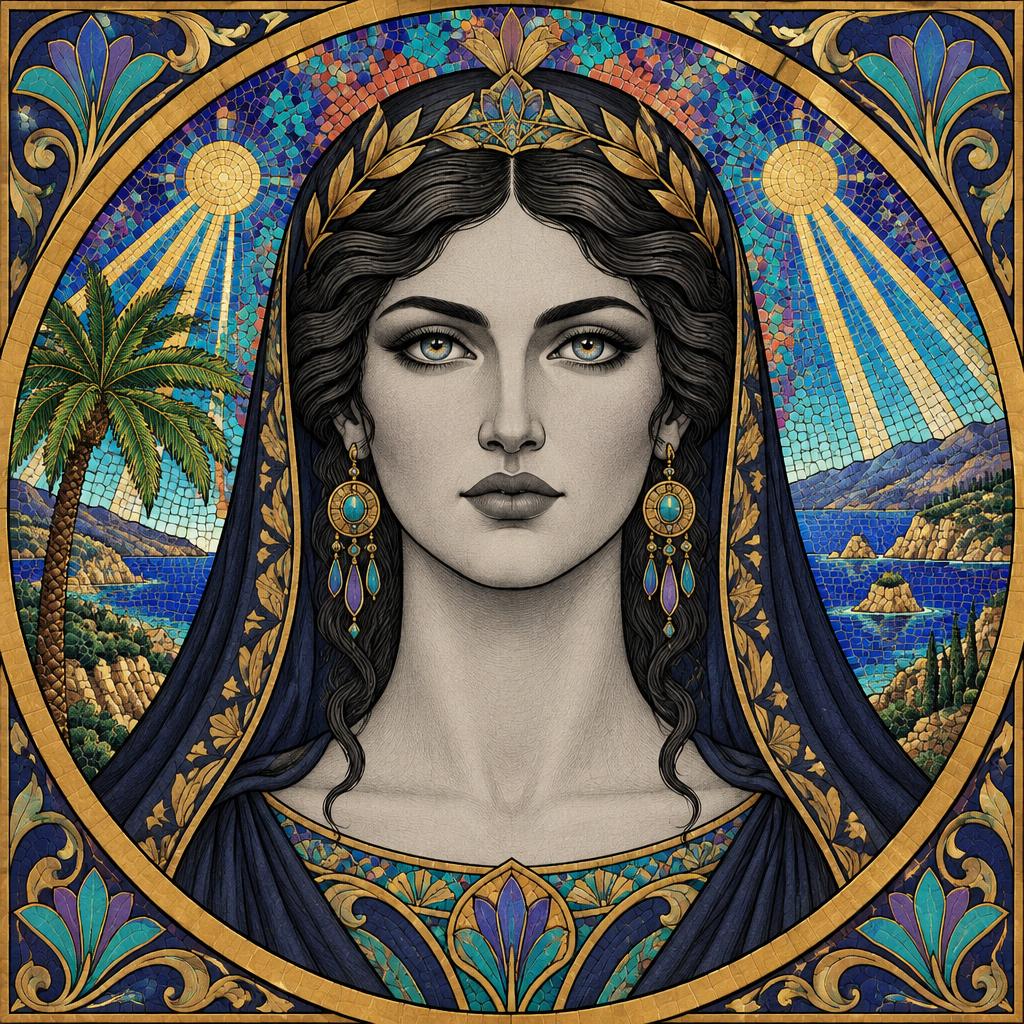
Astarte
Levantine (Canaanite / Phoenician)
Lady of the Sea and Star, Mistress of Cities
Domains
LoveSea voyagesCity protectionFertilitySovereign favourSymbols
Crescent and star · Dove · Sphinx throne · Cypress · Sea vessel
Lore
Her cult travelled by ship: wherever Phoenician traders landed, her star was raised. She is a goddess of departure and safe return — the one you pray to when you cannot see the shore.
Levant and the Phoenician Mediterranean, c. 1500 BCE onward

Ataegina
Iberia / Spain
Goddess of Spring's Return
Domains
SpringThe underworldRebirthHealingOaths and cursesSymbols
Goat · Cypress · Spring flowers · Votive tablet · Silver offering
Lore
What survives of her is a pile of requests. That is her character: she is the goddess people turned to when something had been taken and they wanted it back — health, property, a fair outcome. …
Lusitania and western Iberia, pre-Roman into the Roman period

Atete
Oromo / East African
Mother of Fertility, Keeper of Women's Rites
Domains
FertilityWomen's solidarityJusticeMilk and cattleBlessingSymbols
Milk gourd · Butter · Green grass bundles · Fresh cream · Song
Lore
Her power runs on collective voice. The Ateetee song is not a plea — it is a sanction, sung by many women at once, and the community regards it as binding. …
Oromo tradition, Horn of Africa; living practice

Athena
Greece
Grey-Eyed Weaver of Strategy
Domains
StrategyCraft and weavingCivic lawDefensive warClear thinkingSymbols
Owl · Olive tree · Corinthian helm · Aegis with gorgon head · Loom and spindle
Lore
She won Athens by gift rather than force: against Poseidon's saltwater spring she offered the olive tree, and the city chose the thing that could feed it. Her Panathenaic festival centred on weaving and presenting a new robe for her statue, so devotion to her was measured in finished work — and the Odyssey has her intervene as advice and disguise, never as a thunderbolt.
Greek world, Mycenaean roots through the Classical city-states (c. 1400–100 BCE)

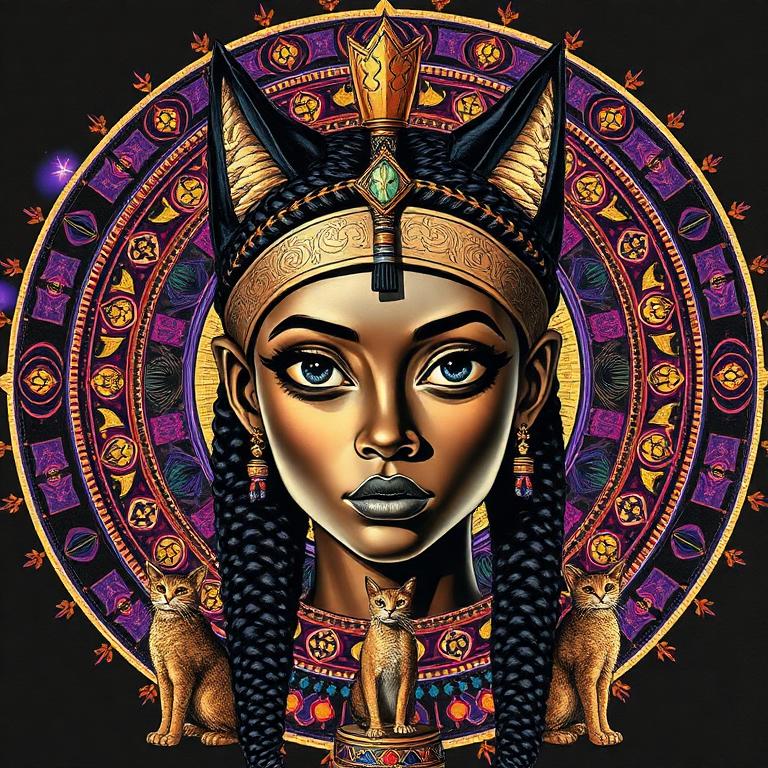
Bastet
Ancient Egypt
Lady of Bubastis, Protector of the House
Domains
HomeCatsJoyProtectionMusic and festivalSymbols
Cat · Sistrum · Perfume jar · Kittens · Papyrus
Lore
Hundreds of thousands of mummified cats were buried in her cemeteries — a whole economy of affection and offering. She is the rare great deity whose domain is domestic happiness: the safe doorway, the fed household, the room where music is playing and nothing bad is happening.
Egypt, Old Kingdom through Roman period

Benzaiten
Japanese
Lady of Flowing Speech and Music
Domains
MusicEloquenceWaterWealthArtistrySymbols
Biwa lute · White serpent · Torii in the sea · Waves · Jewel
Lore
She is said to be jealous of couples who visit her shrines together, a folk detail that says a lot: she wants the artist's full attention. Merchants pray to her for fortune, musicians for skill, speakers for fluency. …
Japan, from c. 8th century CE; adapted from Indian Sarasvati

Brigid
Ireland / Celtic
Keeper of the Forge and the Poem
Domains
SmithcraftPoetry and eloquenceHealing wellsHearth fireLivestock and springSymbols
Perpetual flame · Rush cross · Anvil and tongs · Holy wells · Brat Bhríde cloth
Lore
The Lebor Gabála names her as a triple figure — one Brigid of the forge, one of the poem, one of the healing craft — which is why her gifts always come as skills rather than moods. Households still hang a strip of cloth outside on Imbolc eve for her to bless as she passes, and hundreds of holy wells across Ireland keep her name and their rag-tied branches.
Ireland and Celtic Britain, Iron Age through early medieval; folk observance continues today

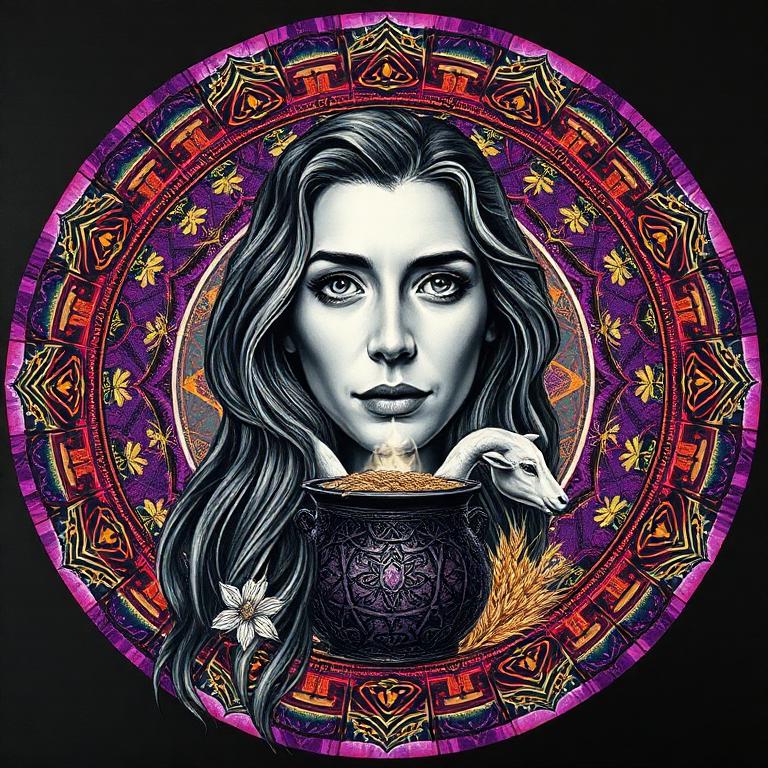
Cerridwen
Welsh / Brythonic
Keeper of the Cauldron of Awen
Domains
InspirationTransformationHerbcraftRebirthPatient labourSymbols
Cauldron · White sow · Herbs · Grain of wheat · Year and a day
Lore
The chase that follows is the myth's heart: hare and greyhound, fish and otter, bird and hawk, grain and hen. She swallows him as a grain of wheat, carries him nine months and gives birth to Taliesin, the greatest poet. …
Medieval Wales; drawn from earlier Brythonic tradition

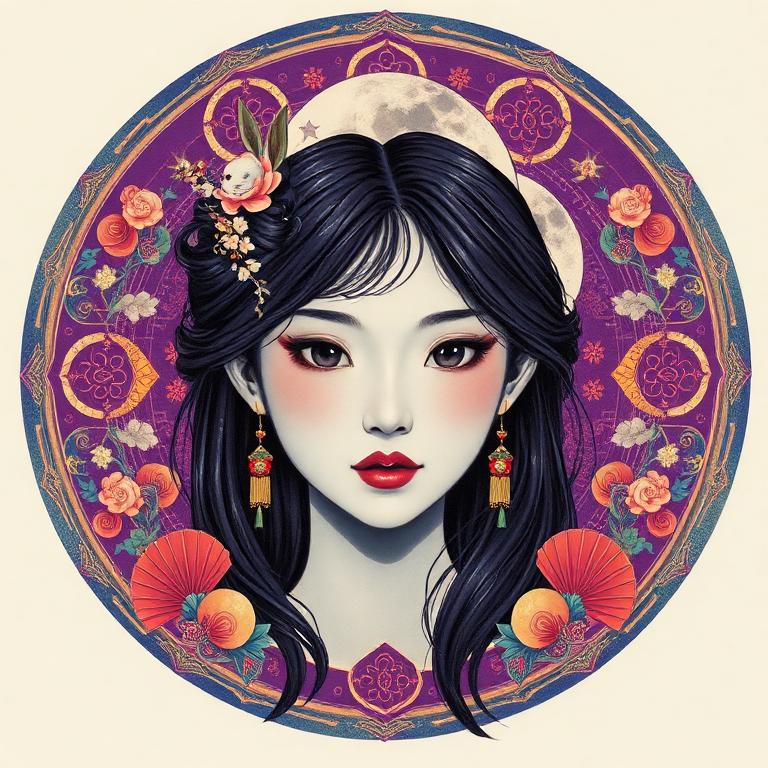
Chang'e
Chinese
Lady of the Moon
Domains
The moonSolitudeLongingBeautyConsequences of choiceSymbols
Full moon · Jade rabbit · Osmanthus tree · Elixir bottle · Mooncake
Lore
Every Mid-Autumn Festival, families eat mooncakes and look up at her, and Hou Yi is said to have set out her favourite fruits in the yard. It is the tenderest exile in mythology: she is not punished, exactly, and she is not coming back. …
China, attested from the Warring States period; living festival tradition

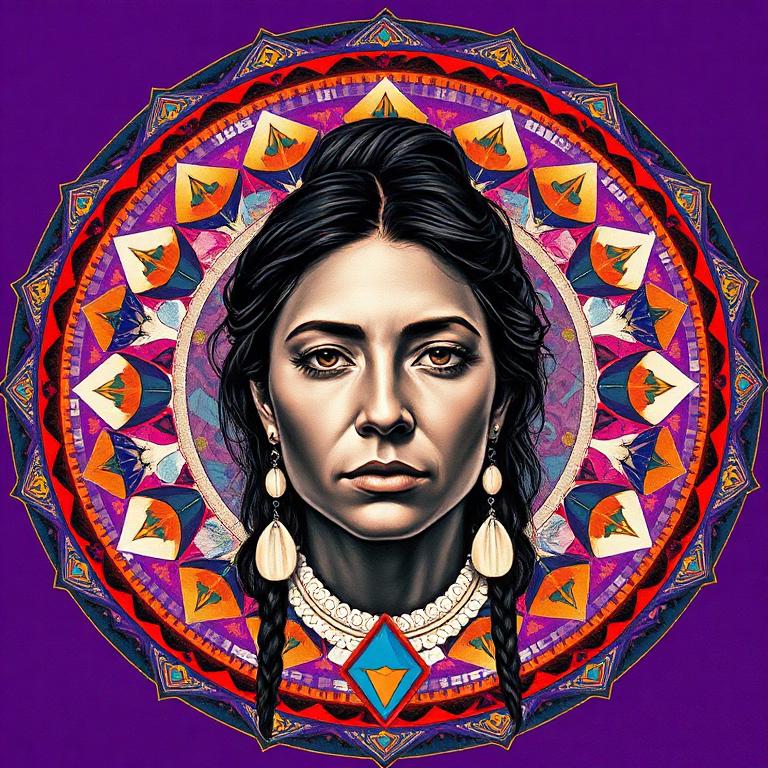
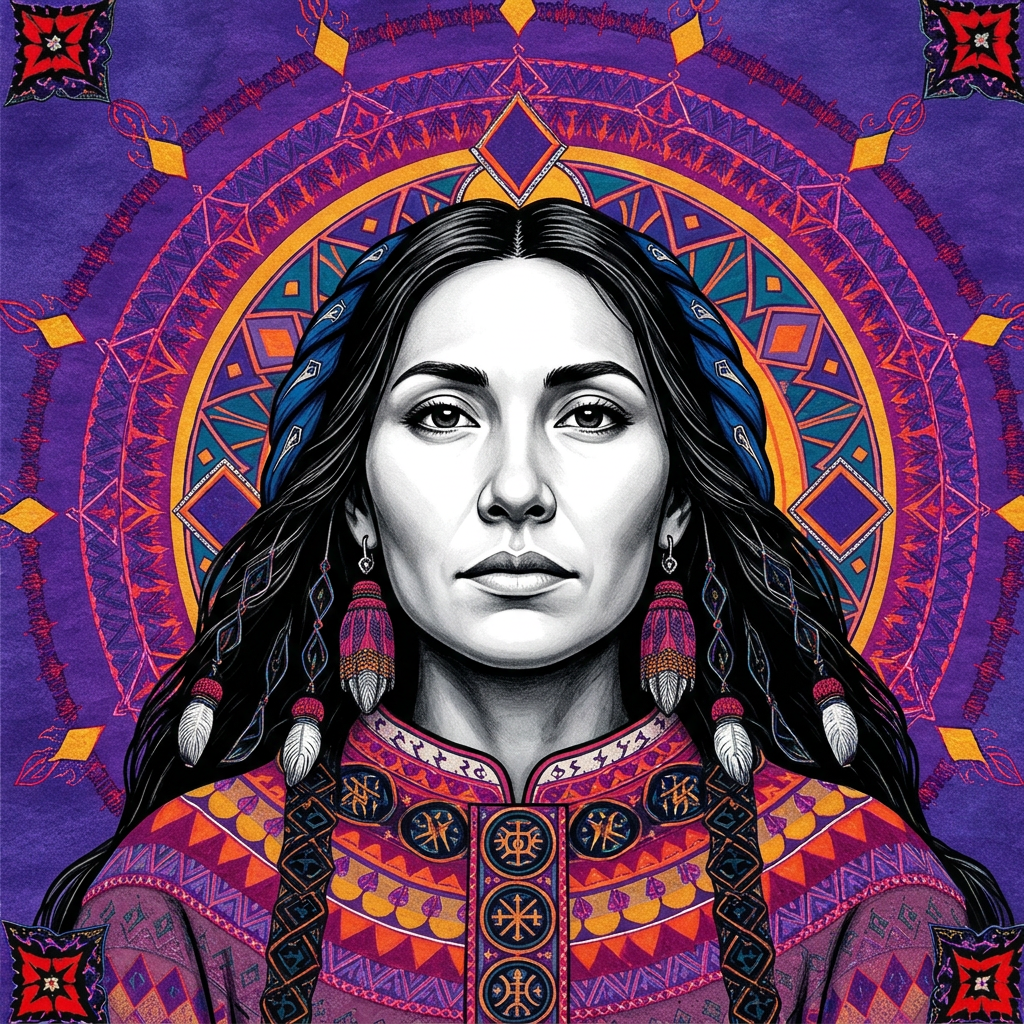
Changing Woman
Diné (Navajo) / Native American
Asdzáá Nádleehé, She Who Renews Herself
Domains
SeasonsThe life cycleCornWomanhoodRenewalSymbols
White shell · Corn · Four sacred mountains · Turquoise · Turning seasons
Lore
She made the first Diné clans from her own body and taught the ceremony that marks a girl's coming of age, which is still held. Publicly shared accounts stress her constancy: she is not fickle for changing, she is reliable because she changes. …
Diné tradition, American Southwest; living tradition

Coatlicue
Aztec / Mexica
She of the Serpent Skirt, Mother of the Gods
Domains
EarthBirth and deathMotherhoodDevouring and givingRenewalSymbols
Serpent skirt · Skull pendant · Obsidian blade · Marigold · Eagle feather
Lore
She conceived Huitzilopochtli from a ball of feathers while sweeping; her daughter Coyolxauhqui led four hundred siblings to kill her for the shame, and the son was born armed and defended her. The story sits exactly on the line the earth sits on — the same ground receives corpses and grows corn.
Central Mexico, Postclassic Mexica period, c. 1300–1521 CE

Cybele
Phrygian / Anatolian
Magna Mater, Mother of the Mountain
Domains
Wild natureCitiesFertilityEcstatic ritesBoundaries of the tameSymbols
Mural crown · Lions · Pine cone · Tambourine · Mountain rock
Lore
Her rites were loud — drums, cymbals, dancing — and unsettling to Roman propriety, which regulated them while never daring to stop them. She is the mother who cannot be domesticated, the reminder that what protects the city comes from outside its walls.
Anatolia from c. 1200 BCE; Rome from 204 BCE

Daēnā
Persian (Zoroastrian)
Insight, the Self That Meets You
Domains
ConscienceInsightReligion as inner visionSelf-knowledgeJudgementSymbols
Mirror · Bridge · Scroll · Maiden of the crossing · Flame
Lore
At the Chinvat bridge the soul meets its own daēnā in the form of a figure whose beauty exactly matches the life it lived. Nobody is sentenced by a stranger; you are met by the self you made.
Iran, Avestan tradition through Pahlavi commentary

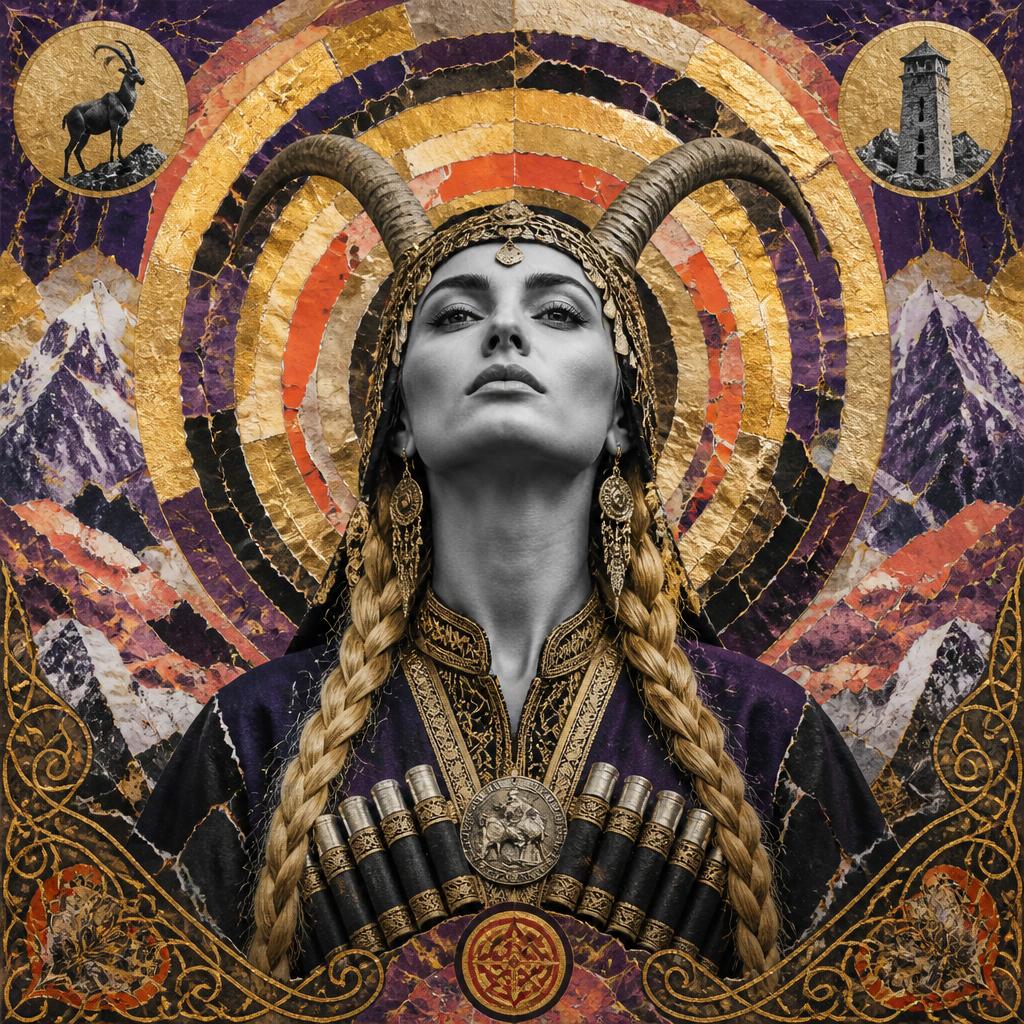
Dali
Georgia / Svan Caucasus
Golden-Haired Mistress of the High Peaks
Domains
Wild animalsThe huntMountain peaksBeauty and dangerLimitsSymbols
Ibex and chamois · Golden hair · Cliff ledge · Snow · Hunter's rifle laid down
Lore
Svan ballads tell of hunters who climbed to her ledge and returned with impossible fortune, then fell from the same cliff after speaking of her in the village. Her golden hair is the thread in these songs: to be favoured by Dali is to be bound by a contract, and the terms are restraint and silence.
Svaneti and the Georgian Caucasus — pre-Christian highland tradition surviving in ballads and hunting custom

Danu
Ireland / Celtic
Mother of the Tuatha Dé Danann
Domains
AncestryRivers and flowAbundanceLineageThe unseen sourceSymbols
River water · Spiral · Green mound · Standing stones · Amber
Lore
The scholars' argument about whether she was ever worshipped is itself the teaching. Some sources run so deep they are only visible in what grew out of them. …
Ireland and wider Celtic Europe; attested through medieval Irish manuscripts

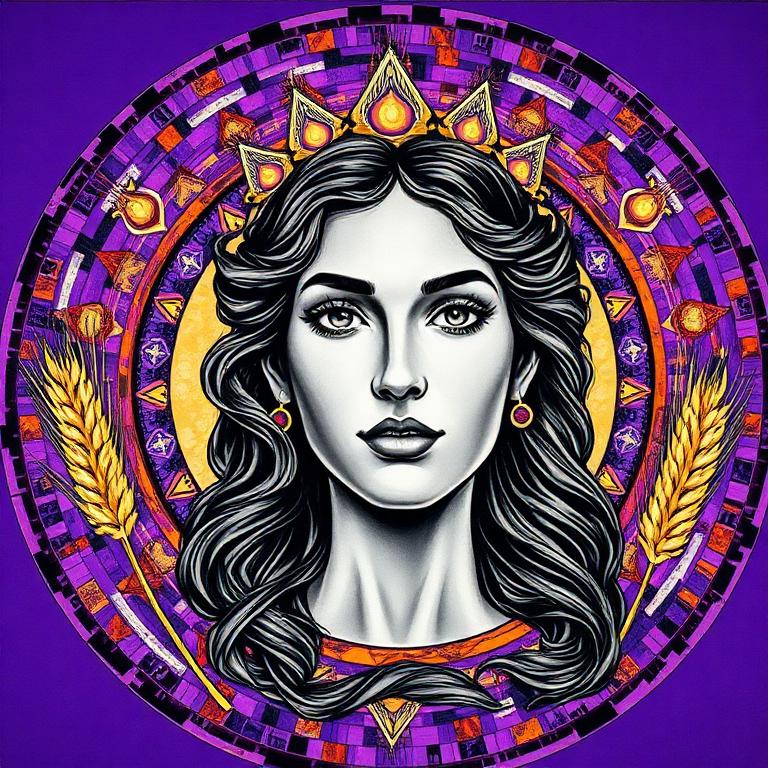
Demeter
Greece
Bringer of the Seasons, Mother of Grief
Domains
Grain and harvestMotherhoodGriefThe seasonsSacred mysteriesSymbols
Sheaf of wheat · Twin torches · Poppy · Pig · Barley drink (kykeon)
Lore
Her grief is not decorative — it has leverage. She stops the harvest, and starving humanity means starving gods with no one left to sacrifice to them. …
Greece, Bronze Age through the Roman period; Eleusinian Mysteries observed for two millennia

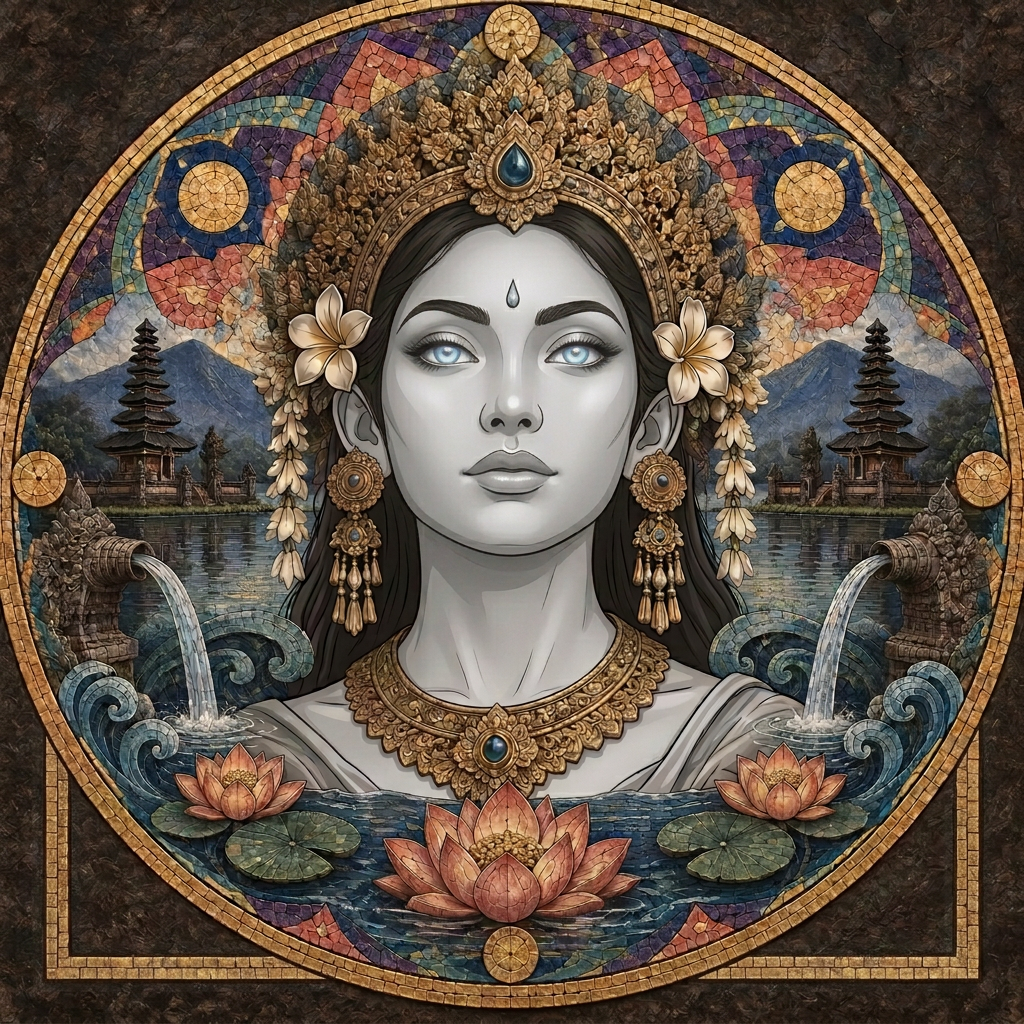
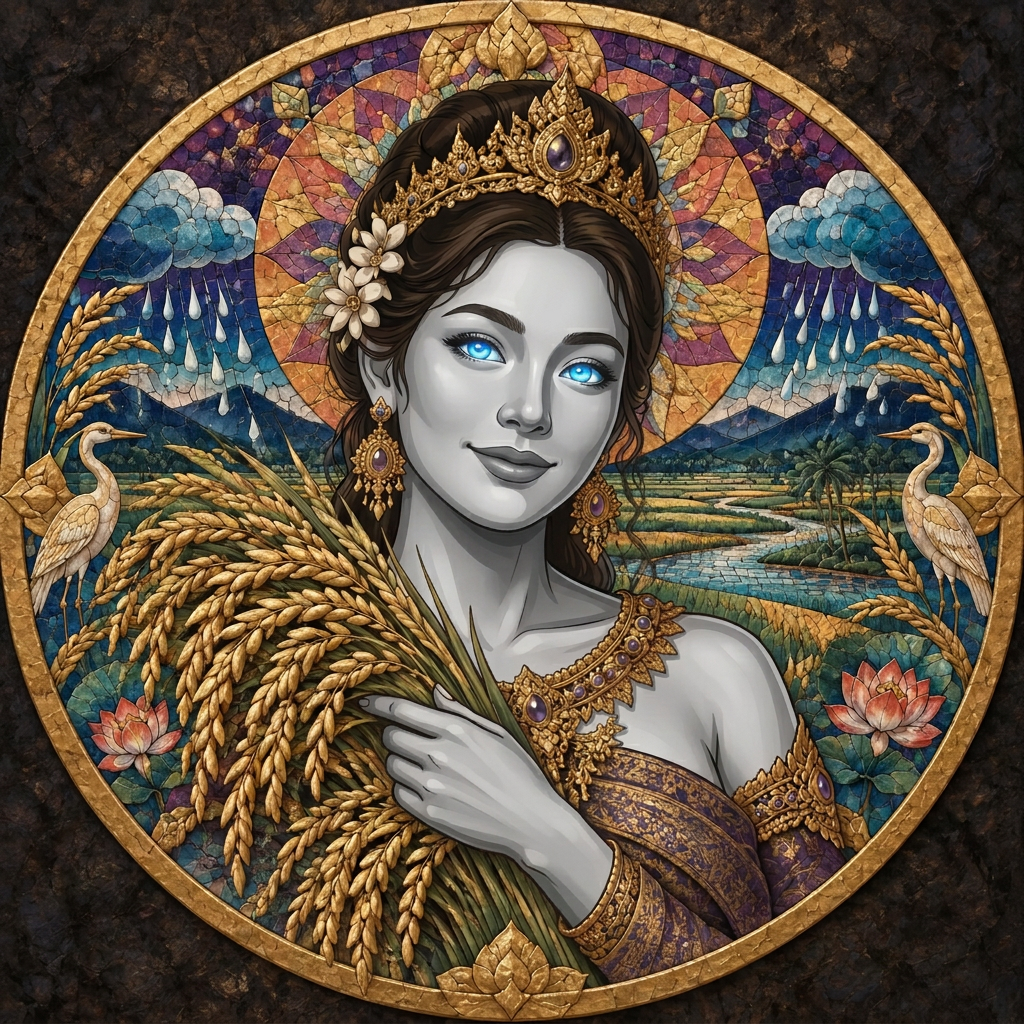
Dewi Sri
Java and Bali / Southeast Asia
Rice Mother, Lady of the Full Barn
Domains
Rice and foodFertilityHousehold prosperityWeavingLife and deathSymbols
Rice stalks · Cili figure · Snake and mouse · Woven mat · Coconut
Lore
Her rites are the opposite of grand: don't waste rice, don't step over the harvest, keep the granary respectful. She rules the everyday miracle of there being enough dinner, and Balinese and Javanese households still make her small figures at planting. …
Java and Bali; pre-Hindu roots, observed continuously through to the present

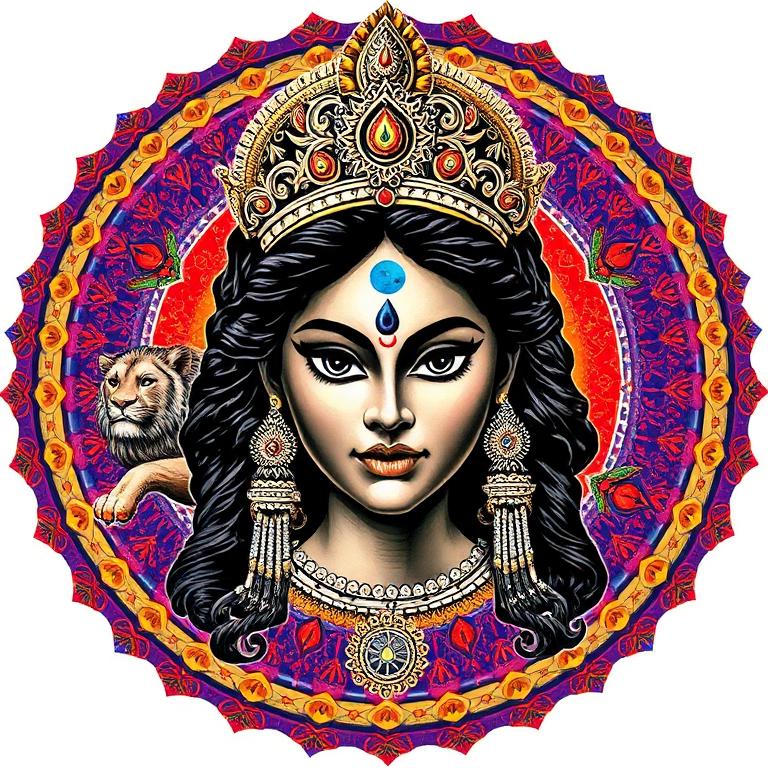
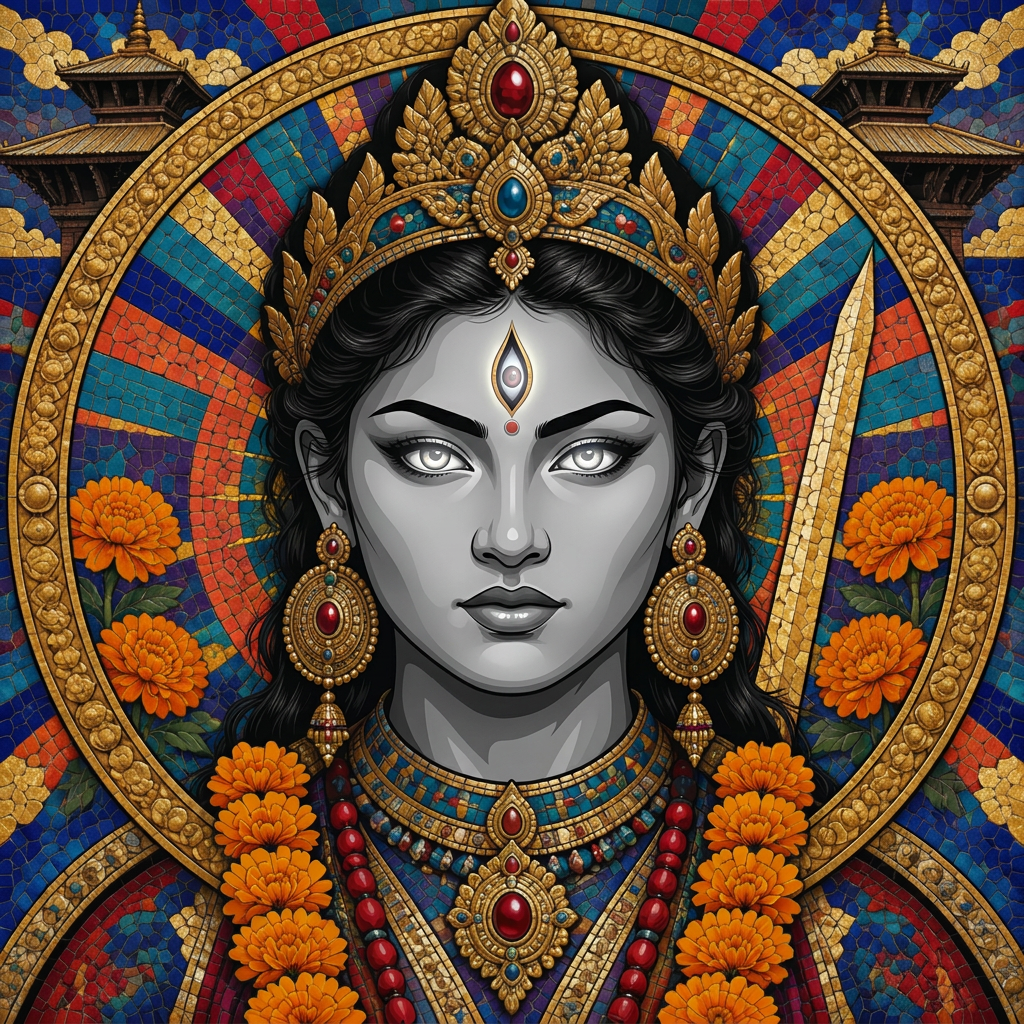
Durga
Hindu / South Asian
The Invincible, Slayer of the Buffalo Demon
Domains
ProtectionVictoryCourageRighteous warMotherhoodSymbols
Lion · Trident · Conch · Lotus · Ten arms
Lore
She is composed while she fights — the sculptures show her face calm, foot on the demon, no strain. Her ten arms carry every god's weapon: she is what happens when many powers agree to act through one focused person. …
India, c. 6th century CE onward; living tradition

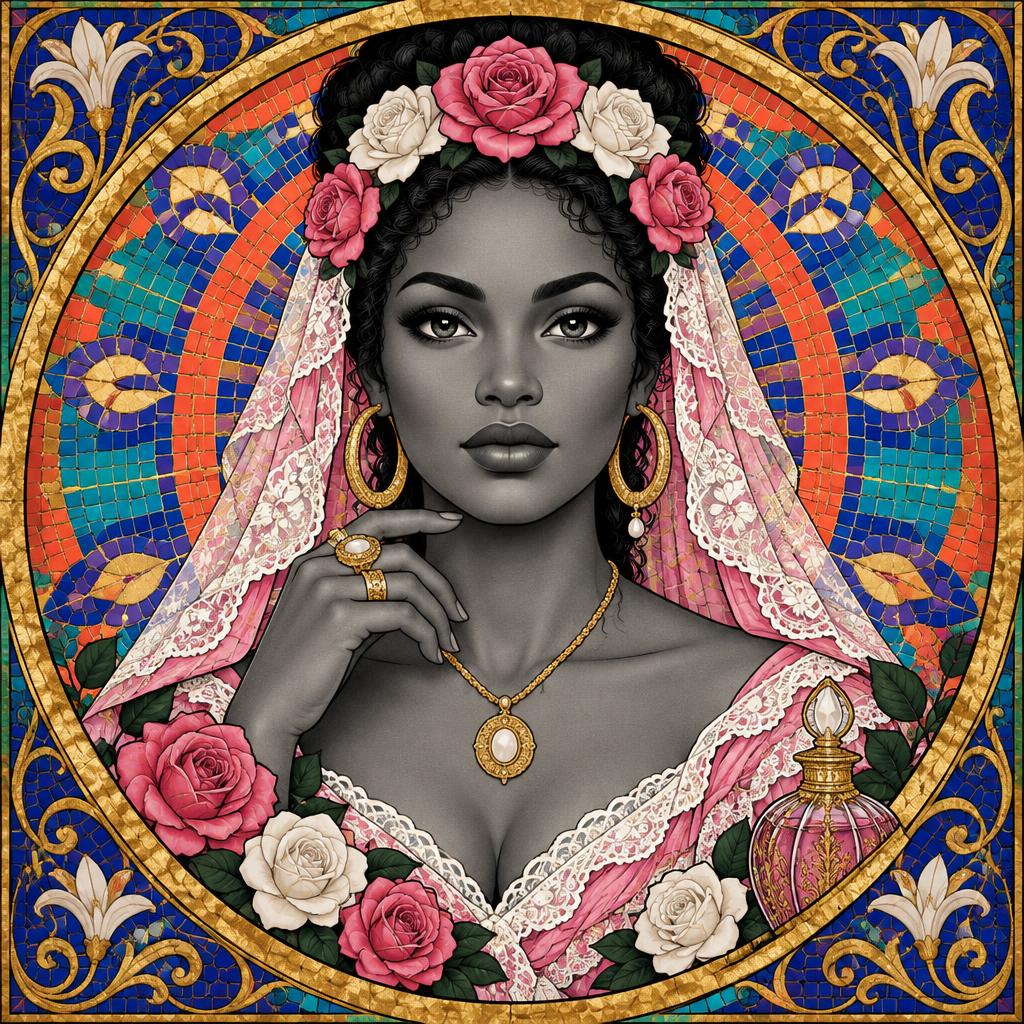
Erzulie Freda
Haiti / Caribbean
Lwa of Love, Luxury and Tears
Domains
LoveBeautyLuxuryLongingArtistrySymbols
Gold rings · Lace and perfume · Mirror · Pink champagne · Pierced heart
Lore
Her weeping is not weakness; it is the price of refusing to lower the standard. Devotees keep her table immaculate — perfume, sweets, three wedding rings — and she gives back charm, artistry and a sharpened sense of what beauty is for. …
Haiti, from the colonial period to the present within living Vodou tradition

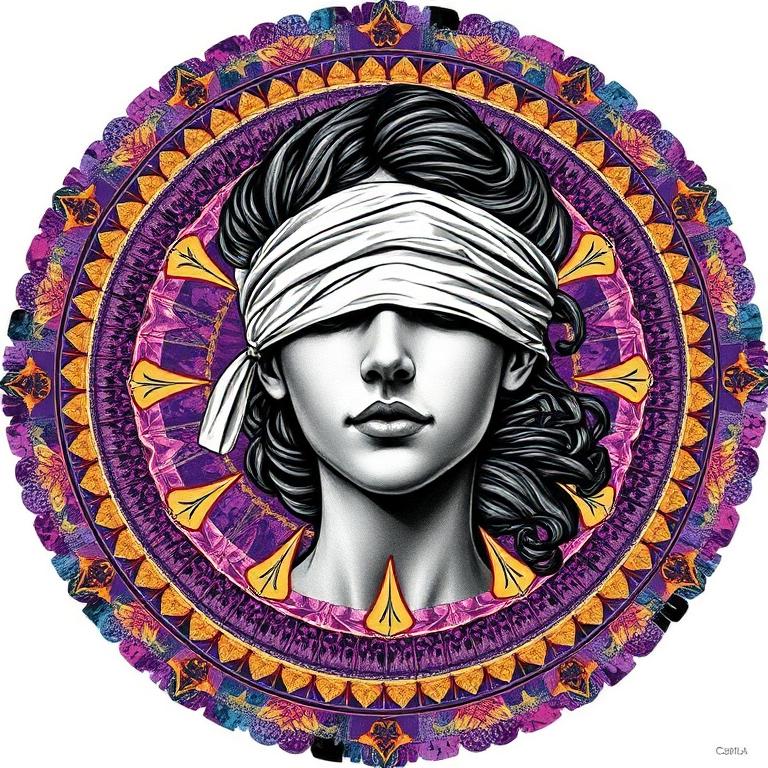
Fortuna
Roman / Italic
Lady of the Turning Wheel
Domains
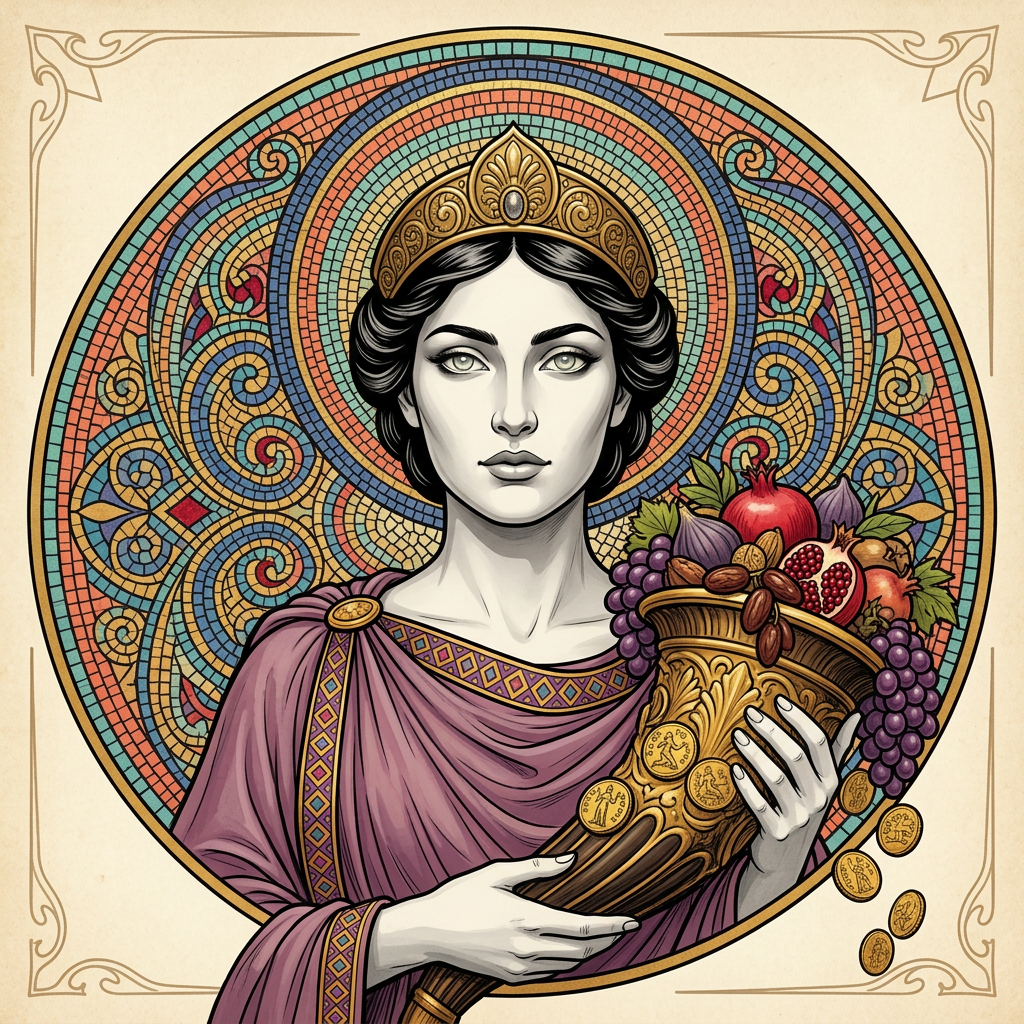
LuckFateChanceAbundanceReversalSymbols
Spoked wheel · Cornucopia · Ship's rudder · Blindfold · Sphere
Lore
Her wheel became medieval Europe's favourite image: kings rising on one side, falling on the other, the same wheel, no malice. Boethius wrote her speech from prison — she never promised to stay. …
Rome and Italy, c. 6th century BCE through late antiquity

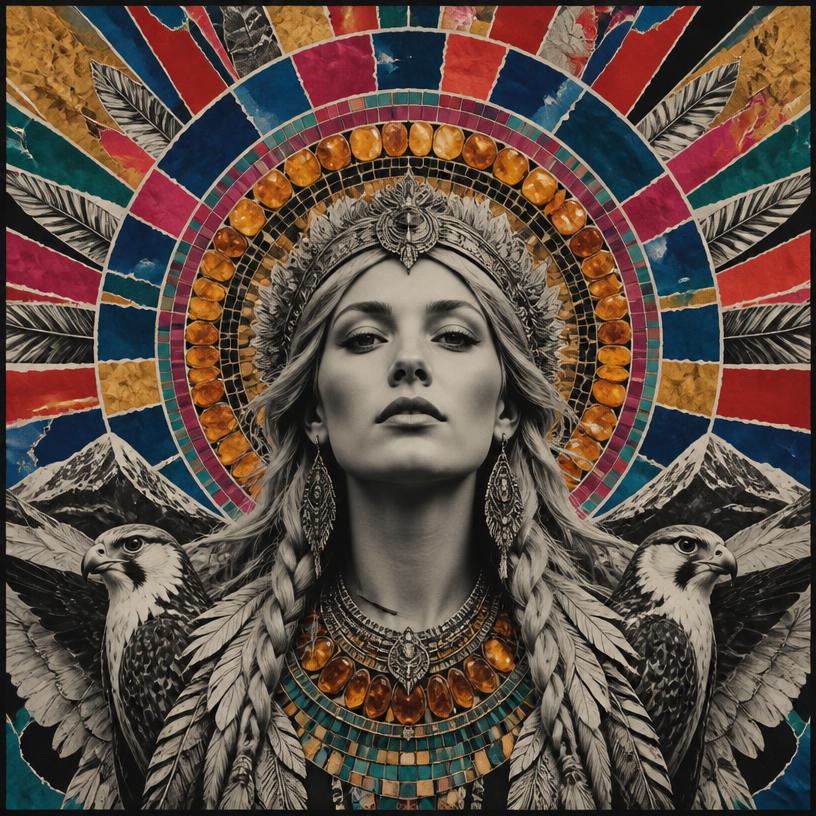
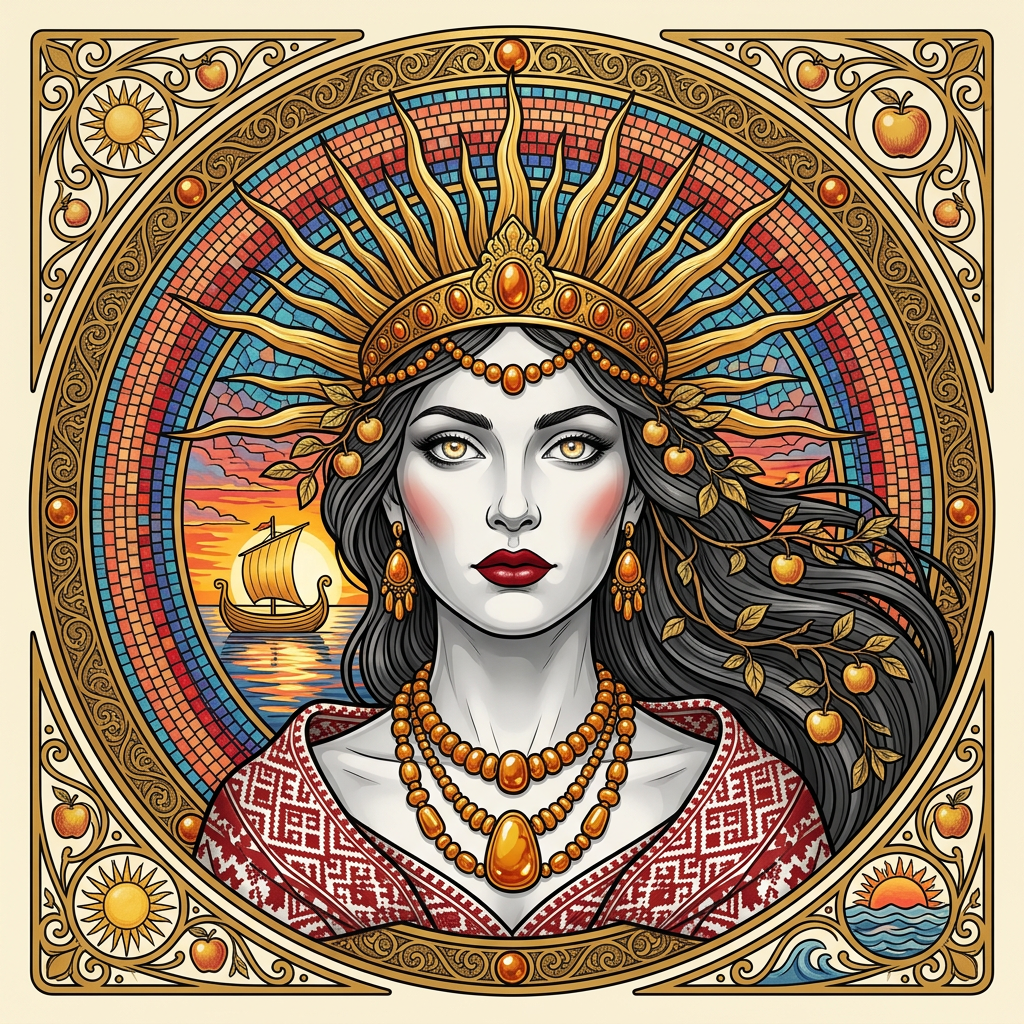
Freyja
Norse / Scandinavia
Lady of the Amber Necklace
Domains
Love and desireGoldSeiðr magicWar and the honoured deadProphecySymbols
Brísingamen necklace · Falcon-feather cloak · Cat-drawn chariot · Boar Hildisvíni · Tears of red gold
Lore
The Eddas make her the first teacher of seiðr — trance-worked magic that even Odin learned from her — and give her the pick of the slain before Valhalla, so she is never only a goddess of softness. Her hunt for Óðr across unknown lands under assumed names is the oldest Norse portrait of longing as a journey rather than a wound.
Scandinavia, Viking Age c. 800–1100 CE, recorded in 13th-century Icelandic manuscripts

Frigg
Norse / Swedish
Queen of Ásgarð, Keeper of Keys
Domains
ForesightMarriage and householdMotherhoodSpinningDiscretionSymbols
Ring of keys · Distaff and spindle · Mistletoe · Falcon cloak · Fensalir hall
Lore
Her great story is Baldr's. Foreseeing her son's death, she extracted an oath of protection from every thing in the world — and skipped the mistletoe as too young to matter. …
Viking Age Scandinavia

Gaia
Ancient Greece
Broad-Breasted Earth, First Mother
Domains
EarthOriginsOathsProphecyGrowth and burialSymbols
Soil · Grain · Serpent · Cornucopia · Deep caves
Lore
When Ouranos crushed her children back inside her, she armed Kronos with a sickle — the earth does not endure abuse forever, it grows the tool of its own release. Everything born of her returns to her, and she is not frightened by it.
Greece, primordial cult with roots in the Bronze Age

Ganga
Hindu / South Asian
The River Descended from Heaven
Domains
PurificationRiversForgivenessRelease of the deadFlowSymbols
River water · Makara · Floating oil lamps · Lotus · Pot of water
Lore
Millions bathe in her to release wrongdoing and carry the dead to her banks. She is famously indiscriminate: she does not check whether you deserve the water. …
India, Vedic period onward; living tradition

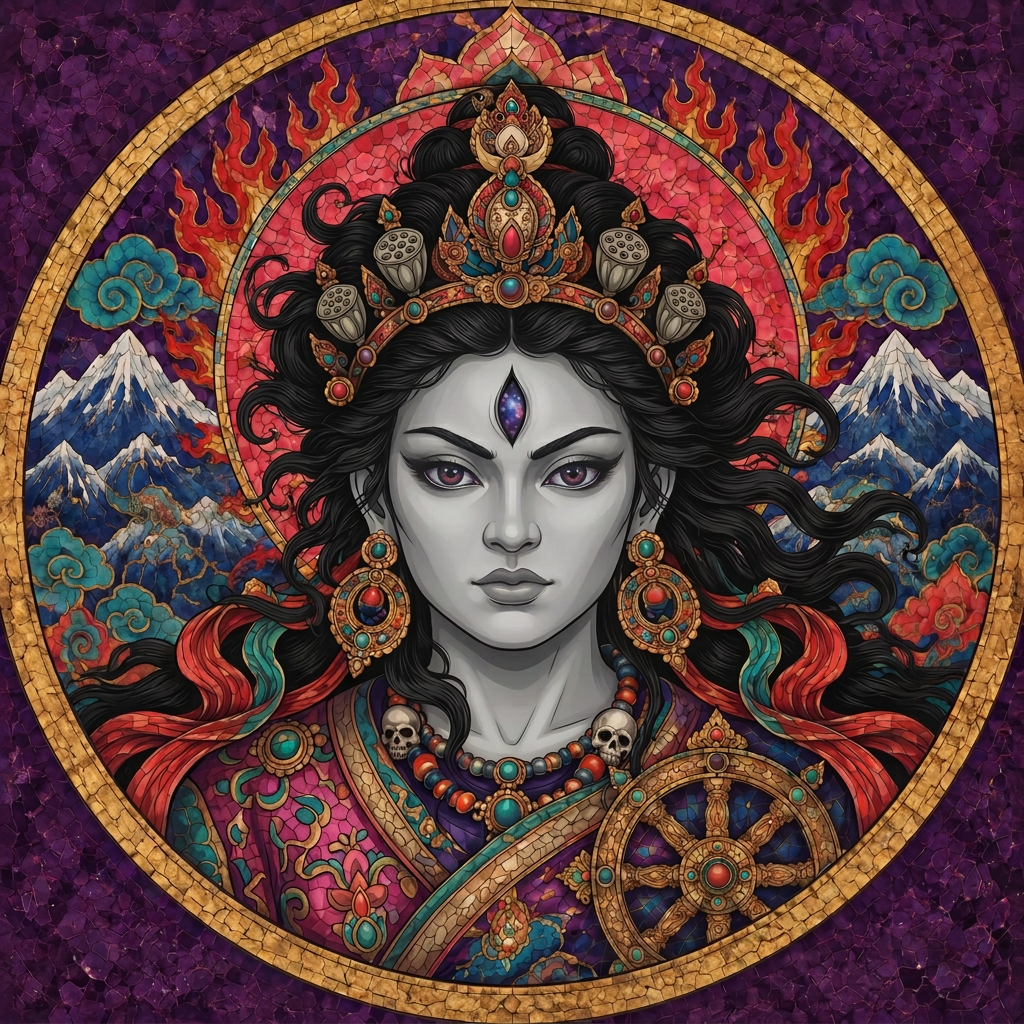
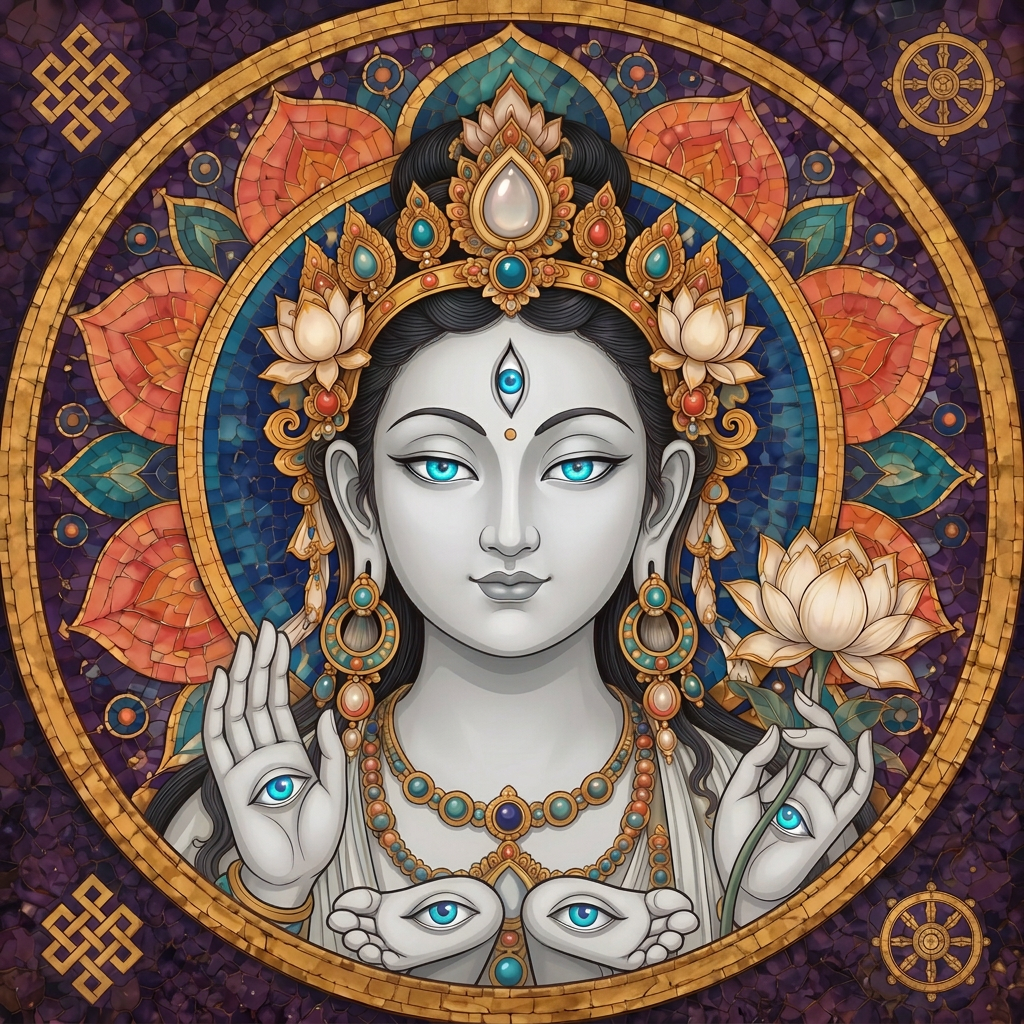
Green Tara
Tibetan Buddhist
Swift Liberator, Mother of All Buddhas
Domains
CompassionSwift helpFearlessnessProtection on journeysActionSymbols
Blue utpala lotus · Half-extended right leg · Green light · Mantra beads · Open right hand
Lore
In one account she was a princess told she should pray to be reborn male to reach enlightenment, and vowed instead to attain it in a woman's body and to keep returning in one. She is the goddess of the fast response — the help that arrives while you are still panicking, and the courage to be the one who moves first.
India and Tibet, c. 6th century CE onward; living tradition

Guanyin
China
She Who Hears the Cries of the World
Domains
CompassionMercyRescueHealingRefuge for the desperateSymbols
Willow branch · Vase of pure dew · White robe · Lotus · Thousand arms
Lore
The vow that defines her is a refusal: standing at the threshold of nirvana, she turned back and said she would not go while anyone was still suffering. Her mercy is not soft-focus. …
China from roughly the Tang dynasty to the present, across East Asia

Haŋwí
Lakota
The Moon, Companion of the Sun
Domains
MoonNight travelDignity after shameTime-keepingCompanionshipSymbols
Crescent moon · Night sky · Quilled star · Buffalo robe · Morning star
Lore
Her withdrawal is not defeat but self-possession: she takes her own domain and rules it. She marks the months and lights the traveller who moves after dark.
Northern Plains; living Lakota tradition

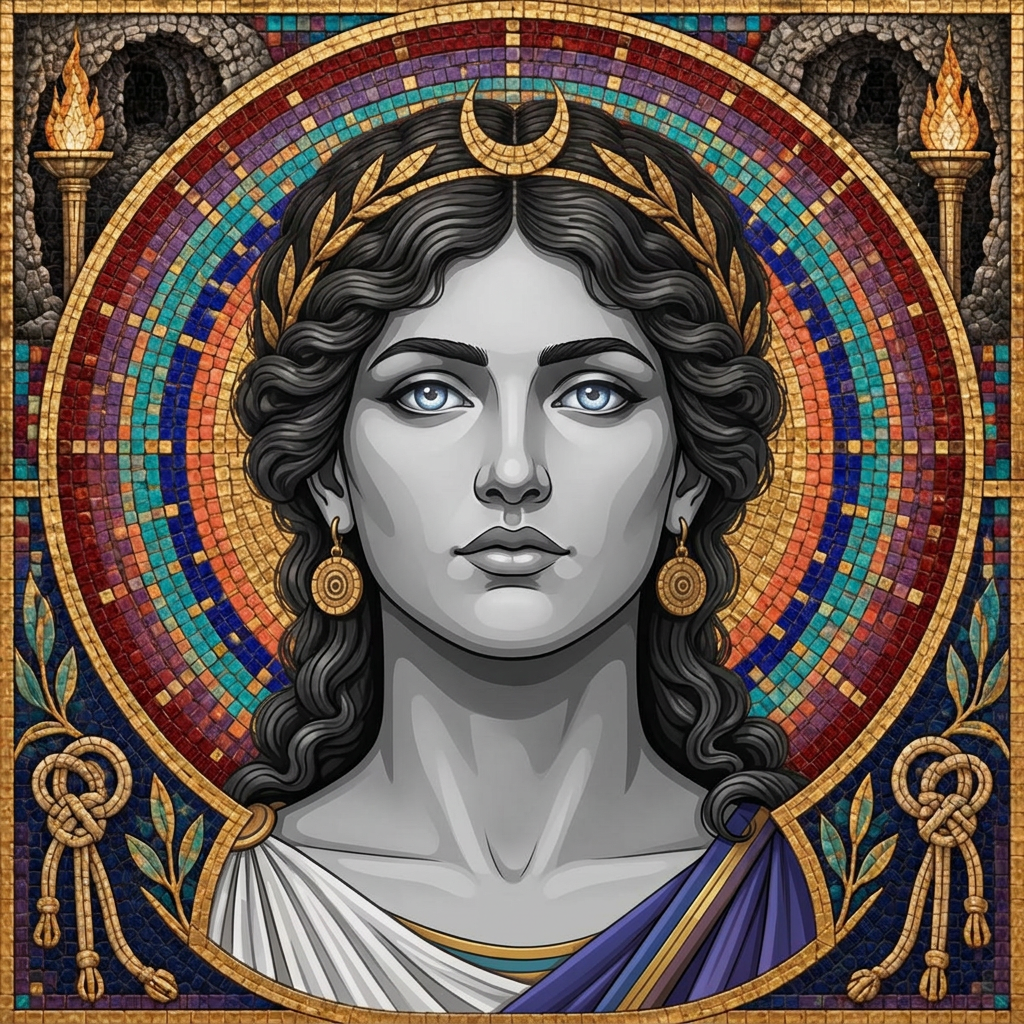
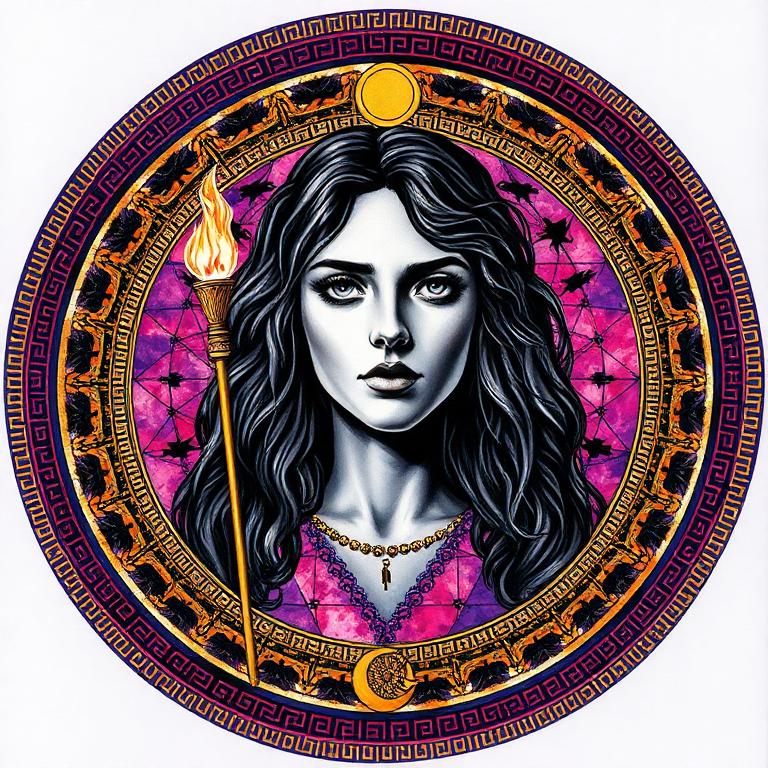
Hekate
Greek / Anatolian
Lady of the Crossroads, Torchbearer
Domains
CrossroadsWitchcraftThresholdsThe moonGuidance in the darkSymbols
Twin torches · Keys · Black dog · Crescent moon · Three-way junction
Lore
Households left her a supper at the crossroads each new moon, food that the poor could take. She holds keys because she governs doorways: not the room you are leaving or entering, but the threshold itself, and she is the only one willing to stand there while you decide.
Archaic Greece and Caria, c. 700 BCE onward

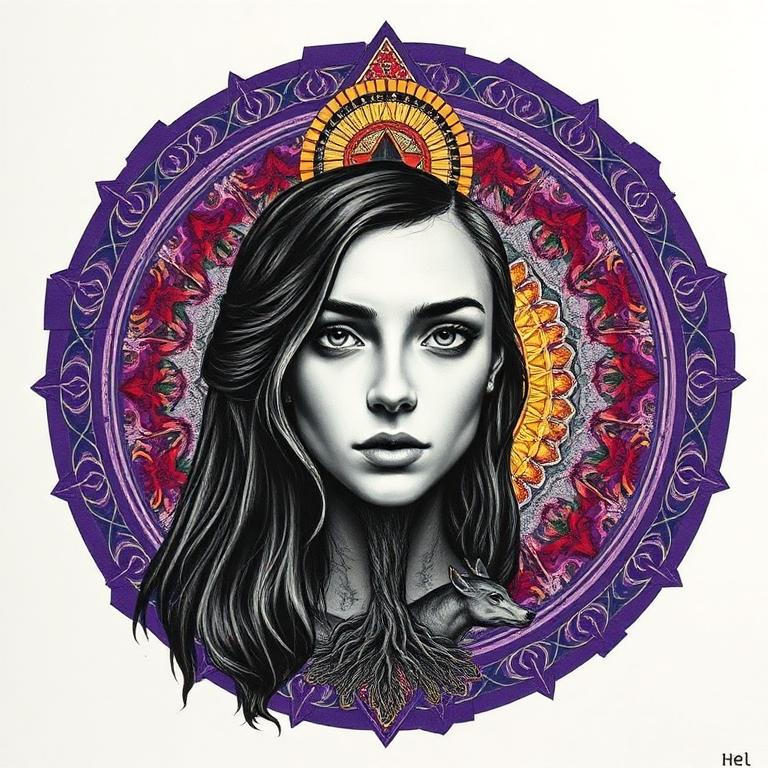
Hel
Norse
Keeper of the Quiet Hall
Domains
Death by age and sicknessRestImpartial hospitalityBoundariesThe unglamorous endSymbols
Gate · Hall and set table · Hound · Tree roots · Half-light
Lore
When the gods begged for Baldr back she agreed on one condition: every single thing in the world must weep for him. One giantess refused, and Baldr stayed. …
Scandinavia, Viking Age

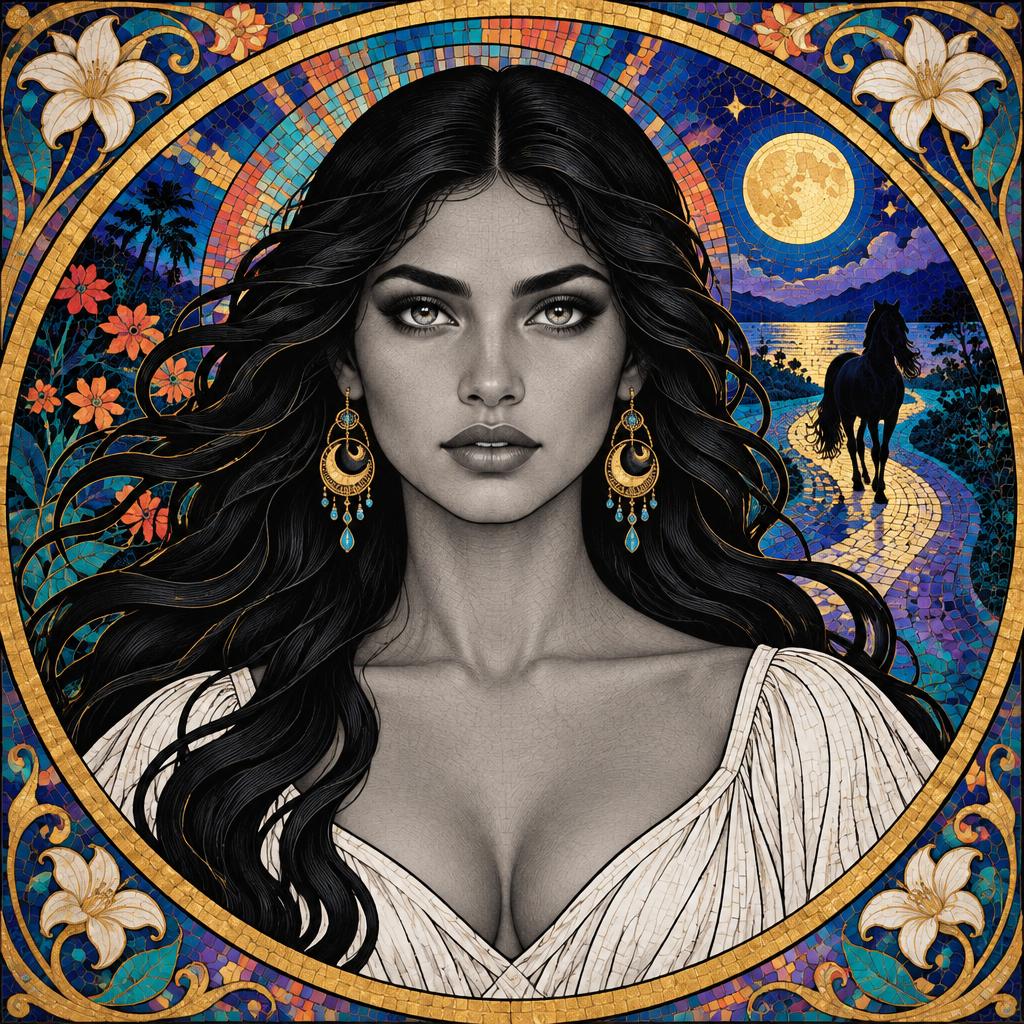
Hera
Ancient Greece
Queen of Heaven, Keeper of the Vow
Domains
MarriageSovereigntyWomen's lifecyclesOathsLegitimate ruleSymbols
Peacock · Diadem · Pomegranate · Cow · Lily
Lore
Every year she bathed in a spring and was made a maiden again. Her anger in the myths is the anger of a sovereign whose covenant has been broken, not a nagging one: she holds the standard nobody else will.
Greece, from Mycenaean cult through the Roman period

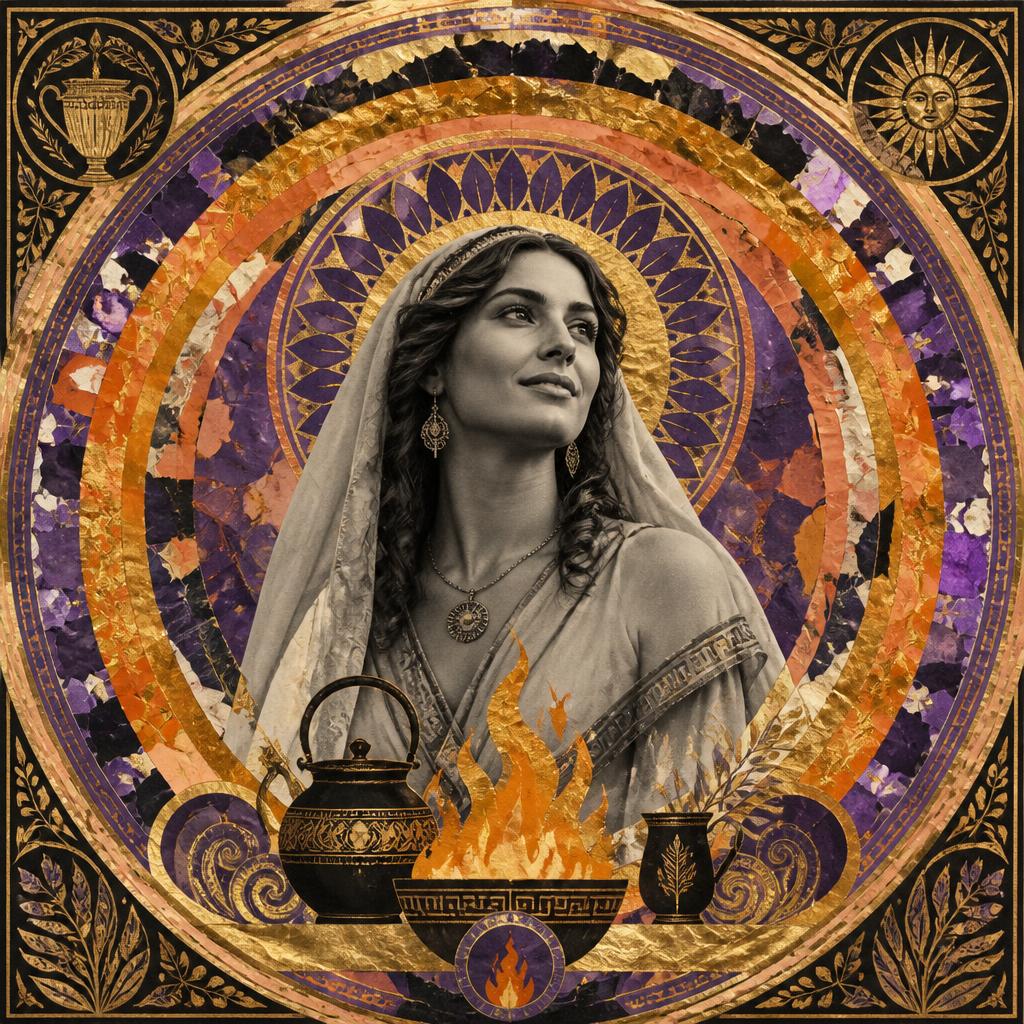
Hestia
Greece
First and Last of the Hearth Flame
Domains
The hearthHomeSanctuary and asylumSacrificial fireConstancySymbols
Living flame · Kettle and hearth · Veil · Circle of the household · First and last libation
Lore
Colonists carried embers from their mother city's hearth to light the new one, so Hestia is literally how a Greek city became itself somewhere else. She has almost no myths and almost no temples — because she is in every house, and a stranger who reached the hearth could not lawfully be turned out.
Greek world, Archaic through Hellenistic period (c. 800–100 BCE)

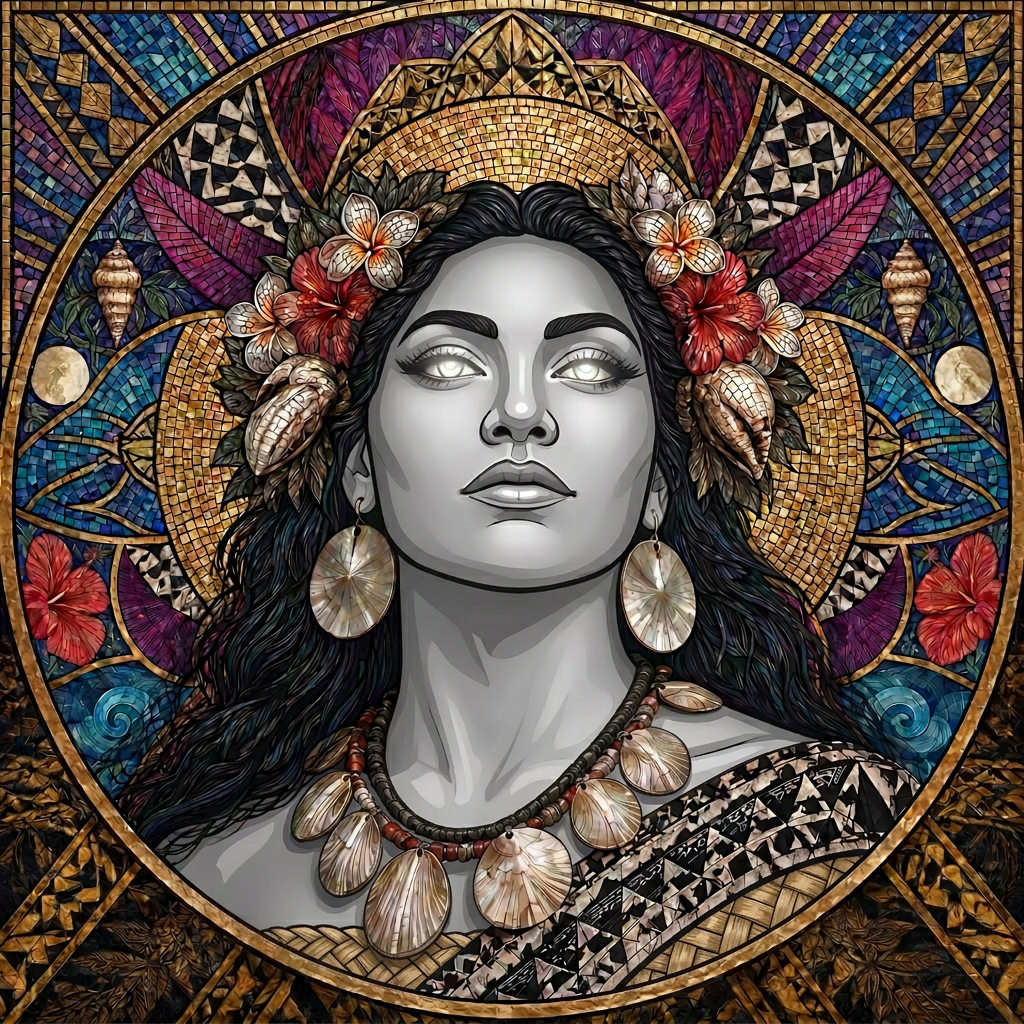
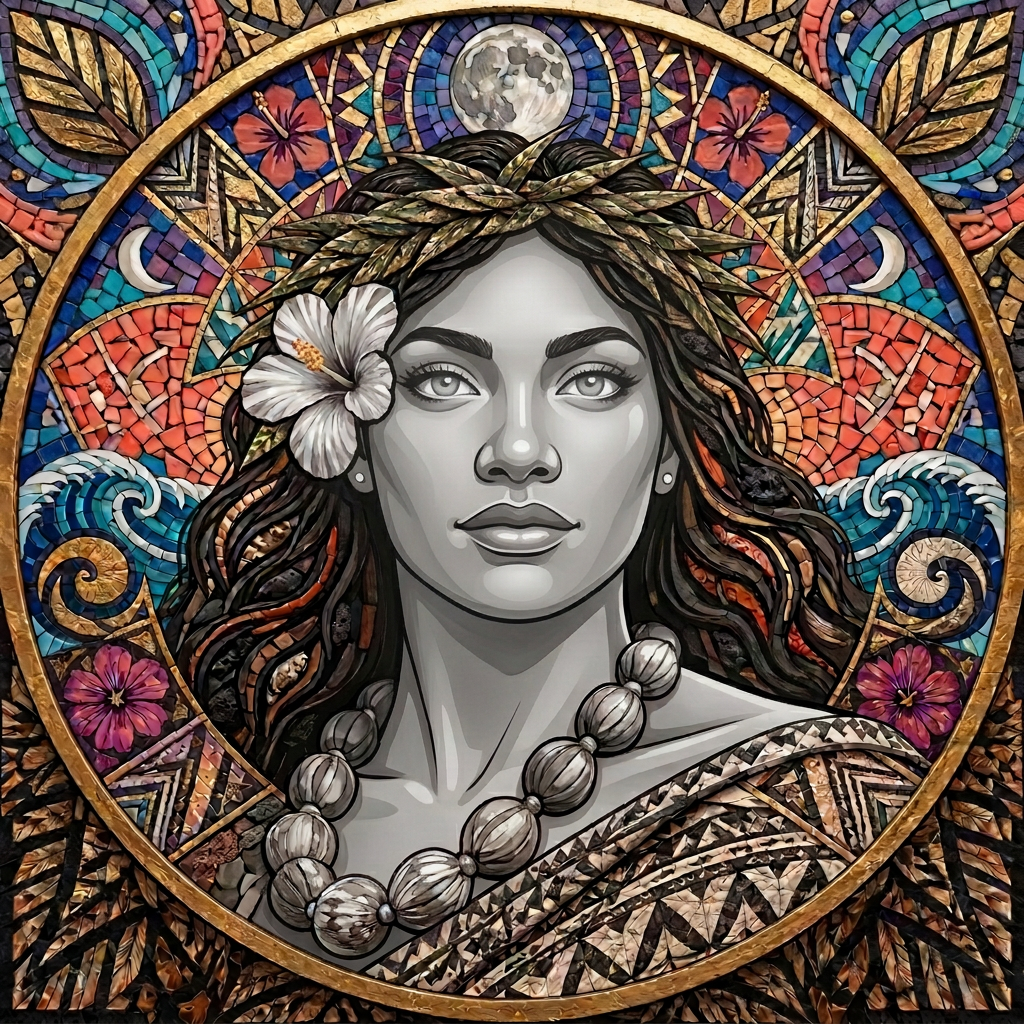
Hi'iaka
Hawaiian
Hi'iakaikapoliopele, Dancer of the Forests
Domains
HulaHealingForestsChantLoyal courageSymbols
Lehua blossom · Ferns · Pāʻū skirt · Chant and drum · New growth on lava
Lore
Her epic is the longest narrative in Hawaiian tradition, and it is about loyalty tested past its limit. She kept the promise, walked the whole island chain, and then refused to be destroyed by the sister she served. …
Hawaiian archipelago; oral epic tradition, still danced

Hina
Polynesian
Woman in the Moon
Domains
MoonTapa makingVoyagingWomen's craftsTidesSymbols
Moon phases · Tapa beater · Banyan bark · Tiare flower · Canoe
Lore
She is the goddess who left. Her myth is not punishment or abduction: she chose the moon over a household that would not stop asking. …
Ancestral Polynesia; carried across the Pacific by voyaging traditions

Hinglaj Mata
Pakistan / Sindh-Balochistan
Nani of the Desert Cave
Domains
Sacred power (shakti)PilgrimageDesert survivalProtectionVowsSymbols
Cave shrine · Red veil and chunri · Mud volcano · Hingol river · Coconut offering
Lore
Pilgrims traditionally walk, tie red cloth, and bathe in the Hingol before entering the cave; on the way they pass mud volcanoes treated as part of the rite. She is a goddess of vows kept under difficulty: the journey is deliberately hard, and completing it is the offering.
Balochistan and Sindh (Pakistan) — Hindu shakta tradition with Muslim veneration, living pilgrimage

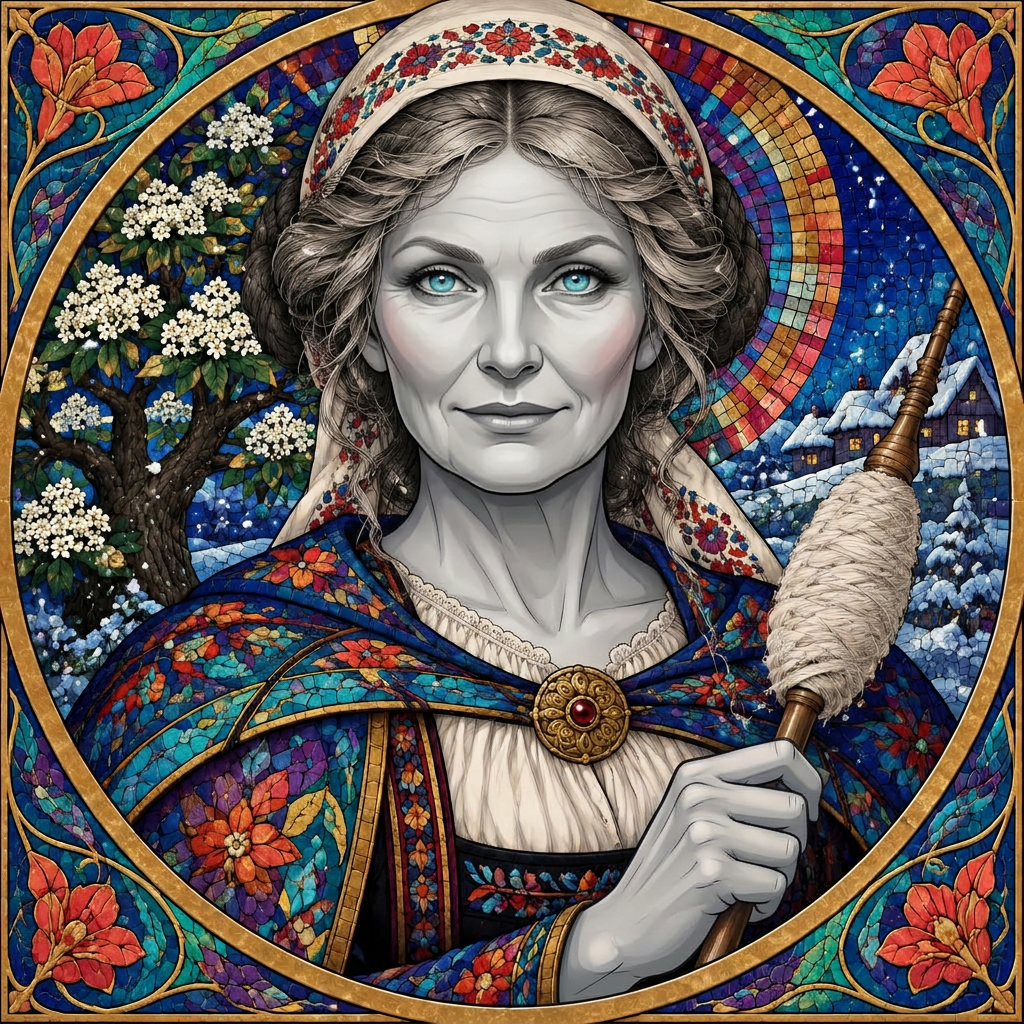
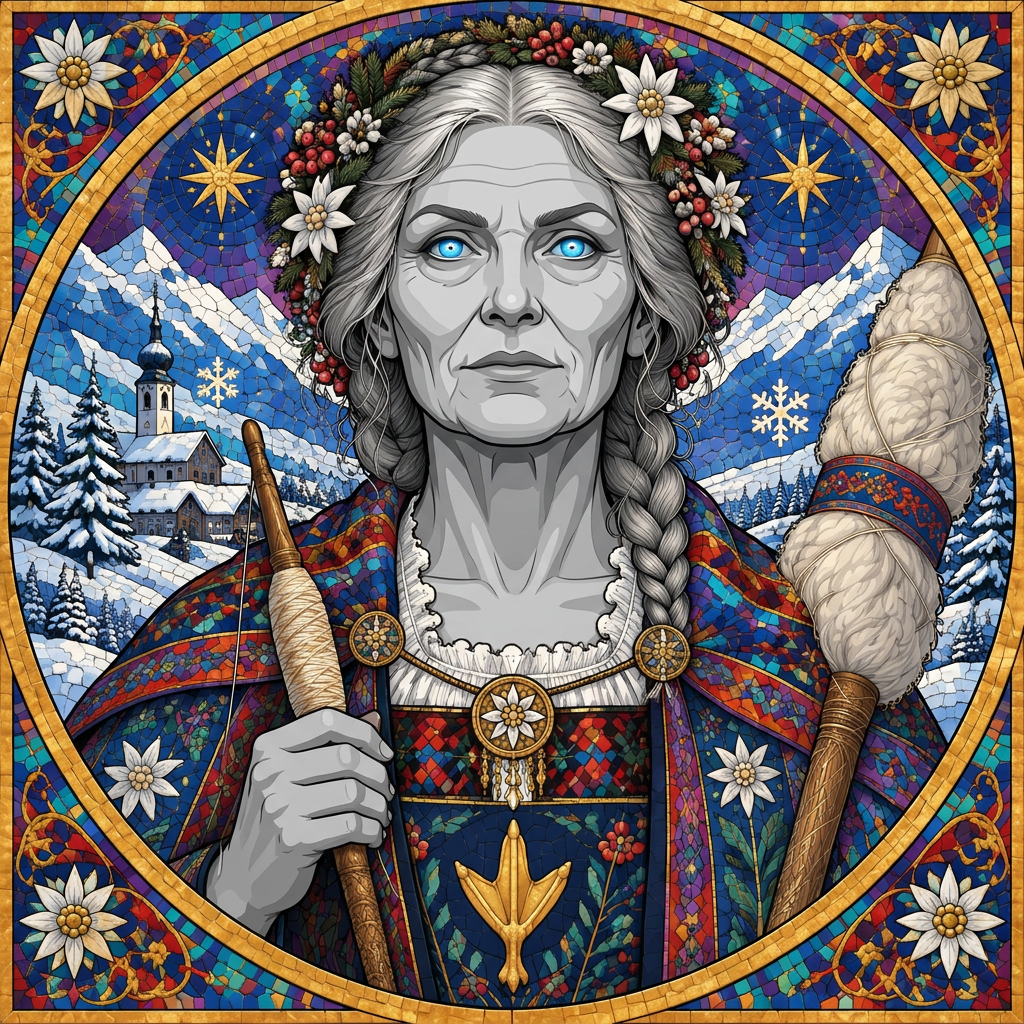
Holda
Germany / Germanic
Frau Holle, Keeper of the Winter House
Domains
WinterSpinning and diligenceHousehold orderSnowThe deadSymbols
Spindle and distaff · Feather bed · Elder tree · Well · Flax
Lore
Her season is the twelve nights of midwinter, when spinning must stop and the wheel rests. She rides with the dead through the storm and checks the linen cupboards of the living. …
German-speaking Central Europe; folklore recorded from the medieval period onward

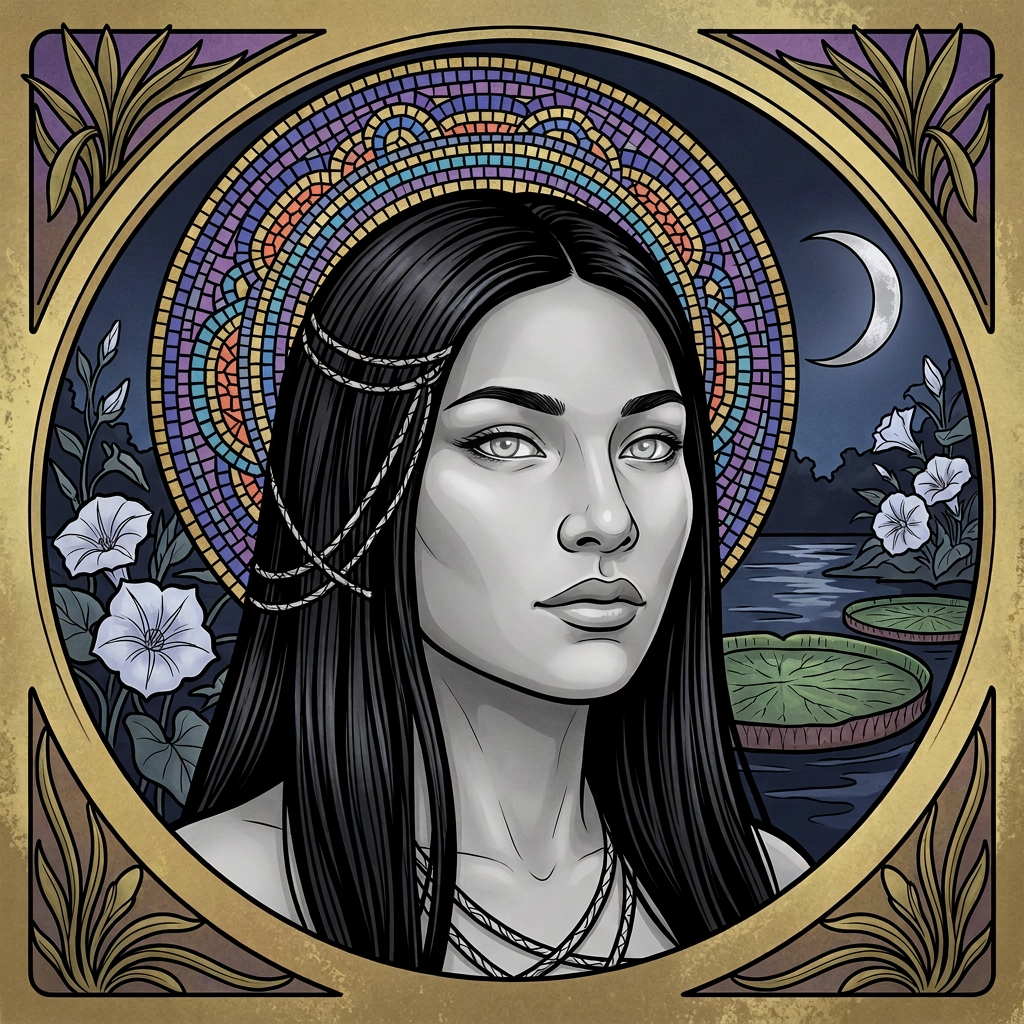
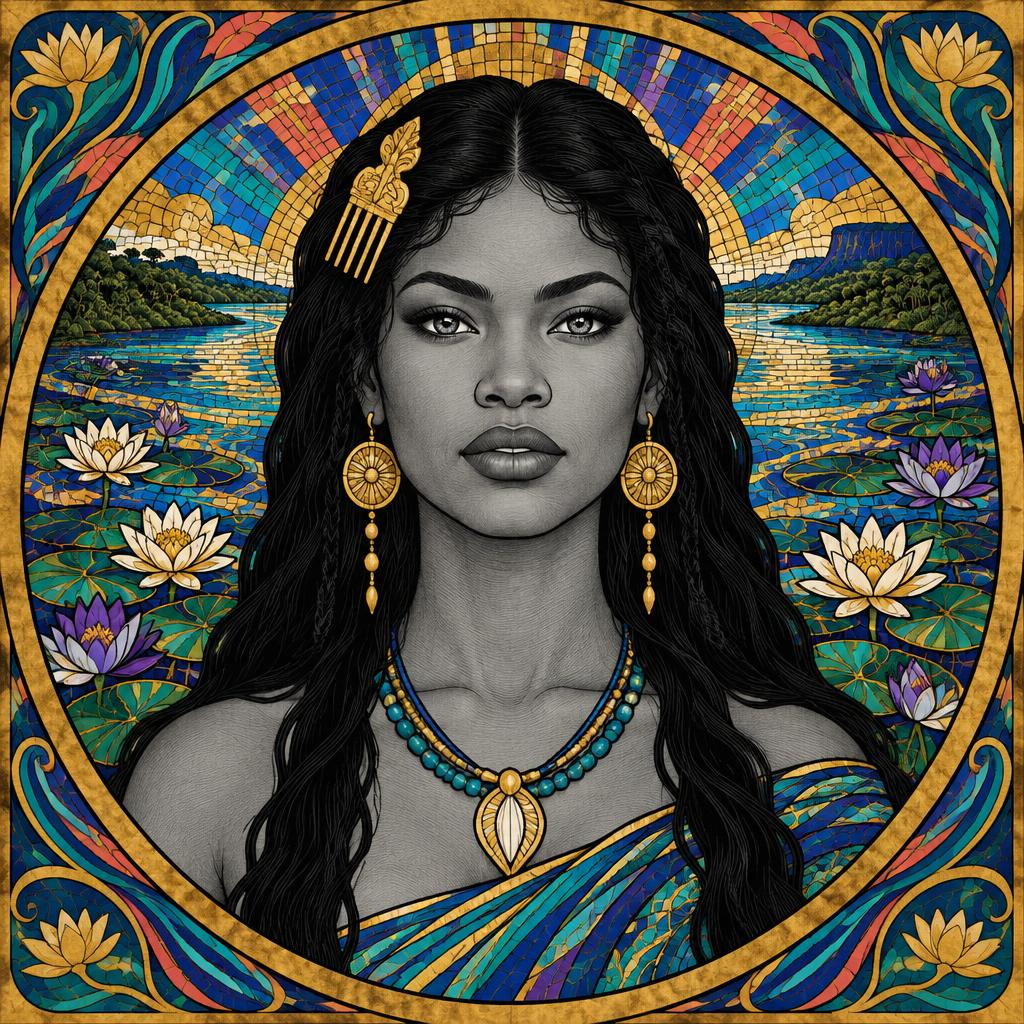
Iara
Brazil / Amazonian
Mother of Waters, Song of the River Bend
Domains
Rivers and lakesEnchantmentBeautyDepths and the unconsciousWarningSymbols
Green river water · Long black hair · Water lily (vitória-régia) · Fish tail · Evening song
Lore
Older Tupi tellings make her a warrior daughter drowned by her brothers and taken up by the river, so her enchantment carries an old injury. Riverside communities still treat the dusk hour and the still bend as hers: some water is not for entering, and some beauty is a boundary rather than an invitation.
Amazon basin, Brazil — Indigenous Tupi tradition carried into Brazilian folklore, living tellings

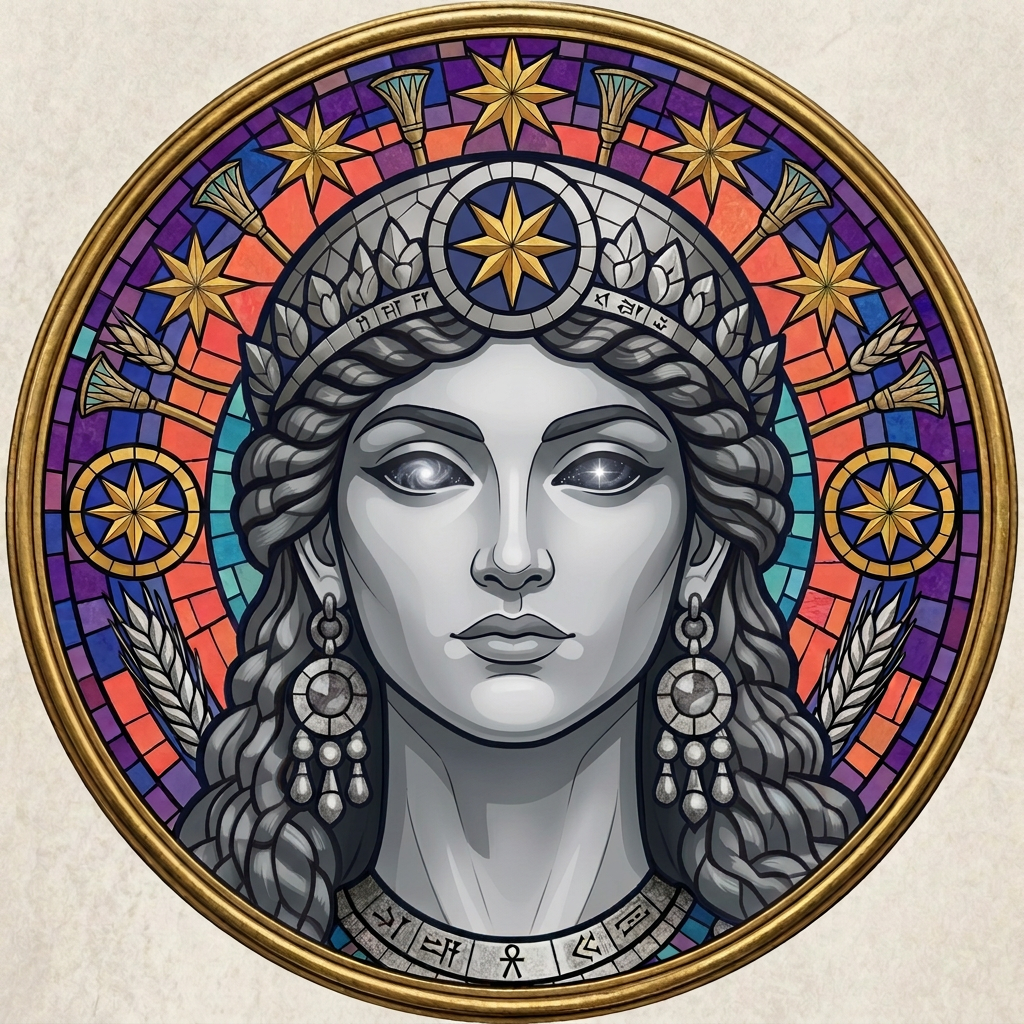
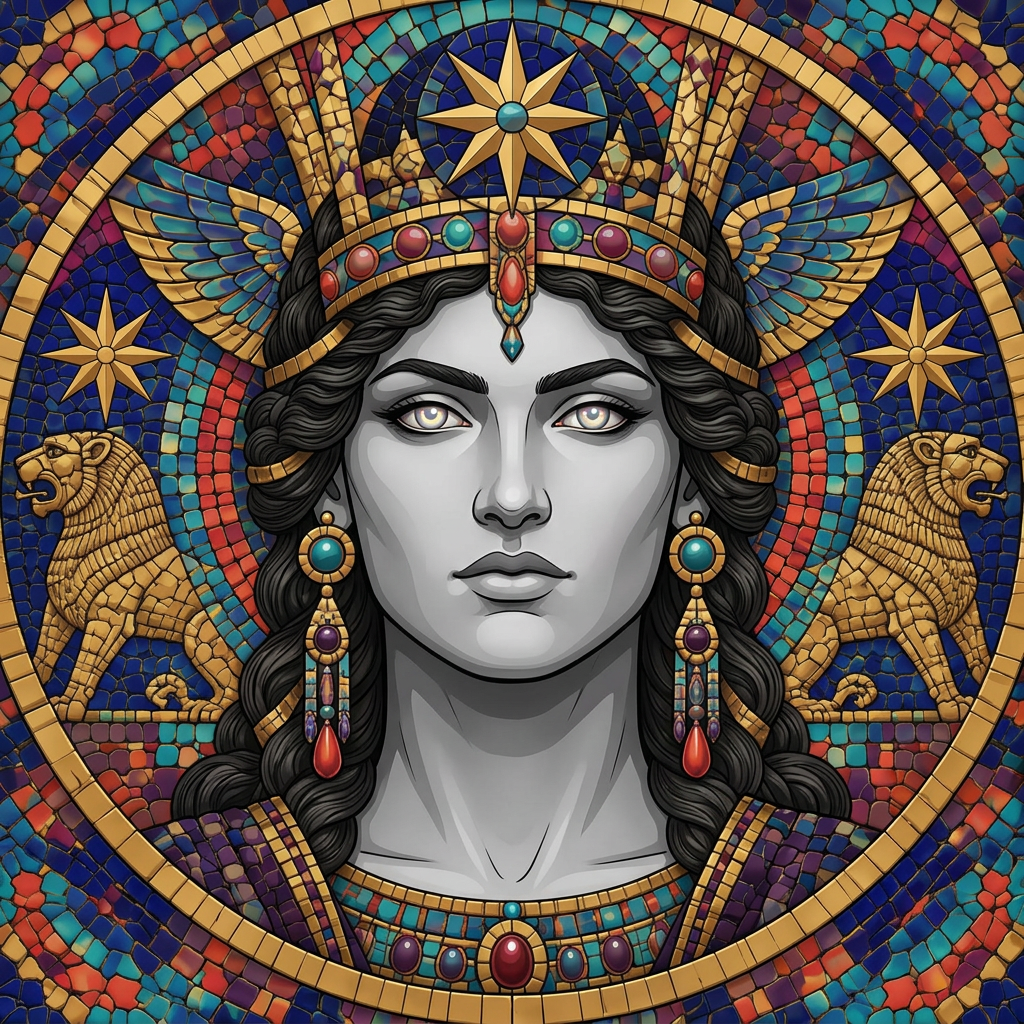
Inanna
Sumerian / Mesopotamian
Queen of Heaven, Lady of the Morning Star
Domains
LoveWarVenusSovereigntyDescent and returnSymbols
Eight-pointed star · Lion · Reed bundle · Rosette · Morning and evening star
Lore
Her defining myth is the descent: she goes down to the underworld to her sister Ereshkigal, and at each of seven gates surrenders a garment, a jewel, a piece of her authority, arriving naked and dying there. She returns — but only because someone else takes her place. …
Sumer and Akkad, c. 4000–1750 BCE

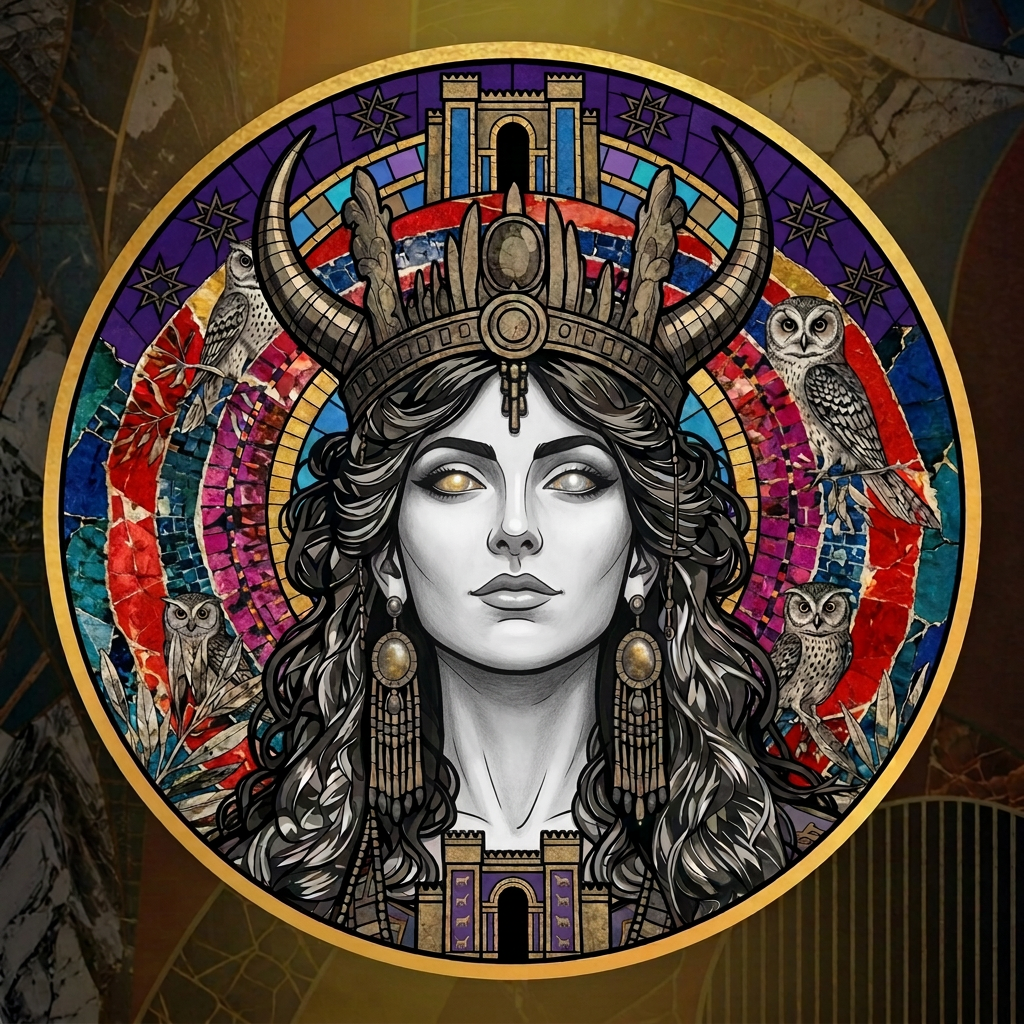
Ishtar
Mesopotamian (Akkadian / Babylonian)
Queen of Heaven, Lady of Love and Battle
Domains
LoveWarDesireJusticeThe morning and evening starSymbols
Eight-pointed star · Lion · Horned crown · Venus · Reed bundle
Lore
She descended to the underworld, passing seven gates and surrendering an ornament at each until she stood stripped and was killed — then rose. Her myth is the clearest statement in the ancient world that desire and death share a road.
Mesopotamia, c. 2300 BCE through the Neo-Babylonian period

Isis
Ancient Egypt
She of Ten Thousand Names
Domains
Magic and true namesHealingMotherhoodRites of the deadSailorsSymbols
Throne glyph · Knot of Isis (tyet) · Kite / falcon wings · Sun disc and horns · Sycamore milk
Lore
Egyptian texts call her weret-hekau, great of magic, because she won her power by learning a hidden name rather than inheriting it: she tricked the sun god Ra into speaking his own, and became a healer no poison could refuse. Her temple at Philae was the last working Egyptian sanctuary, still receiving offerings into the sixth century CE, and her spring Navigium Isidis blessed the reopening of the sea lanes across the whole Roman world.
Nile Valley, Old Kingdom (c. 2600 BCE) through the Roman Mediterranean (c. 400 CE)

Ix Chel
Maya / Mesoamerica
Lady Rainbow of the Moon and Loom
Domains
The moonWeavingMedicineChildbirthWater and rainSymbols
Backstrap loom · Serpent headdress · Jade ear flares · Crescent moon · Rabbit · Overturned water jar
Lore
Women crossed open sea by canoe to her shrine on Cozumel to ask for safe birth and healthy children — one of the best-documented pilgrimages in the pre-Columbian Americas. The codices show her in two aspects, young weaver and fanged elder pouring out a water jar, so Maya thought held growth and destruction inside a single lunar cycle instead of splitting them.
Maya lowlands, Classic and Postclassic periods (c. 250–1550 CE) into living Maya communities

Izanami
Japanese
She Who Invites, Ruler of Yomi
Domains
CreationDeathMarriageGriefNecessary separationSymbols
Jewelled spear · Islands · Boulder at the cave mouth · Plum branch · Comb-tooth torch
Lore
Izanagi followed her and lit a torch to see her, breaking his promise; horrified by what death had made of her, he fled and sealed the passage with a boulder. She said she would take a thousand lives a day; he said he would cause fifteen hundred births. …
Japan, Kojiki compiled 712 CE; older oral tradition

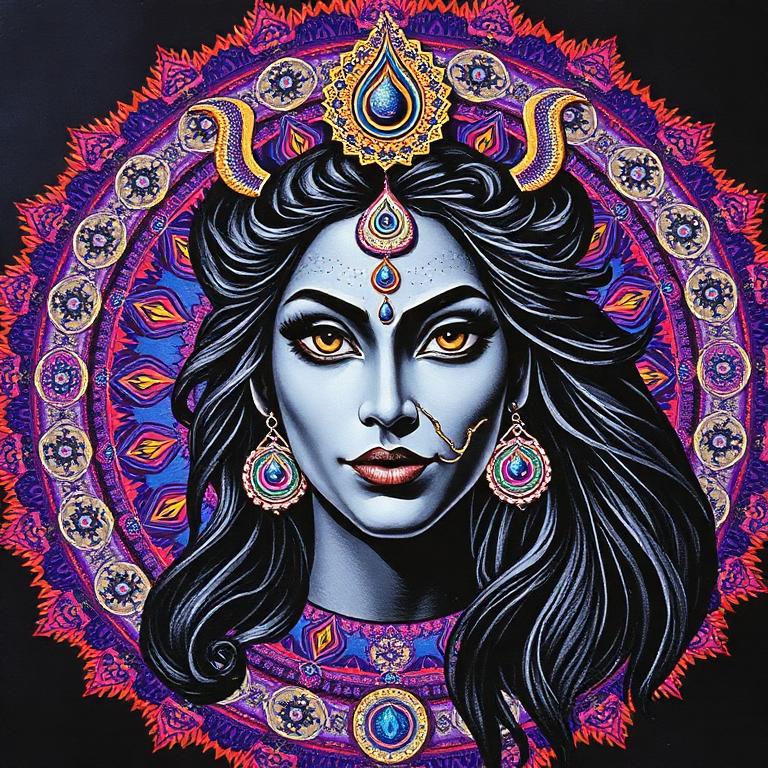
Kali
Hindu / South Asian
She Who Is Time, the Mother of Endings
Domains
TimeDestruction of illusionLiberationFierce loveEndingsSymbols
Garland of skulls · Sword · Outstretched tongue · Flames · Dark night
Lore
The famous image of her standing on Shiva is read by devotees as the moment her rage meets pure stillness and stops. Her skull garland is often counted as the letters of the alphabet: she wears language itself, the whole system of names, and can take it off.
India, c. 6th century CE onward; living tradition

Konohanasakuya-hime
Japan
Blossom Princess of Mount Fuji
Domains
Cherry blossomMount FujiVolcanoesChildbirthDelicate lifeSymbols
Sakura branch · Mount Fuji · Fire · Sake · Mirror
Lore
When her husband doubted her child was his, she sealed herself in a birthing hut and set it on fire — if the child were not his, she said, it would burn. She and her sons walked out unharmed. …
Japan, recorded in the Kojiki (712 CE); enshrined at Fuji and worshipped today

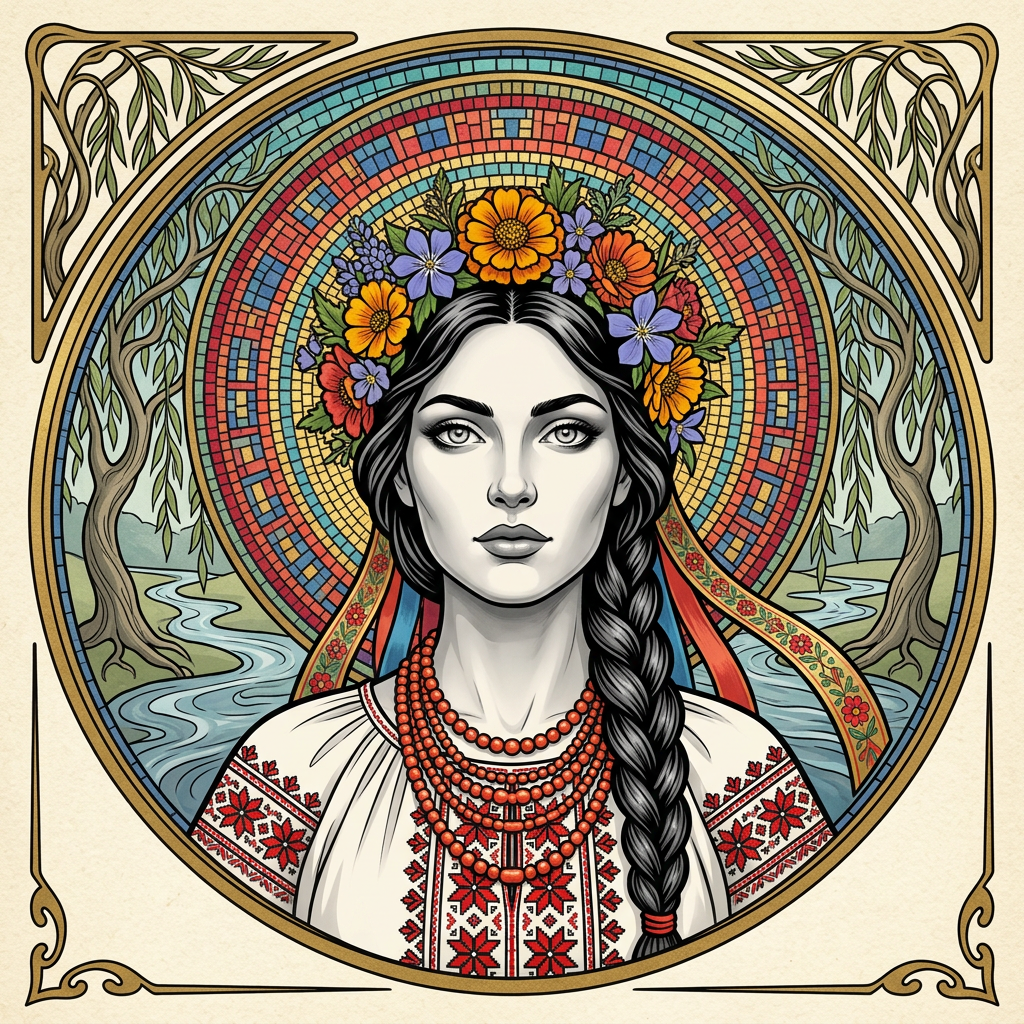
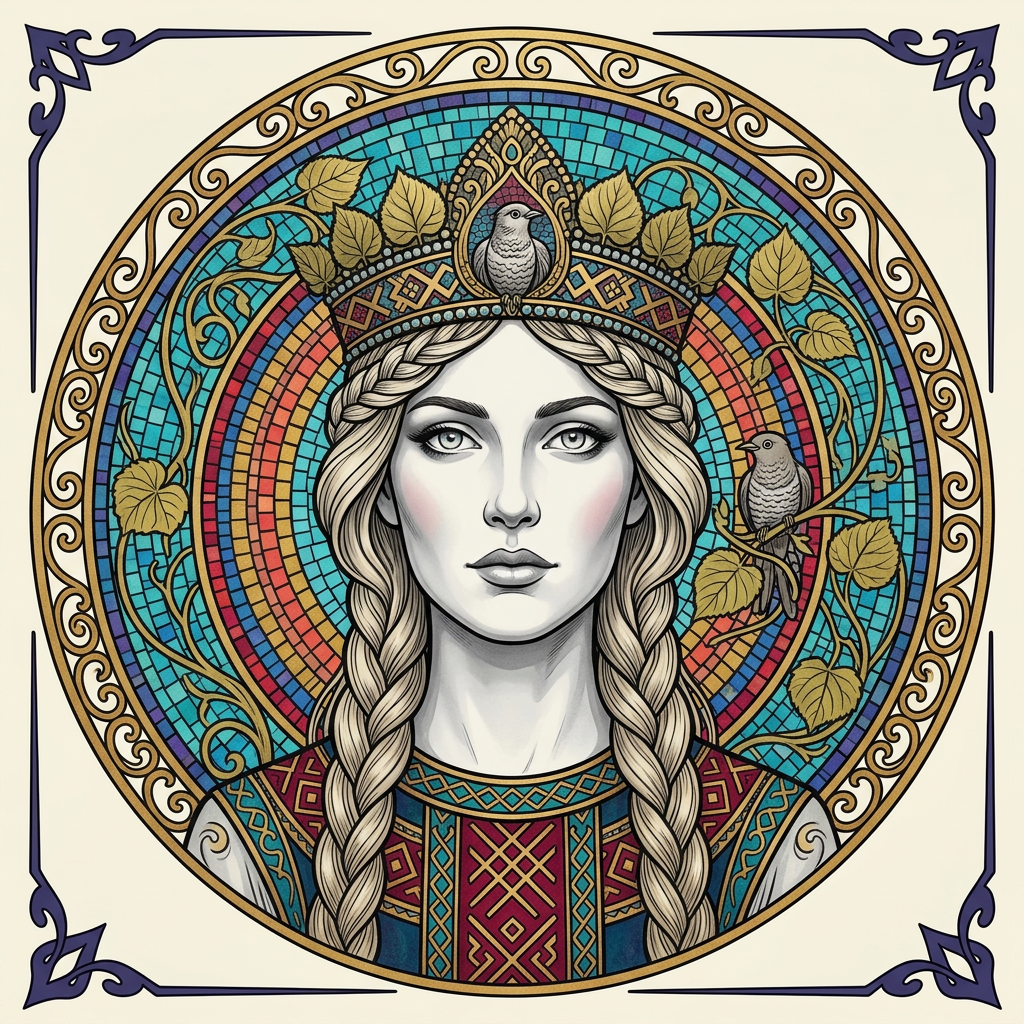
Lada
Slavic
Lady of Spring and Concord
Domains
SpringLoveMarriageHarmonyRenewalSymbols
Flower crown · Birch branch · Wheat · Cranes returning · Embroidered cloth
Lore
Her season is the moment the ice gives — the cranes coming back, the first green, the marriages arranged after winter. She stands for concord rather than passion: the harmony of a household, a village, two families deciding to get along. …
Slavic folk tradition, attested from medieval sources onward

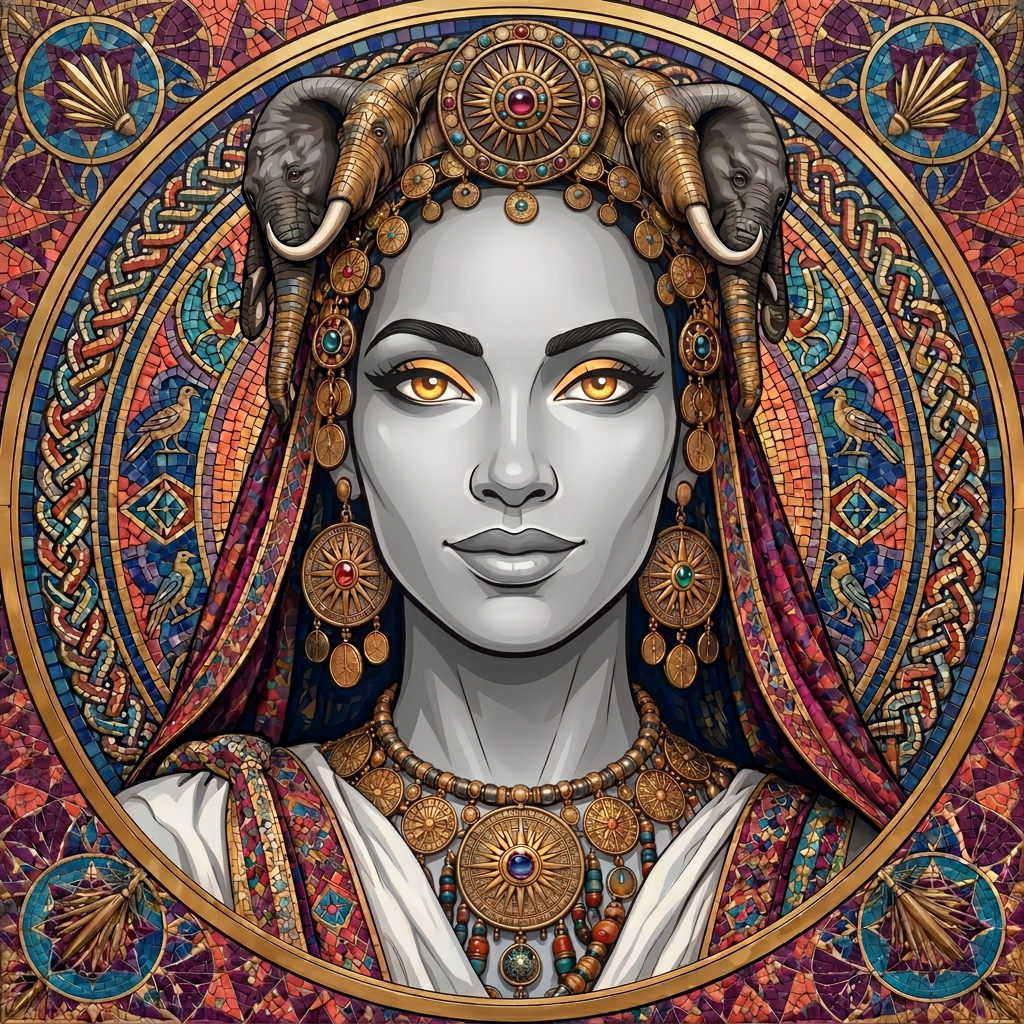
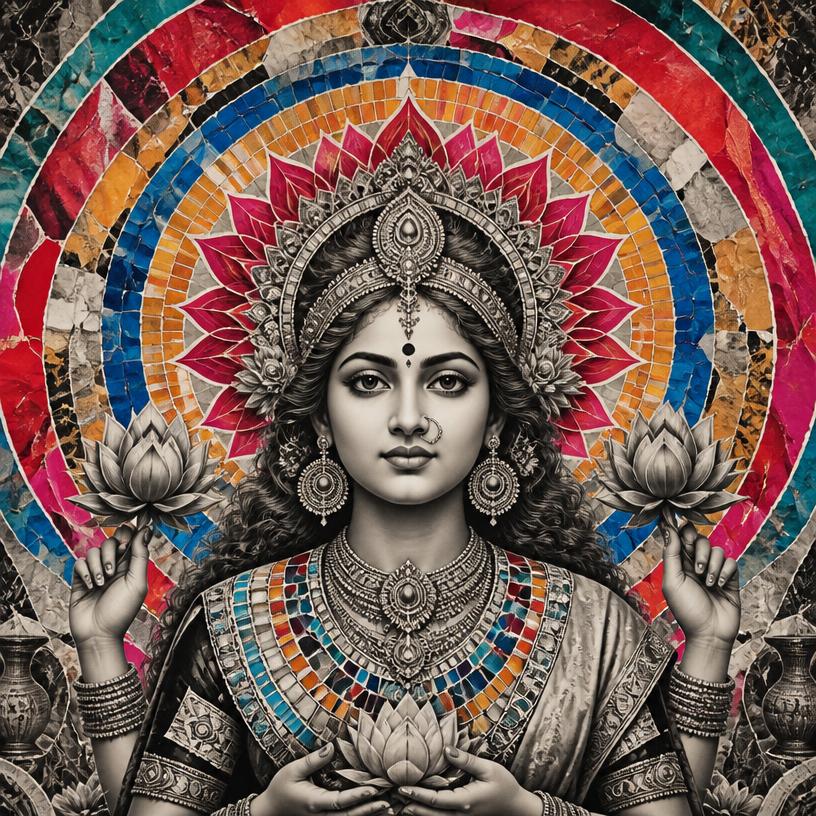
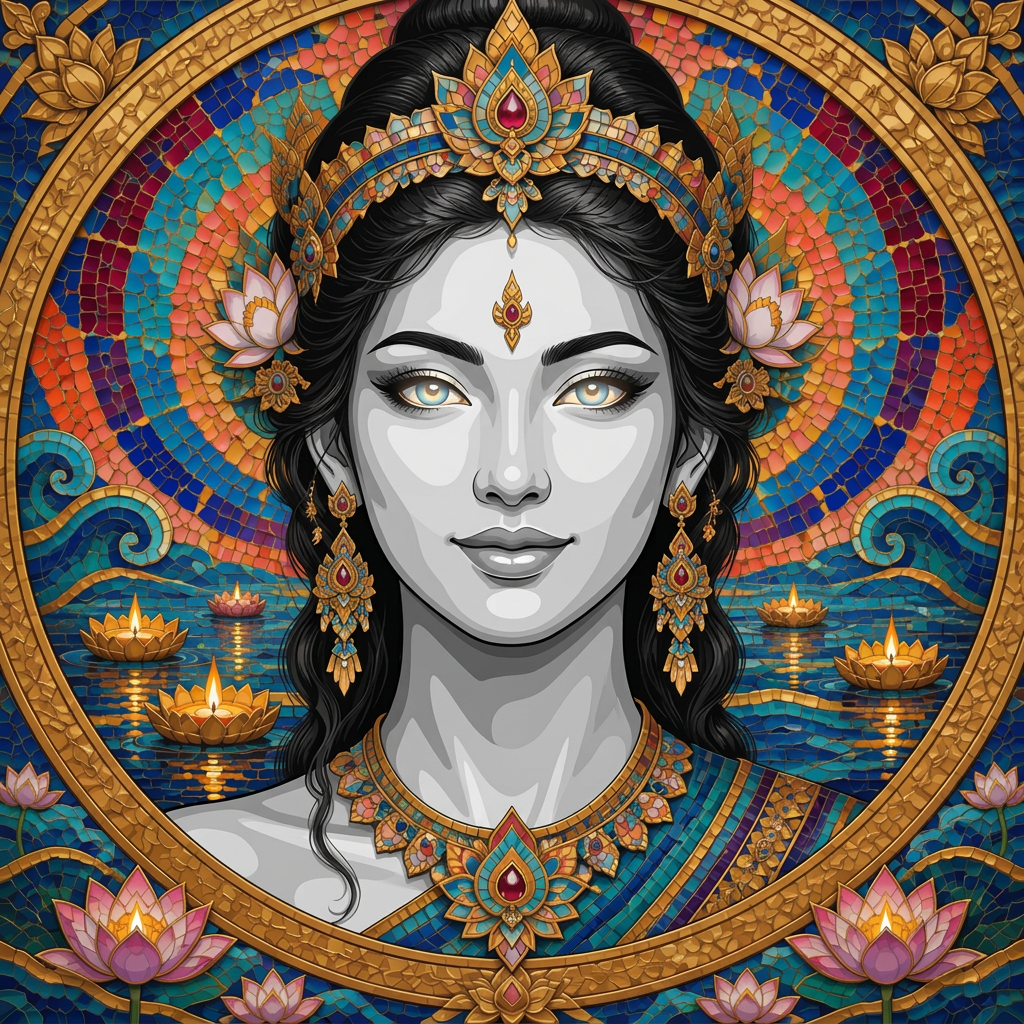
Lakshmi
India / Hindu
Lotus-Born Giver of Fortune
Domains
AbundanceBeauty and grace (śrī)Prosperity of the householdGenerosityGood fortuneSymbols
Lotus · Falling gold coins · Pair of elephants · Diwali oil lamps · Open doorway
Lore
She is called Chanchala, the moving one, because wealth that stops circulating stops being hers. At Diwali doors and windows are opened and lamps set on thresholds specifically so she can enter and pass through; her elder sister Alakshmi, misfortune, is the one who settles in where a house is neglected, ungenerous or unclean.
South Asia, Vedic hymns (c. 1000 BCE) through unbroken living worship

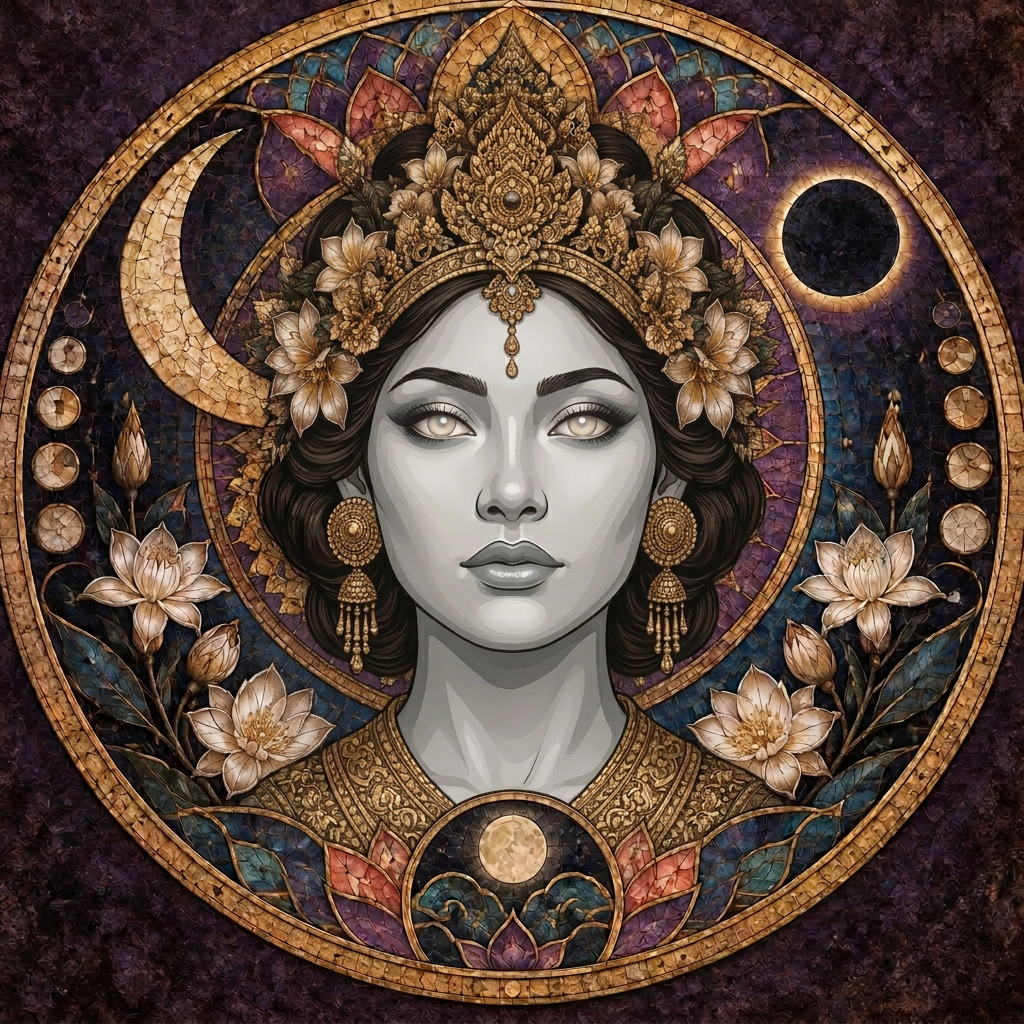
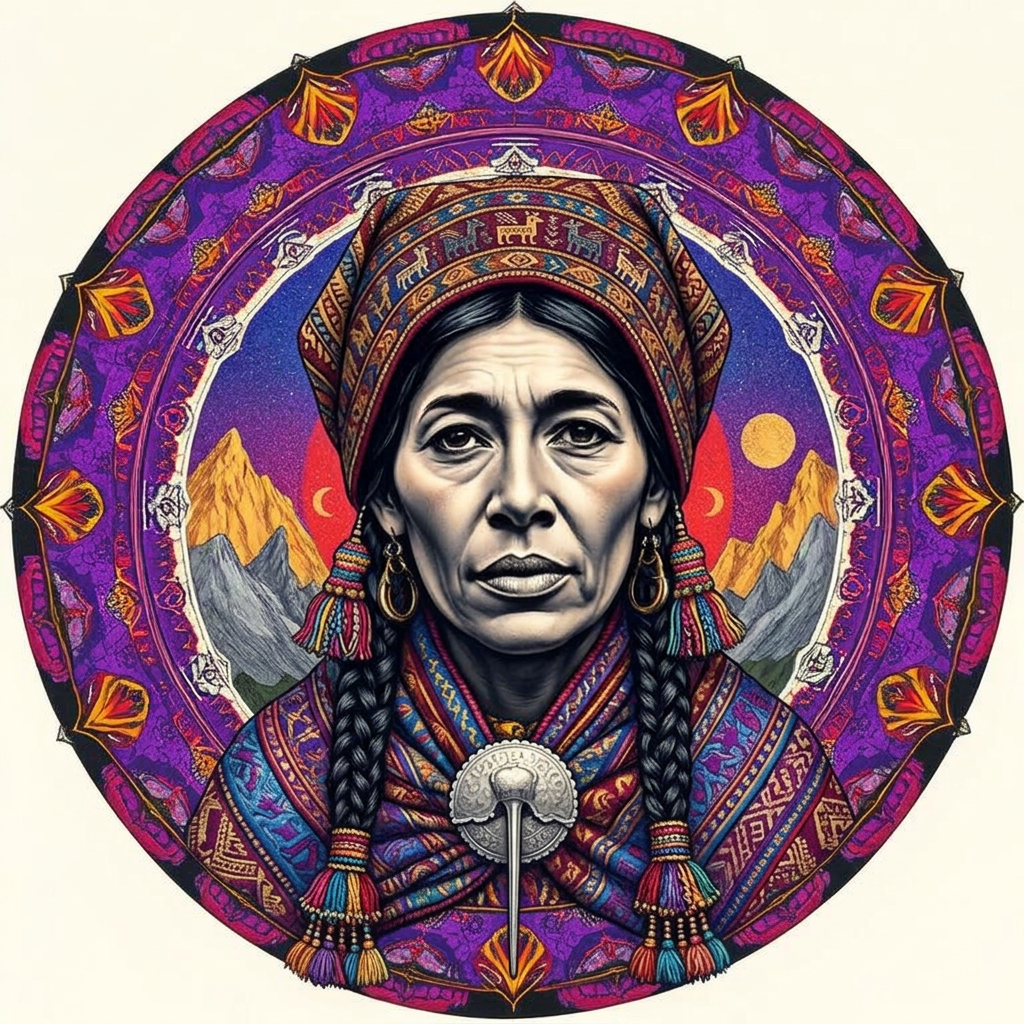
Mama Quilla
Inca / South America
Mother Moon, Guardian of Women
Domains
MoonTime and calendarMarriageWomen's cyclesProtection at nightSymbols
Silver crescent · Moon phases · Silver disc face · Festival calendar
Lore
Her silver face was said to weep silver tears. She is the counter-rhythm to the sun: not constant, but reliably cyclical, and the entire ritual year was scheduled by her. …
Inca empire, c. 1400–1533 CE, Cusco and the Andes

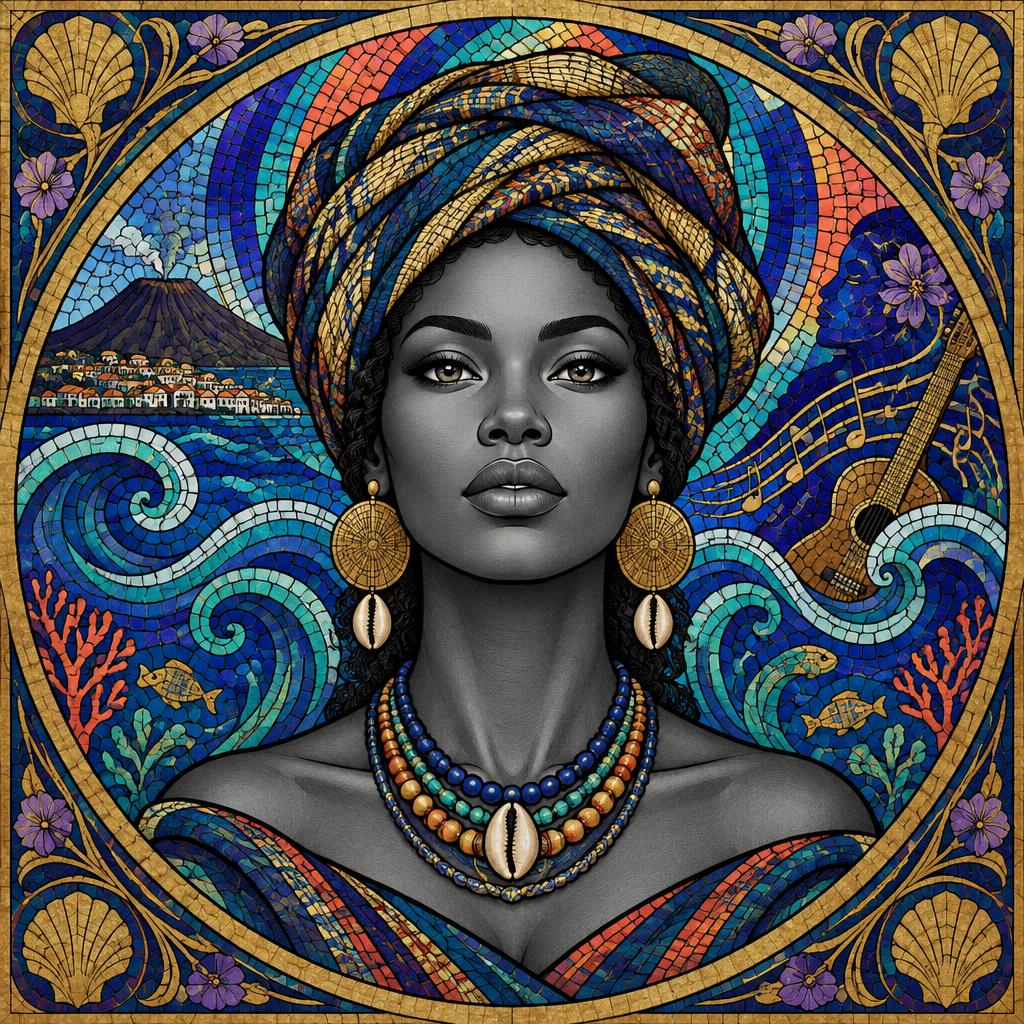
Mami Wata
West and Central Africa
Mother Water, the Serpent Bearer
Domains
WaterWealth and riskBeautyHealingForeign exchangeSymbols
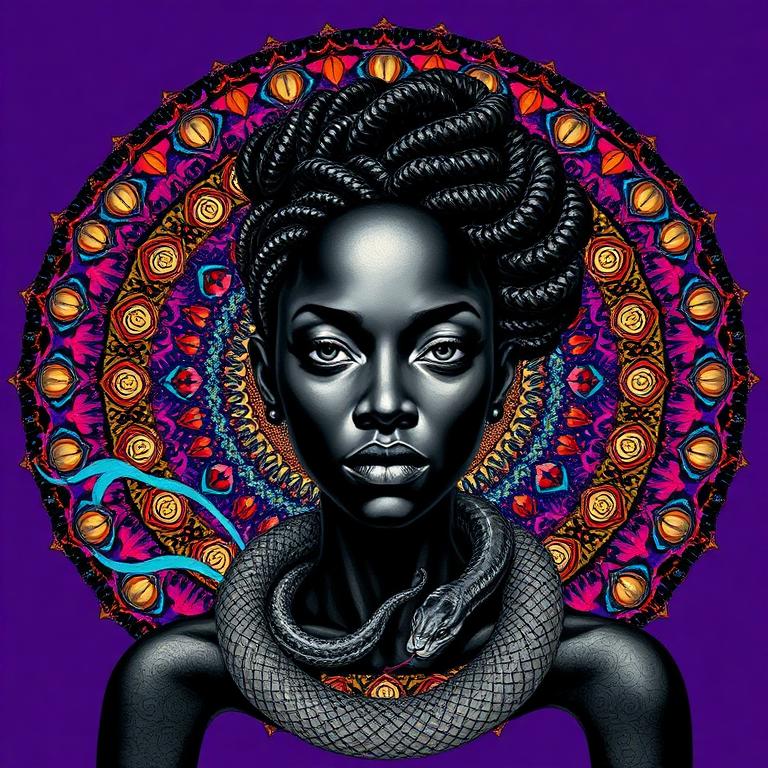
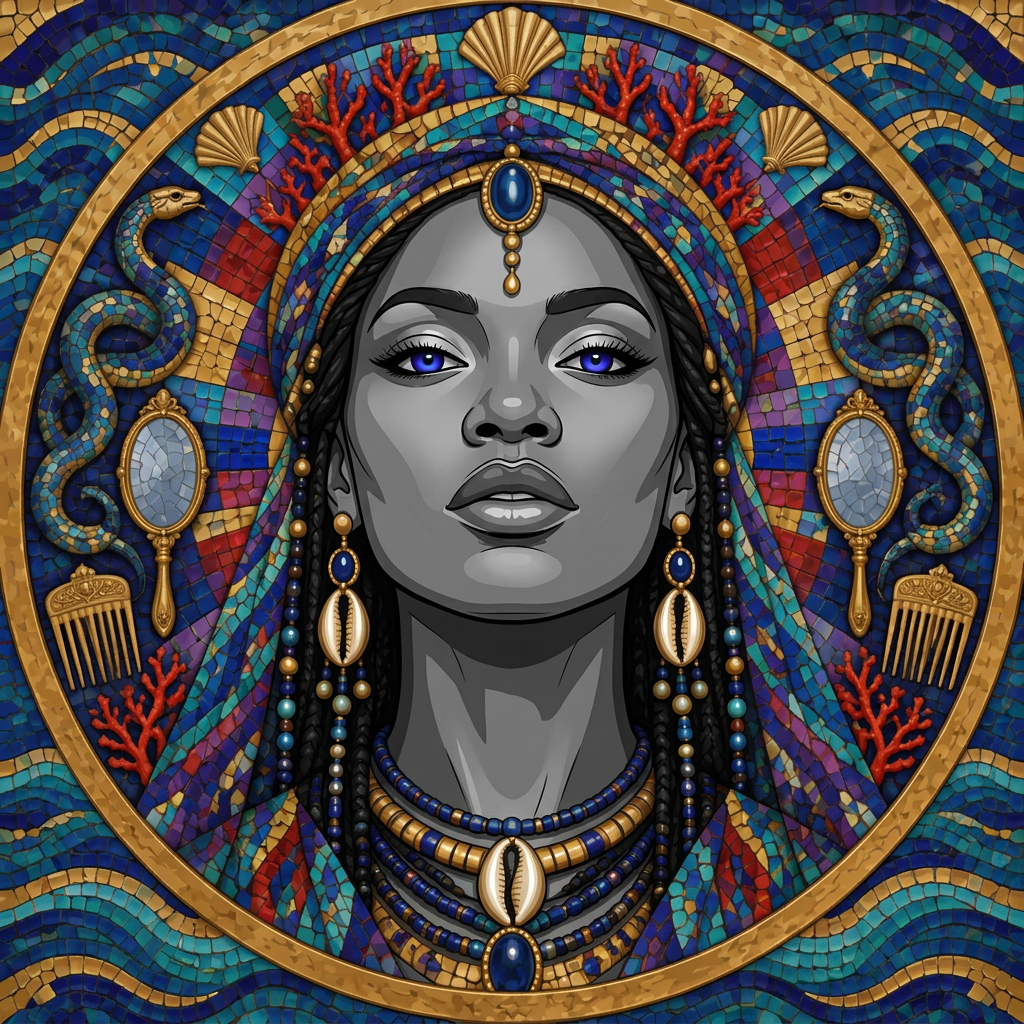
Serpent · Mirror · Comb · Cowries · Perfume and imported goods
Lore
She absorbed the modern world rather than resisting it: European prints, imported mirrors, sunglasses, banknotes. That is her real signature. …
West and Central African coasts and rivers; documented from the colonial era, rooted earlier, thriving today

Mari
Basque Country / Spain
Lady of the Caves and the Weather
Domains
WeatherCaves and mountainsTruth-tellingLivestockJusticeSymbols
Golden comb · Ram · Storm cloud · Cave mouth · Lauburu cross
Lore
Her etiquette is precise — never sit in her presence, never turn your back leaving, and above all never lie to her, because she already knows. She is not a moral abstraction but a landlady of the landscape who runs her territory on plain honesty. …
Basque Country of northern Spain; folk belief documented into the twentieth century

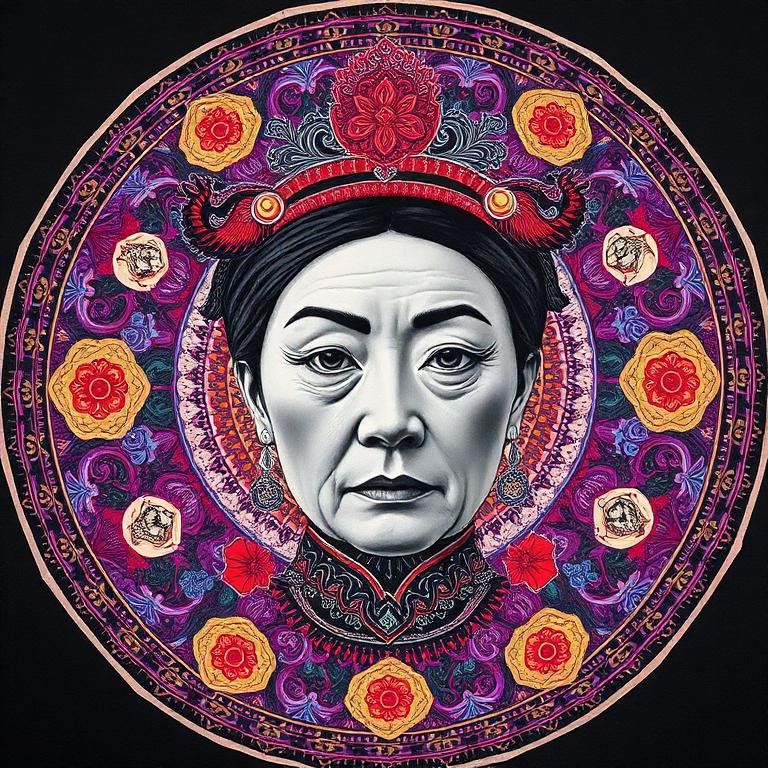
Mazu
Chinese
Empress of Heaven, Guardian of Sailors
Domains
The seaRescueTravelCommunityWatchfulnessSymbols
Fishing boat · Lantern · Red robe · Phoenix crown · Waves
Lore
Two demon generals she defeated — Thousand-Mile Eyes and With-the-Wind Ears — became her attendants: her power is seeing and hearing trouble far off. Her pilgrimages still draw millions, carried in palanquins along routes fishing families have walked for centuries.
China from the 10th century CE; living tradition across the Chinese diaspora

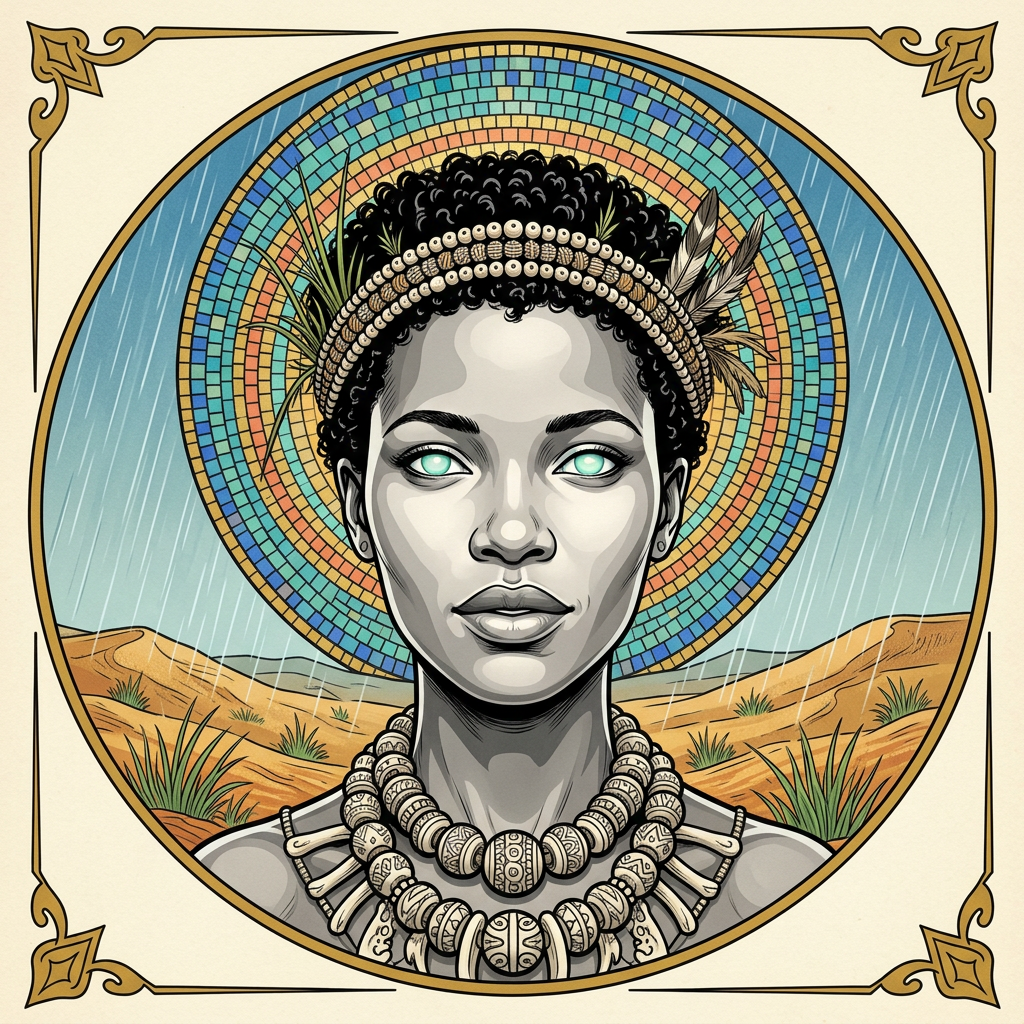
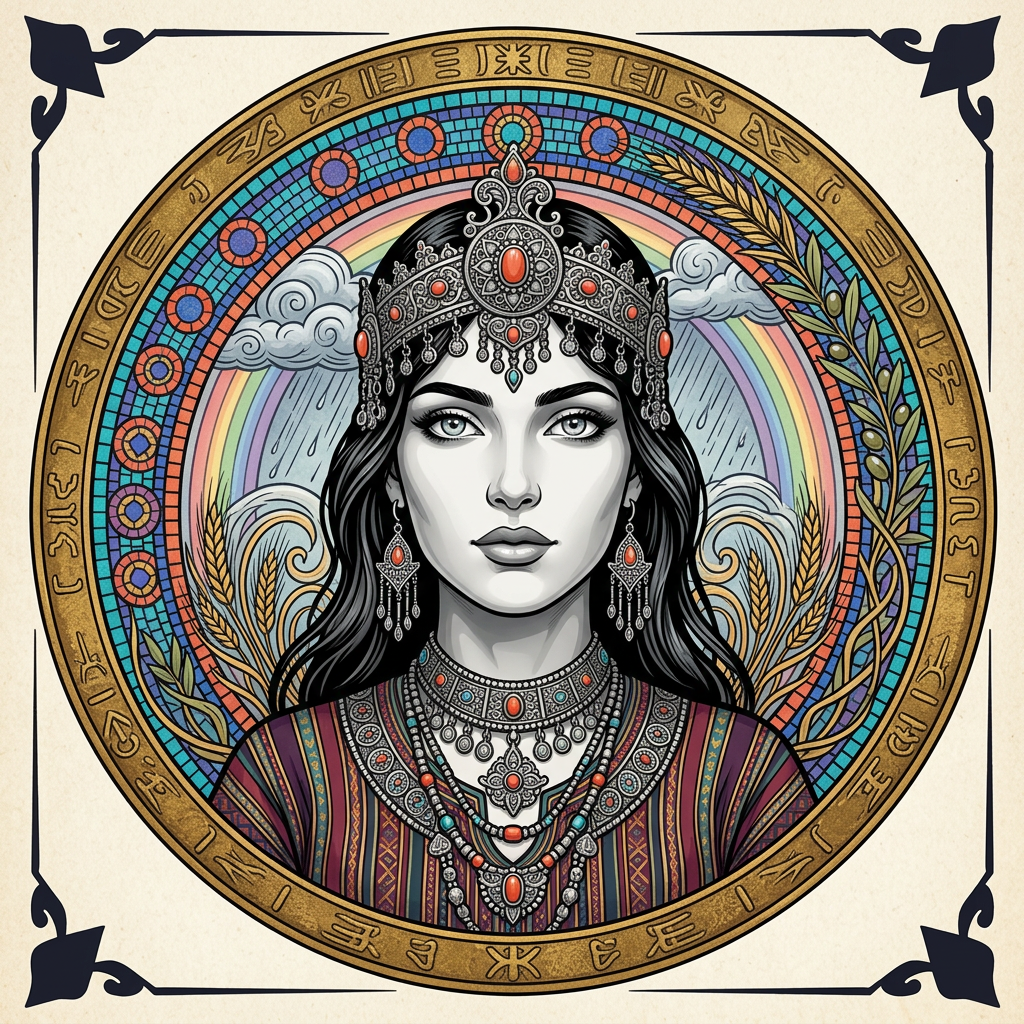
Mbaba Mwana Waresa
Zulu / Southern African
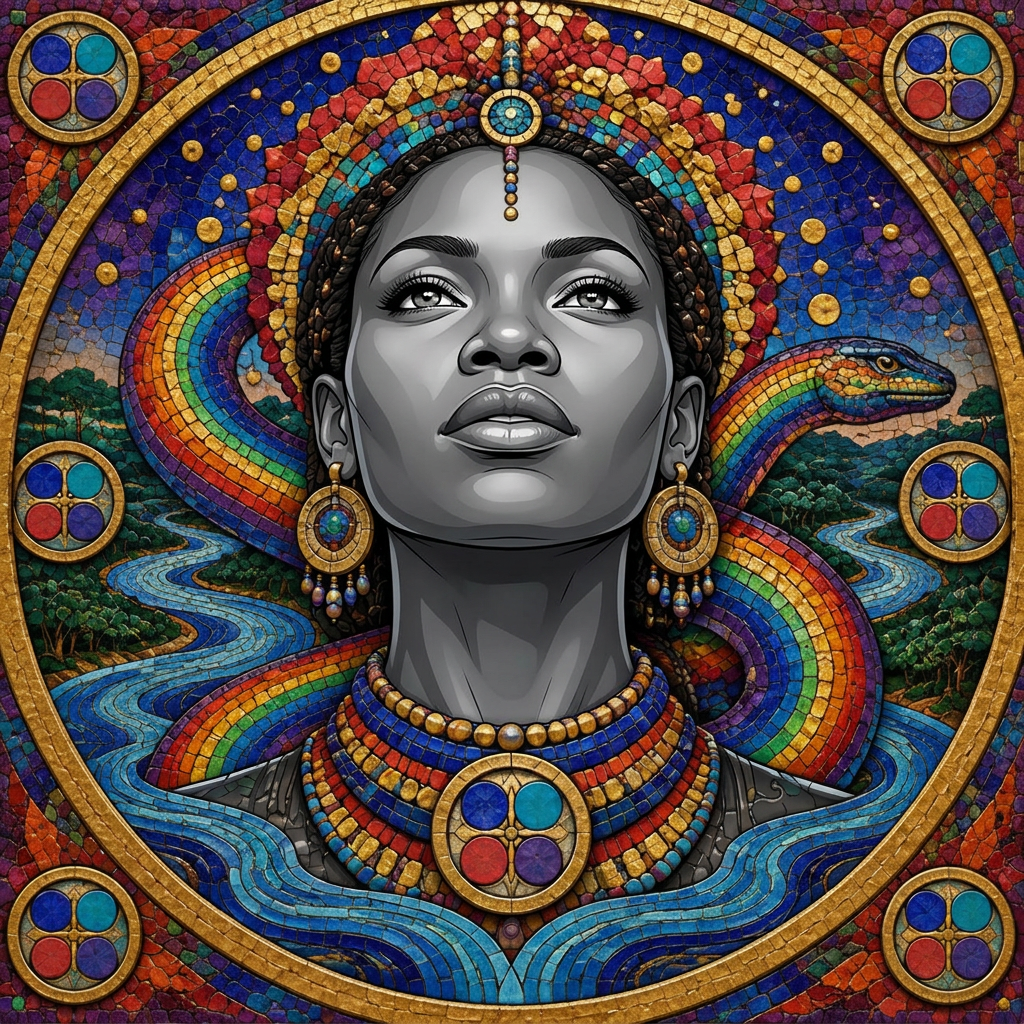
Lady Rainbow, Brewer of the First Beer
Domains
RainRainbowsHarvestBrewingJoy and discernmentSymbols
Rainbow arc · Rain · Sorghum grain · Beer gourd · Grass hut in the sky
Lore
Her famous story is a test. Searching for a husband among mortals, she disguised herself as an ugly woman while a beautiful double stood beside her; the herdsman Thandiwe chose the plain woman, saying he had heard her voice and wanted her, not the picture. …
Zulu oral tradition, Southern Africa

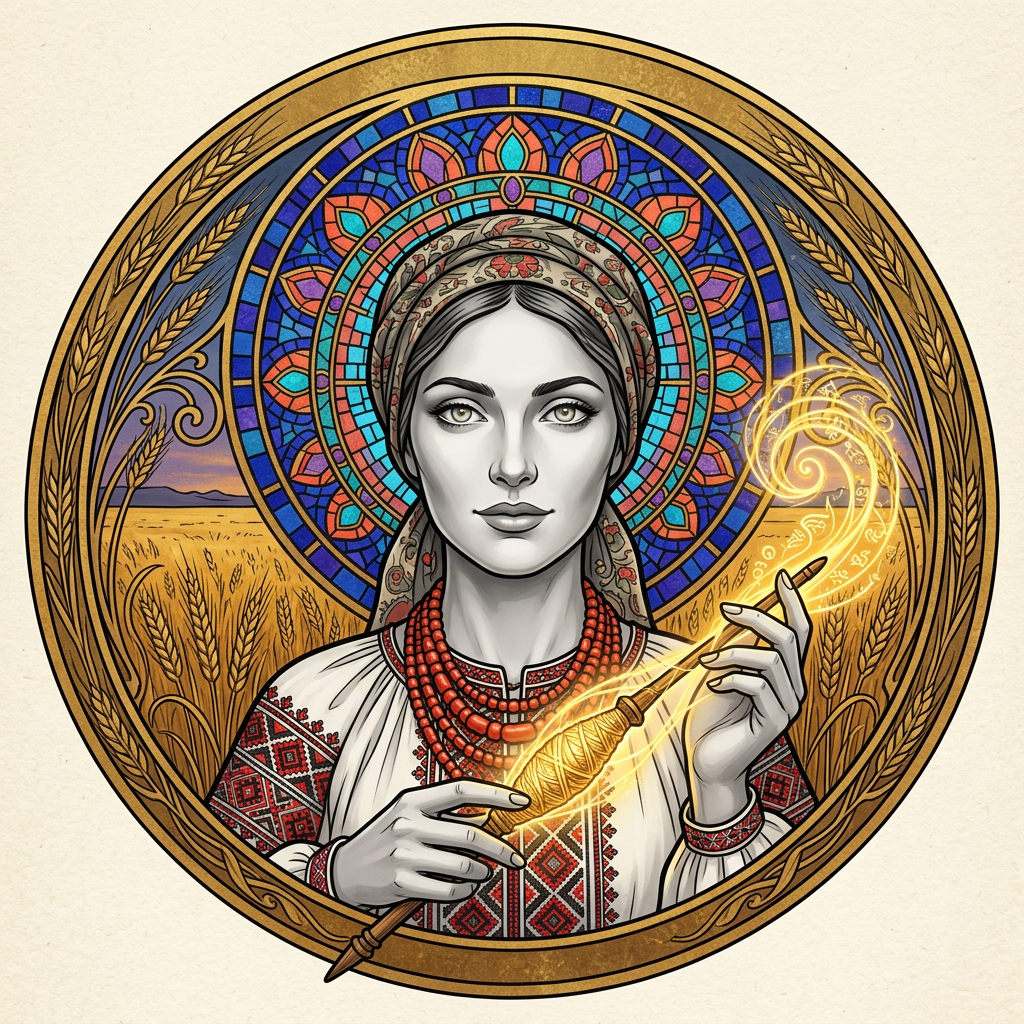
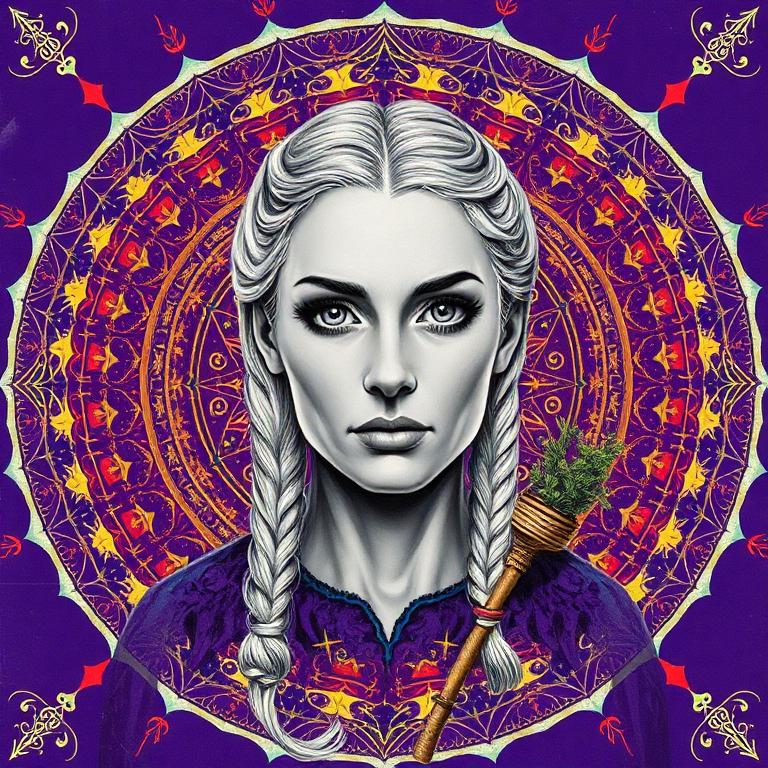
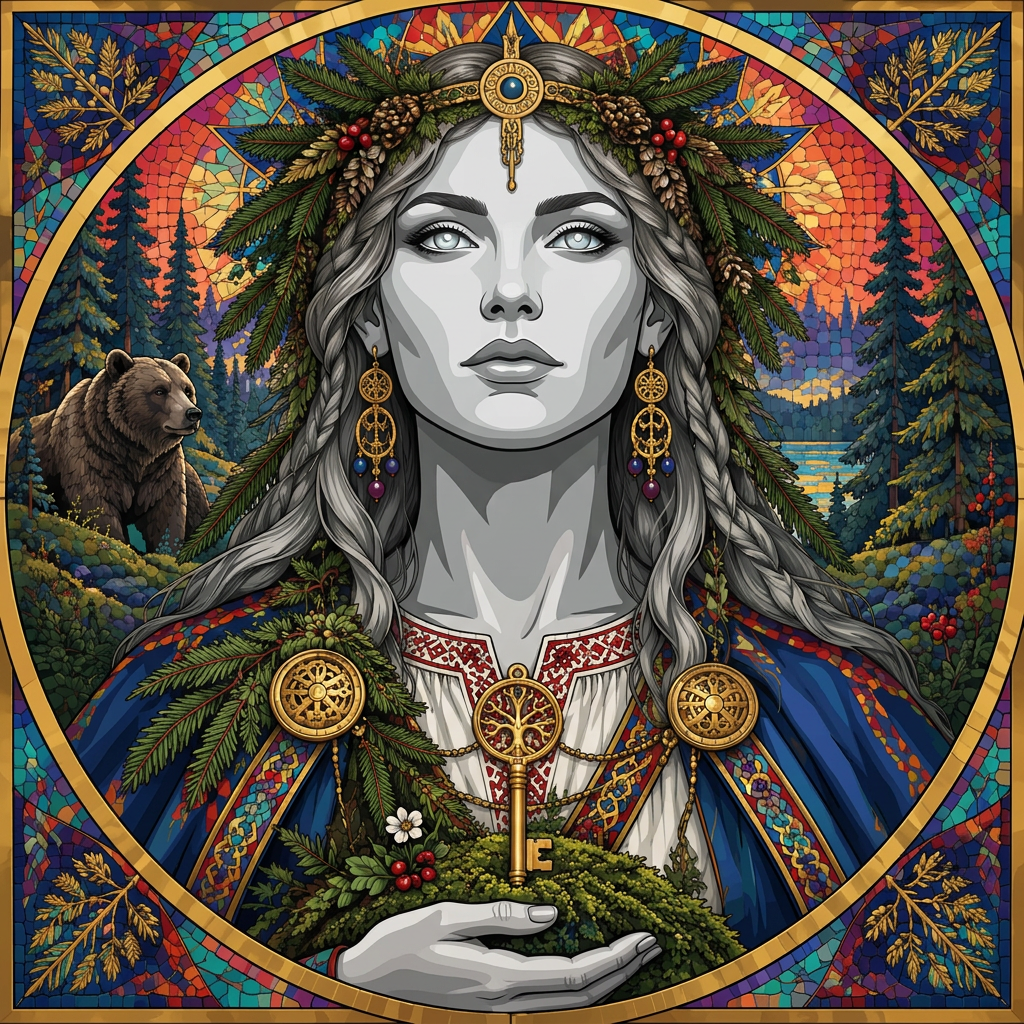
Mokosh
Slavic / Russian
Mother Moist Earth
Domains
Earth and moistureSpinning and weavingWomen's workFertilityFateSymbols
Spindle and flax · Sheared wool · Friday · Wet soil · Embroidered towels
Lore
She walks into houses at night to check the spinning. Left undone or left messy, she tangles it; done well, she blesses the flock. …
Pre-Christian Kievan Rus'; folk practice into the 19th century

Nana Buluku
Fon / Dahomey, West African
The Grandmother Who Made and Withdrew
Domains
CreationAncestryDelegationOriginsWise withdrawalSymbols
Calabash · Paired sun and moon · Clay pots · Cowries · Old cloth
Lore
Her withdrawal is not neglect but the completion of the job. Everything after her is delegated authority, which is why Vodun has so many active spirits and one very quiet source. …
Dahomey (Benin) and the African diaspora; living tradition

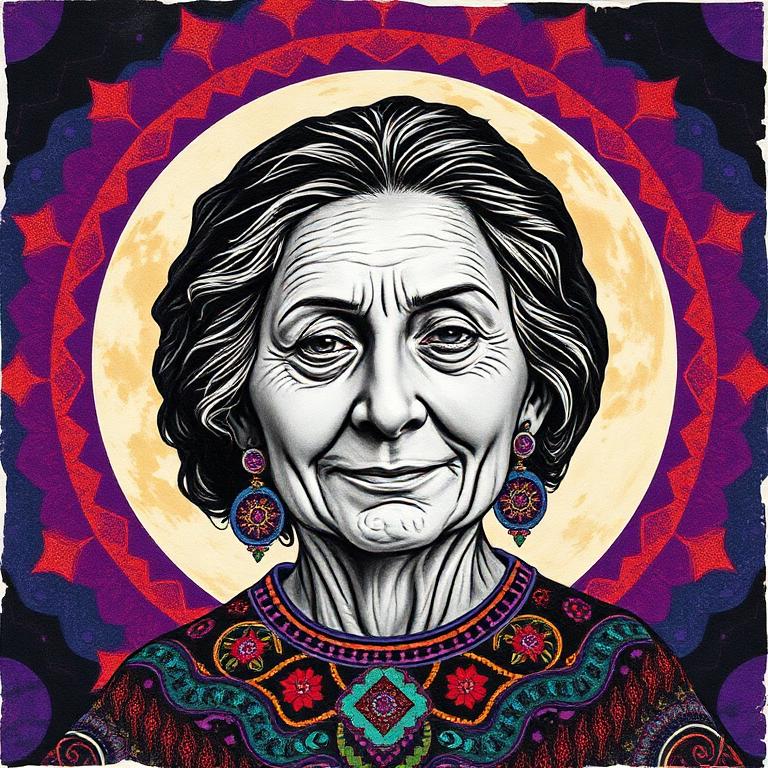
Nokomis
Anishinaabe (Ojibwe)
Grandmother Moon
Domains
MoonWaterWomen's cyclesTeachingGrandmotherly careSymbols
Full moon · Copper vessel of water · Cedar · Berries · Thirteen moons
Lore
She is addressed as a relative, not a symbol — grandmother, greeted with gratitude for the water she governs. Her light is not the sun's blaze but the steady lamp that lets you find your way home at night.
Great Lakes region; living Anishinaabe tradition

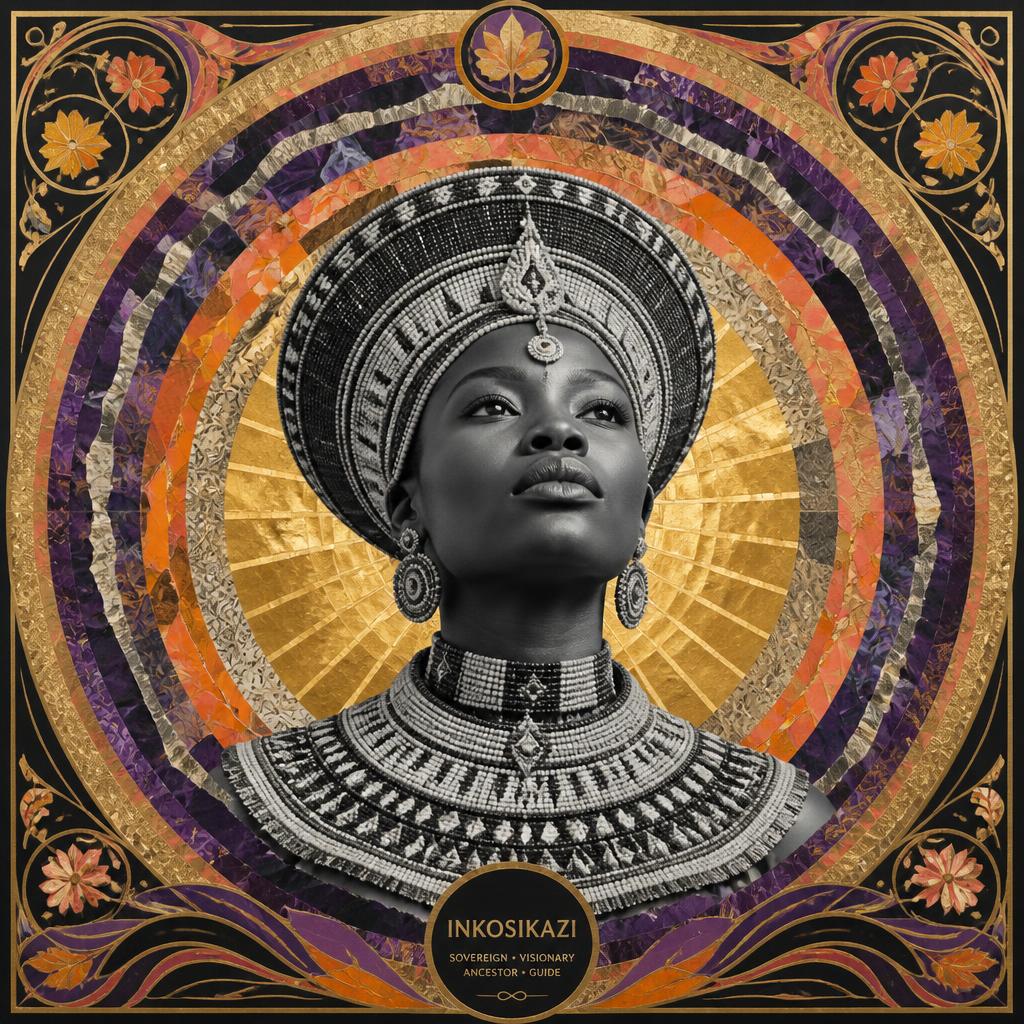
Nomkhubulwane
South Africa / Zulu
Princess of the Rain and Green Grain
Domains
RainFertility of the landHarvestGirlhood and initiationProvisionSymbols
Rain clouds · Green sorghum and maize · Beaded isicholo · Rainbow · First-fruit offering
Lore
She is said to appear as a rainbow, or as mist over green fields, and she is offended by cruelty and by neglected land more than by any ritual mistake. Her ceremonies are led by girls and unmarried women, making her one of the few great deities whose rites are placed deliberately in young women's hands.
KwaZulu-Natal, southern Africa — long-standing oral tradition, still honoured in annual ceremonies

Nüwa
Chinese
She Who Repaired the Sky
Domains
CreationRepairMarriageCraftOrder restoredSymbols
Compass · Five coloured stones · Yellow clay · Serpent tail · Turtle legs
Lore
When the pillar of heaven broke and the sky cracked, flooding and burning the world, she smelted five-coloured stones to patch it and cut the legs from a great turtle to prop the corners. Her signature act is not creation but repair: mending a broken world with whatever was to hand, and it held.
China, mythic antiquity; attested from the Warring States period

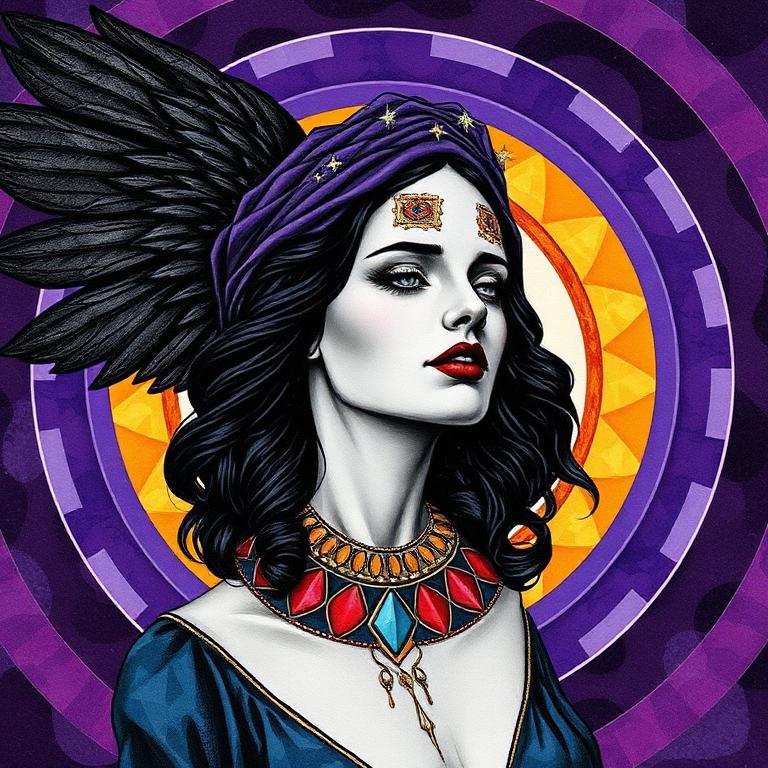
Nyx
Ancient Greece
Night Herself, Elder of the Gods
Domains
NightSleepDreamsMysteryFate's boundariesSymbols
Black wings · Stars · Poppy · Veil · Owl
Lore
In the Orphic hymns she is not evil but generative: the cosmos hatches from an egg laid in her darkness. What cannot be seen is not therefore absent; it is gestating.
Greece, primordial and Orphic tradition

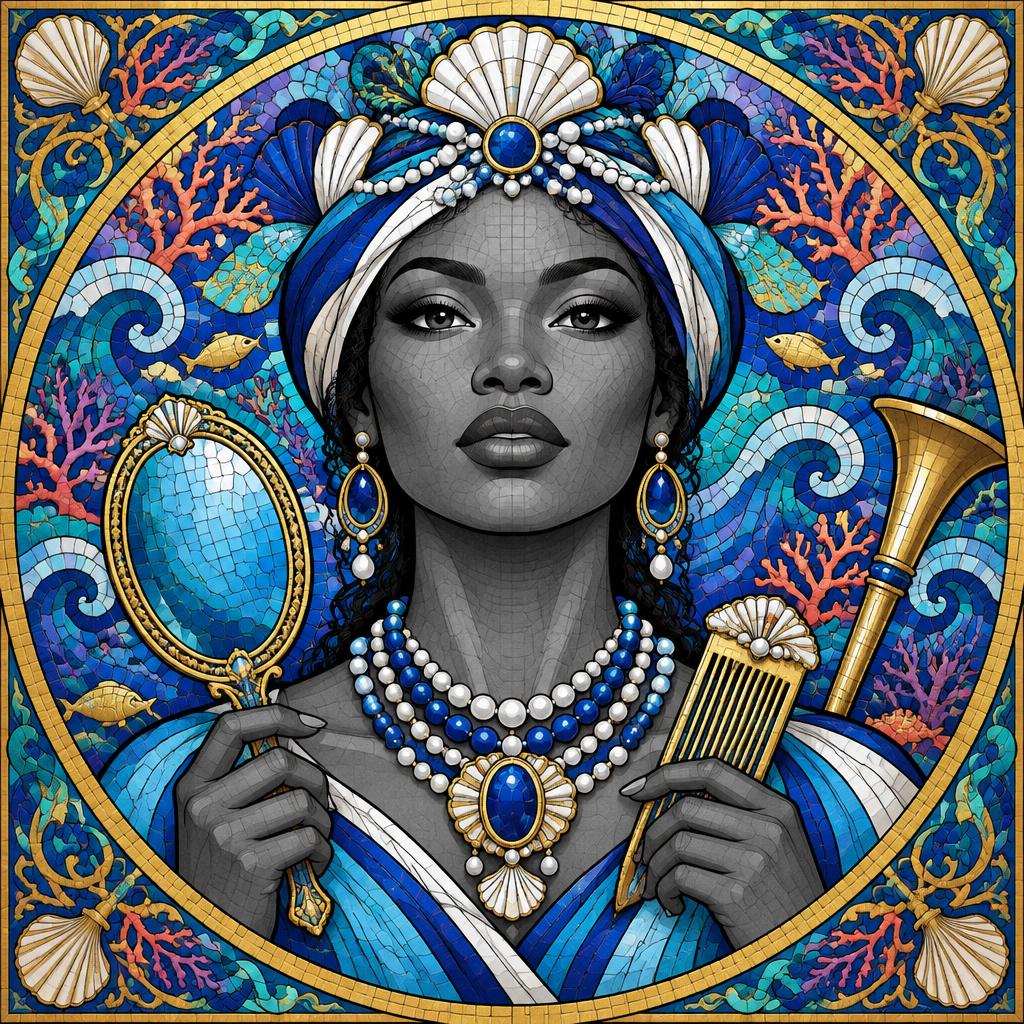
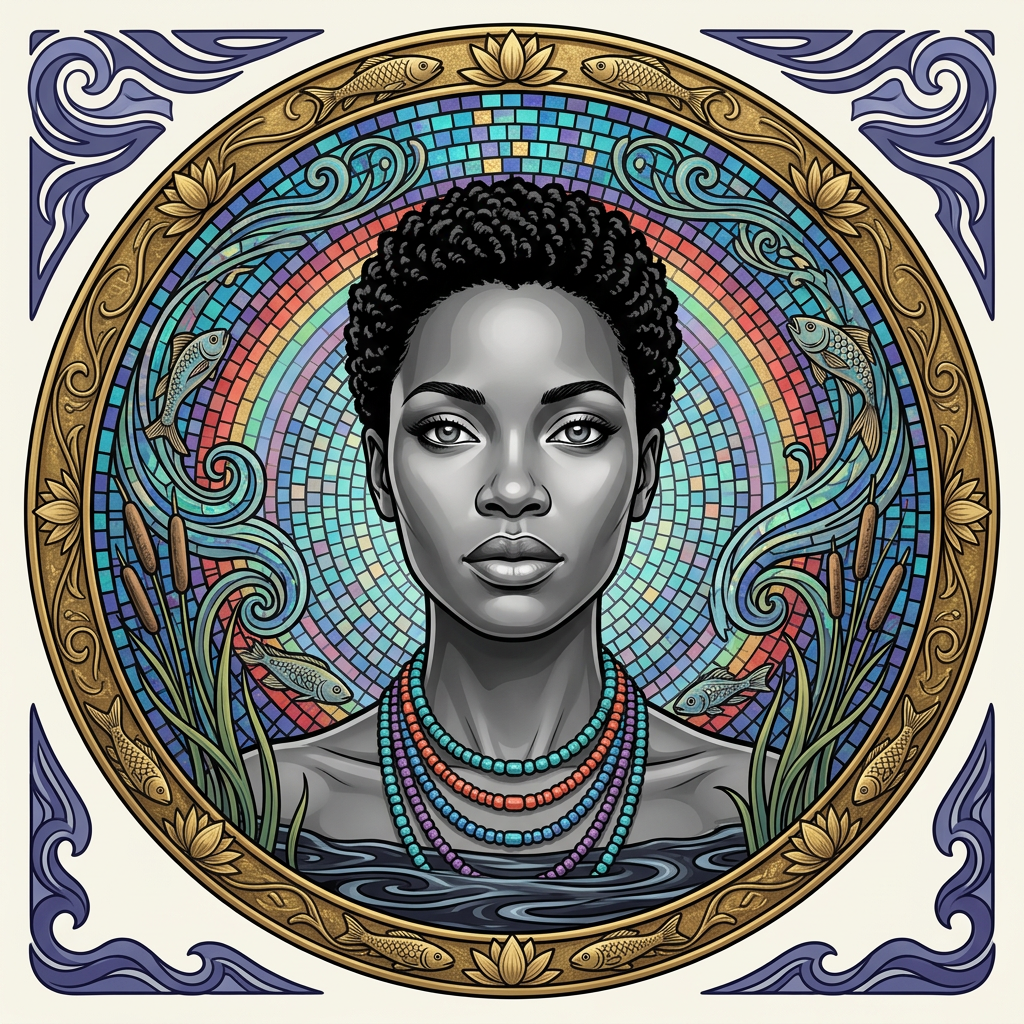
Oshun
Yorubaland / West Africa
Sweet Water, Owner of Honey
Domains
Fresh waterLove and pleasureFertilityDiplomacyDivination and wealthSymbols
River water · Honey · Brass and gold · Cowrie shells · Peacock and vulture · Mirror and fan
Lore
In one telling the orishas withheld rain until the earth cracked; only Oshun, transformed into a peacock and scorched bare by the sun, reached Olodumare and brought the water back — beauty as endurance, not decoration. The annual Osun-Osogbo festival still carries offerings to her river in Nigeria, and her grove is a UNESCO World Heritage site.
Yorubaland (Nigeria) and the Atlantic diaspora — Cuba, Brazil, Trinidad, the US — living tradition

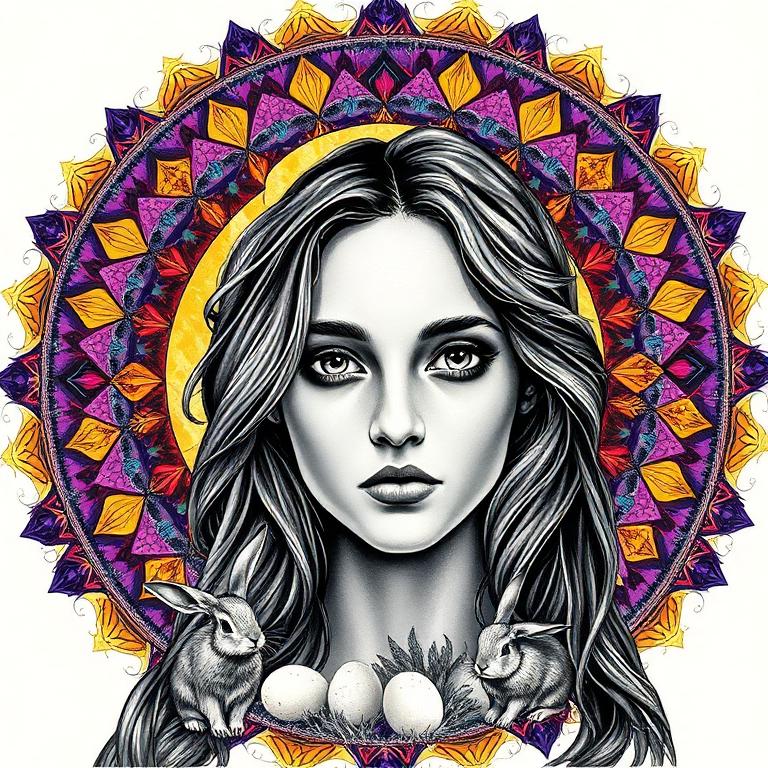
Ostara
Germany / Germanic
Lady of the Rising Light
Domains
DawnSpringFertilityBeginningsReturning lightSymbols
Egg · Hare · First green shoots · Sunrise · Bare feet on cold ground
Lore
Her thinness in the record makes her honest about beginnings. Early spring is not warm; it is mud, cold mornings and a small unreasonable green. …
Germanic Europe; attested via the name of the spring month and later reconstruction

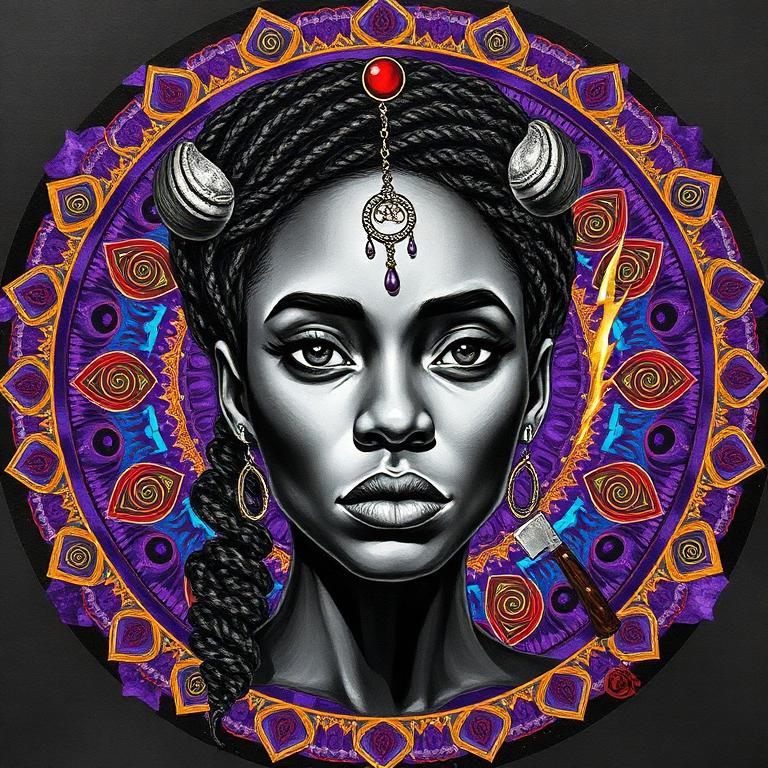
Oya
Yoruba / West African
Wind of Change, Keeper of the Cemetery Gate
Domains
StormsChangeThe marketplaceThe deadFierce truthSymbols
Whirlwind · Lightning · Buffalo horns · Machete · Nine cowries
Lore
She is the only orisha said to face the dead without fear, and her number is nine. Her storms are not senseless: the wind clears the ground so something can be built. …
Yorubaland (Nigeria) and the African diaspora; living tradition

Pachamama
Andes / South America
World Mother, Who Must Be Fed First
Domains
EarthHarvestReciprocityMountainsFertility of soilSymbols
Coca leaves · Poured chicha · Woven manta · Potatoes · Mountain peaks
Lore
She can and does withhold. Earthquakes, failed harvests and illness get read as an account falling out of balance, and the remedy is not apology but payment — a proper offering, buried or burned. …
Andean South America, pre-Inca through the present; observed daily in Peru, Bolivia and beyond

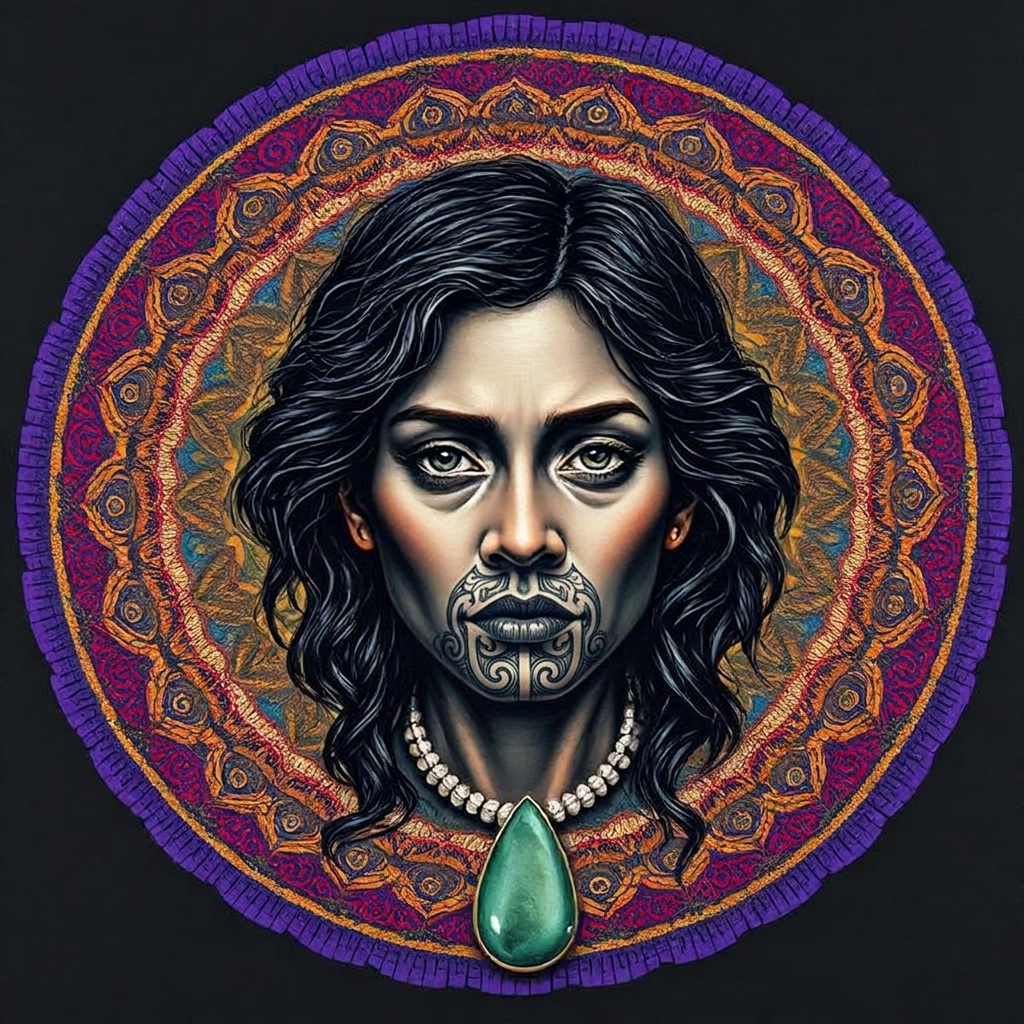
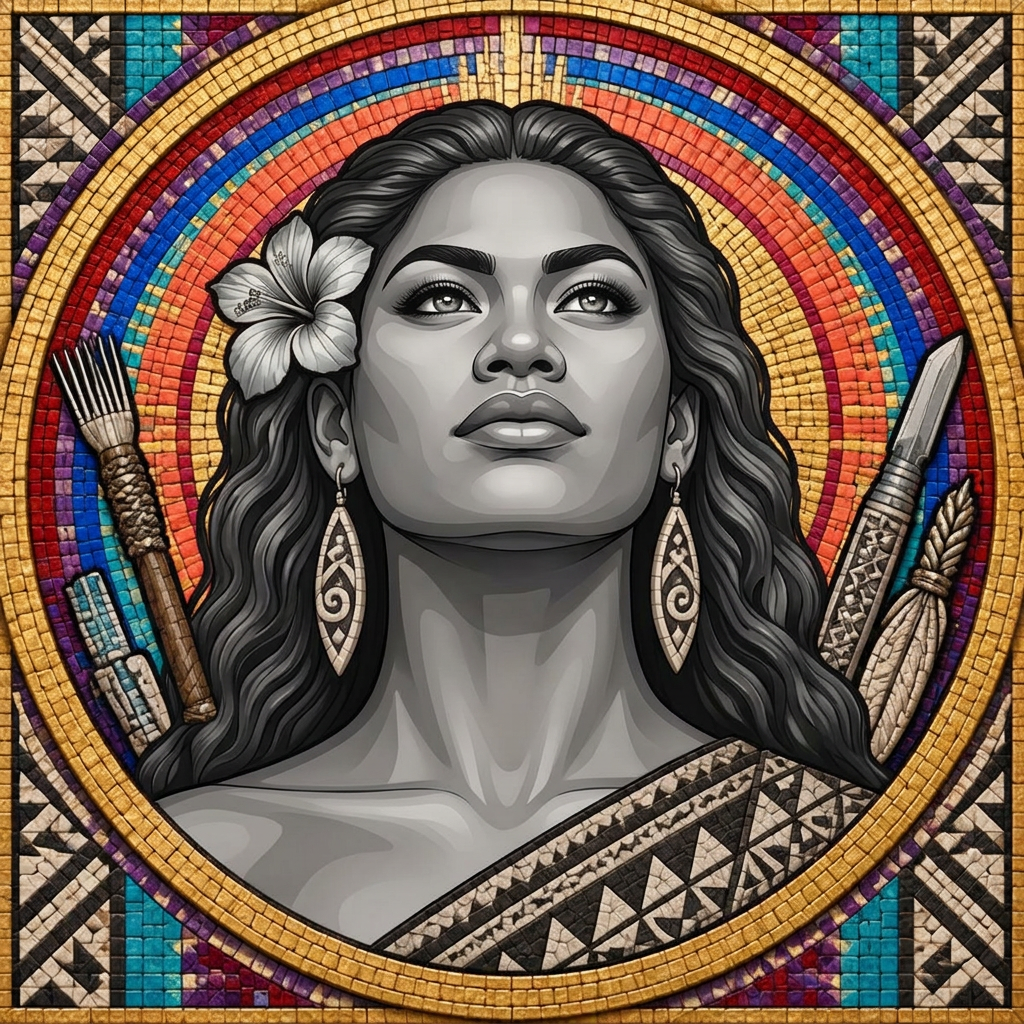
Papatūānuku
Māori / Polynesian
Earth Mother, She on Whom All Rests
Domains
EarthFertilityAncestryGriefGuardianship of landSymbols
Soil and stone · Pounamu · Ferns and koru · Woven flax · Mist
Lore
Her separation myth is the origin of both light and longing. Māori tradition treats her not as metaphor but as ancestor: land is kin, and kaitiakitanga — guardianship — is a family obligation rather than a policy. …
Aotearoa New Zealand; living tradition

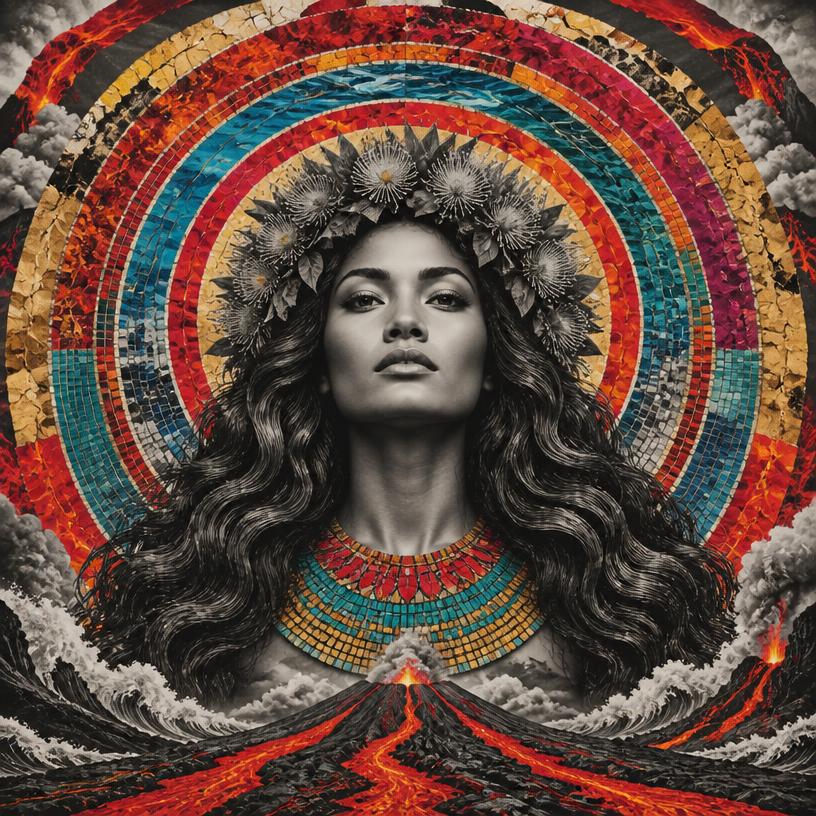
Pele
Hawai'i
She Who Shapes the Sacred Land
Domains
Volcanic fireLand-makingPassion and rivalryBoundariesTransformationSymbols
ʻŌhiʻa lehua blossom · Lava and pumice · Halemaʻumaʻu crater · Long unbound hair · ʻōhelo berries
Lore
Her voyage from Kahiki and her long conflict with her elder sister Nāmaka o Kahaʻi, goddess of the sea, are chanted as genealogy rather than fable — the shoreline is where the two of them still meet. Offerings of ʻōhelo berries are given at the crater rim, and Hawaiians hold that what she takes she is also making: every new acre of the island is hers.
Hawai'i, carried from Kahiki in Polynesian voyaging tradition — a living presence today

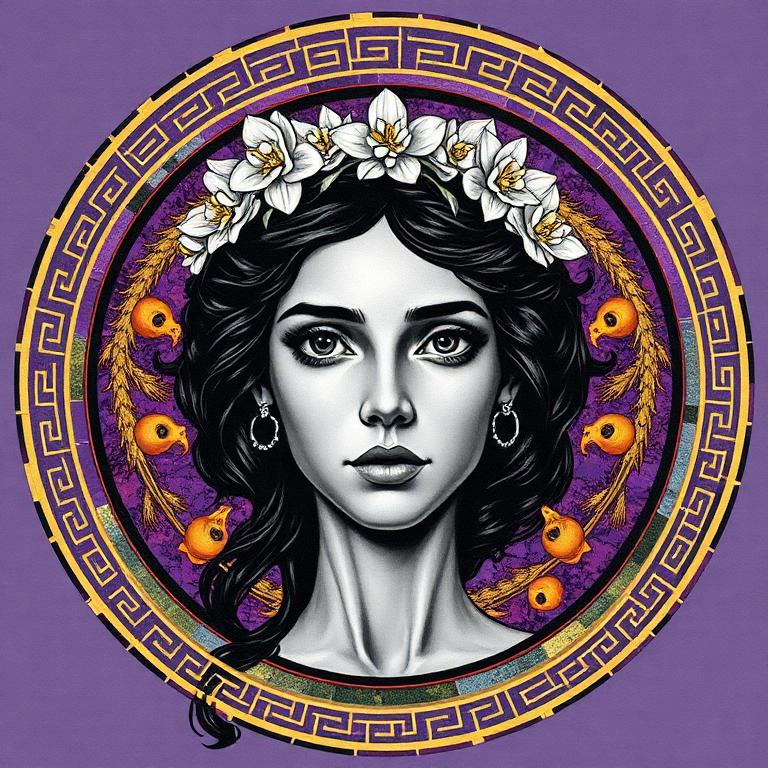
Persephone
Greek
Kore and Queen, Bringer of Spring
Domains
SpringThe underworldInitiationCyclesSovereignty wonSymbols
Pomegranate · Narcissus · Wheat · Torch · Split seasons
Lore
The pomegranate seeds bind her to the underworld — but she is no longer Kore, the girl, when she comes back. She rules there. …
Greece, c. 7th century BCE onward

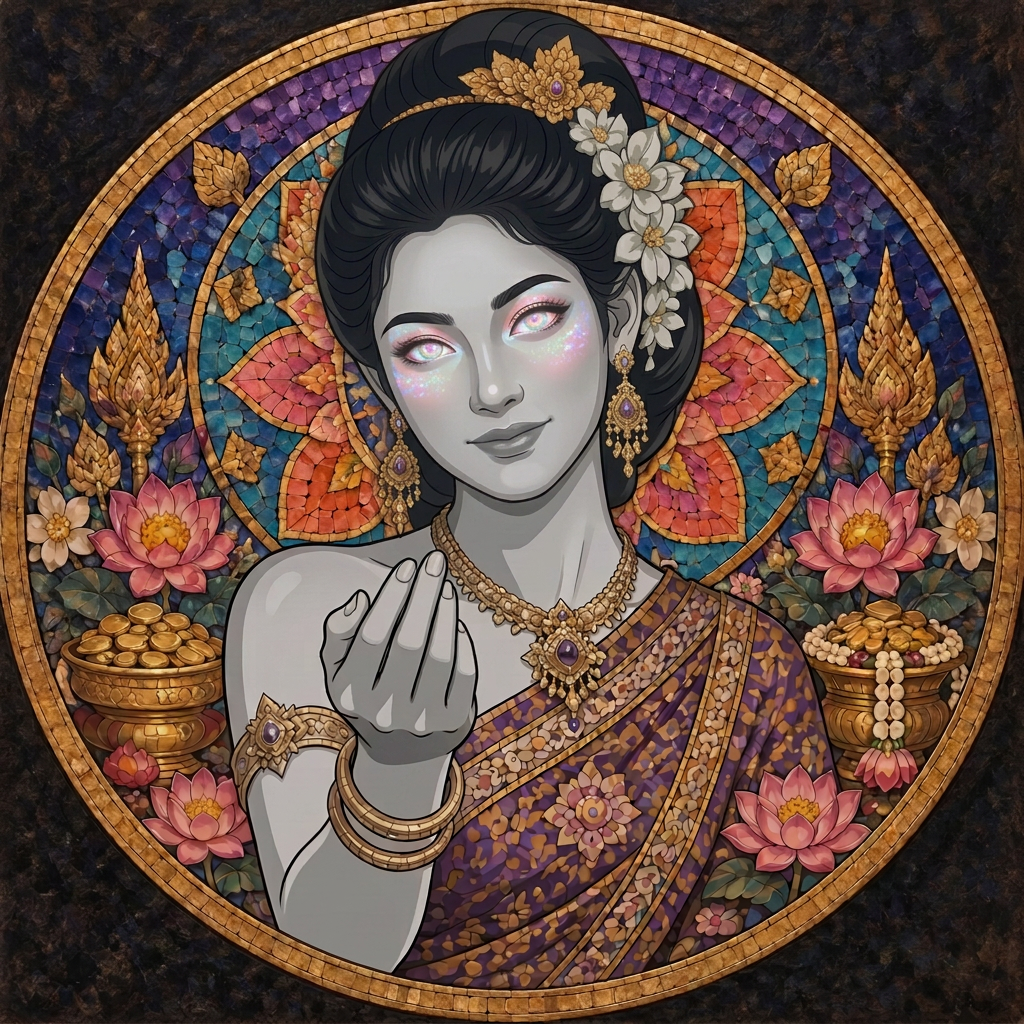
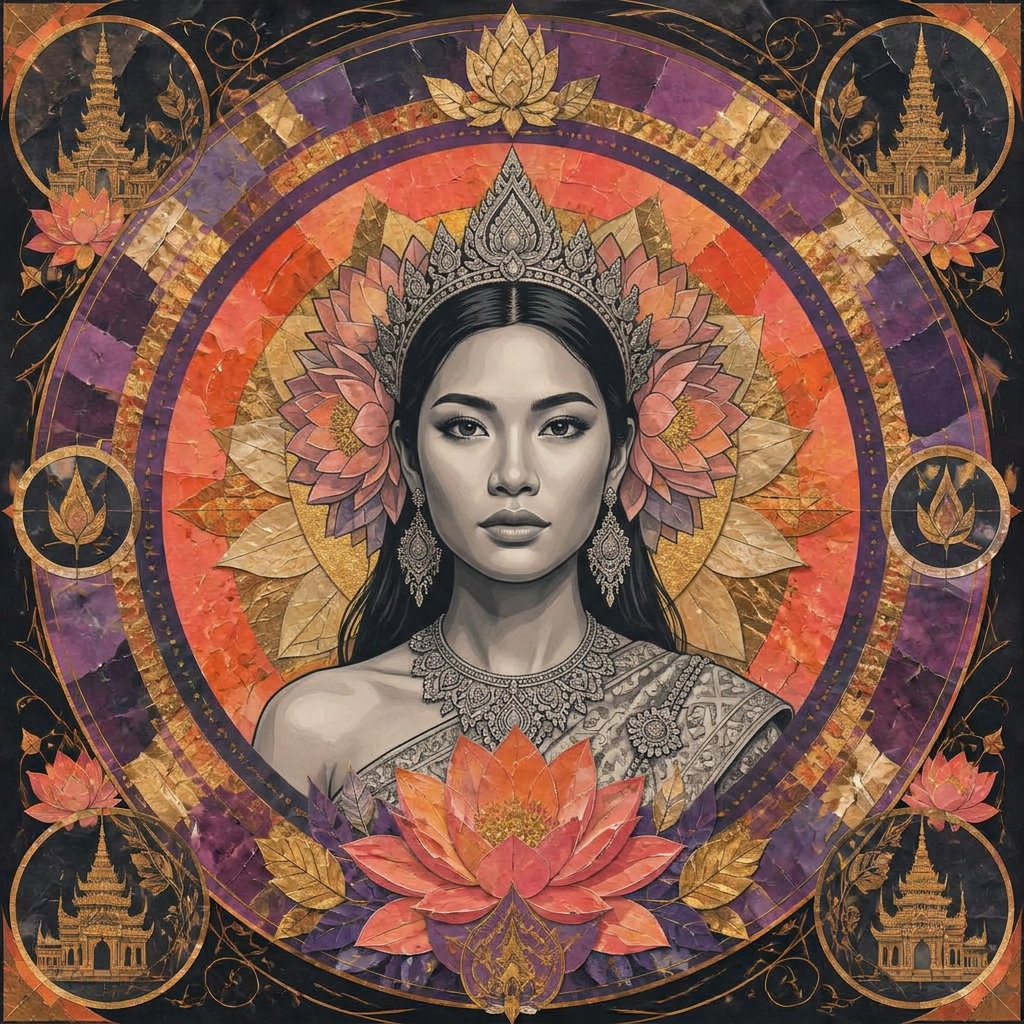
Phra Mae Thorani
Thailand
Earth Mother Who Wrings Out the Flood
Domains
The earthWitness and testimonyWaterSteadfastnessProtection of the truthfulSymbols
Long wrung hair · Flood water · Lotus · Rice earth · Open palm
Lore
Her image marks countless Thai and Lao temples, often as a fountain — water still pouring from her hair. Devotees pour water on the ground for her before building, and she is invoked when someone must stand alone in a claim: the earth remembers what was actually done, whatever is being said about it.
Thailand, Laos and mainland Southeast Asia — Buddhist tradition, living devotion

Po Nagar
Cham Vietnam / Southeast Asia
Lady Mother of the Kingdom
Domains
Land and territoryAgricultureCraft and weavingRainSovereigntySymbols
Brick temple towers · Lotus · Eaglewood · Loom · Rain clouds
Lore
Her stories are about founding: she creates the land, sets the crops, establishes the crafts, and mothers a dynasty. What is remarkable is her afterlife — a goddess of a conquered people who kept her altar because she was too useful and too loved to be evicted. …
Champa, central Vietnam, c. 8th century CE onward; her towers are still active shrines

Rhiannon
Welsh / Brythonic
The Great Queen on the White Mare
Domains
SovereigntyHorsesEnduranceWrongful blameSongSymbols
White mare · Three singing birds · Golden bag · Mounting block · Road
Lore
When her infant son vanishes, her women lie to save themselves and she is condemned to sit at the gate telling every visitor her crime and carrying them on her back like a horse. She serves the punishment for years without breaking, and the child is returned. …
Medieval Wales, Mabinogi manuscripts; earlier oral roots

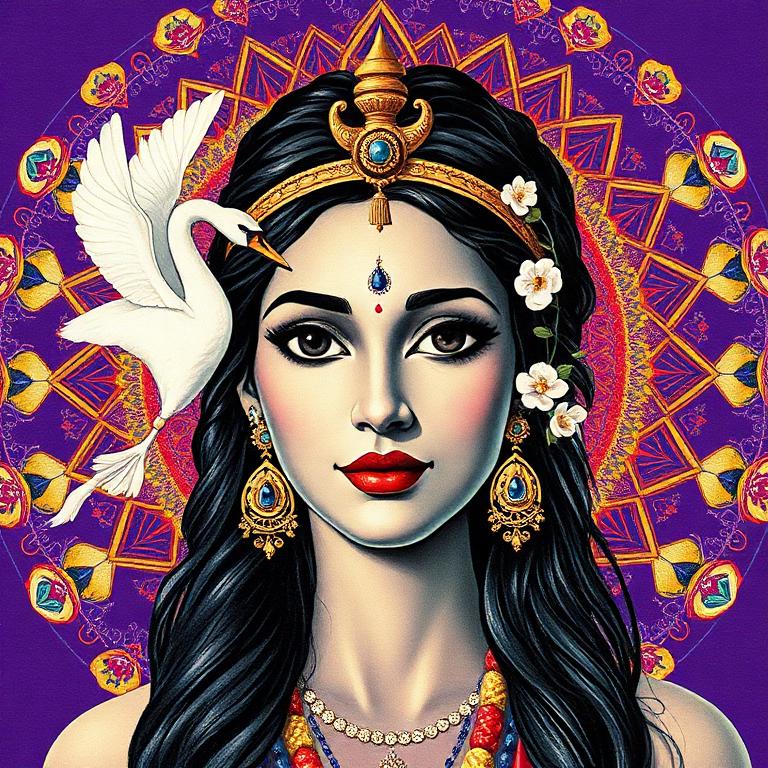
Saraswati
Hindu / South Asian
The Flowing One, Mistress of Speech and Learning
Domains
KnowledgeMusicSpeechWritingThe artsSymbols
Veena · White swan · Palm-leaf manuscript · Lotus · River
Lore
Her swan is said to separate milk from water, the image of discernment: intelligence is not accumulation but the ability to tell one thing from another. She holds a manuscript in one hand and plays with two others — she is study and performance at once, and she rides the current rather than damming it.
Rigvedic India onward, c. 1500 BCE; living tradition

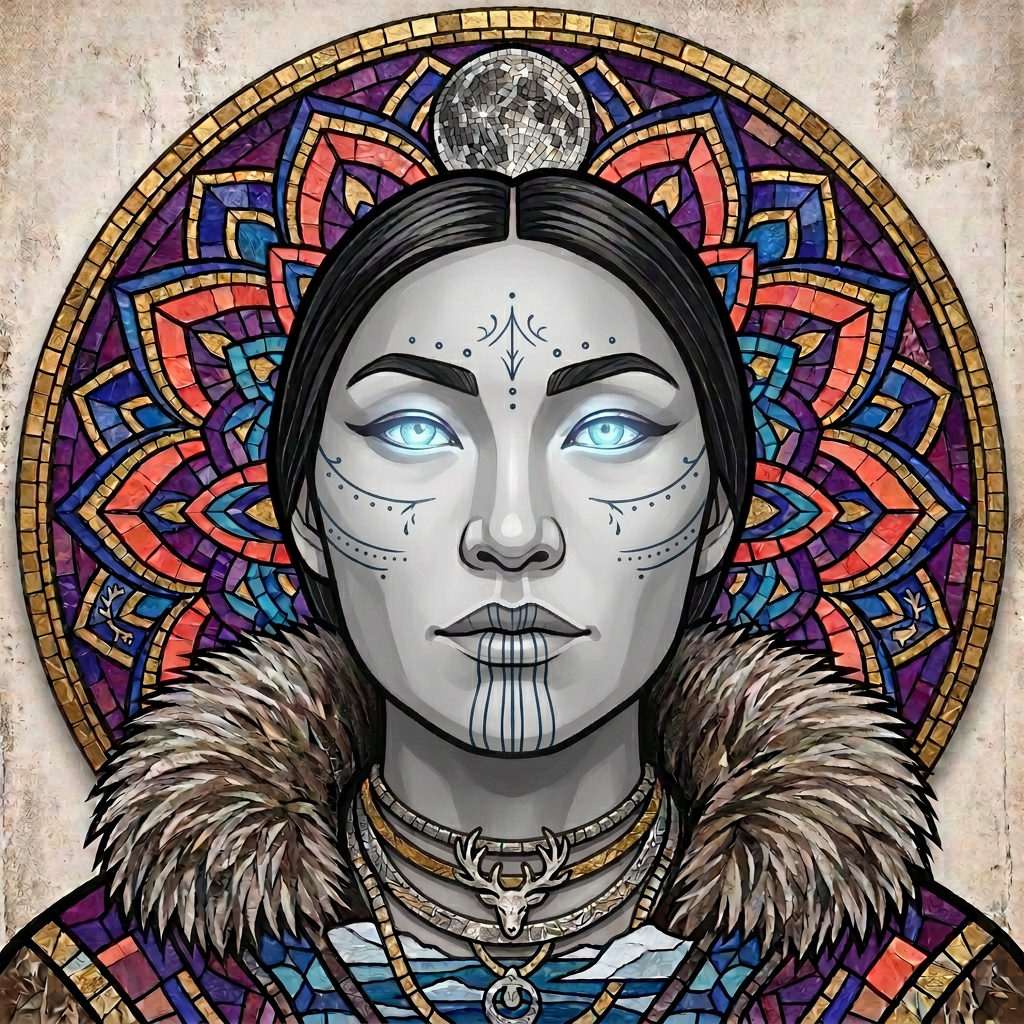
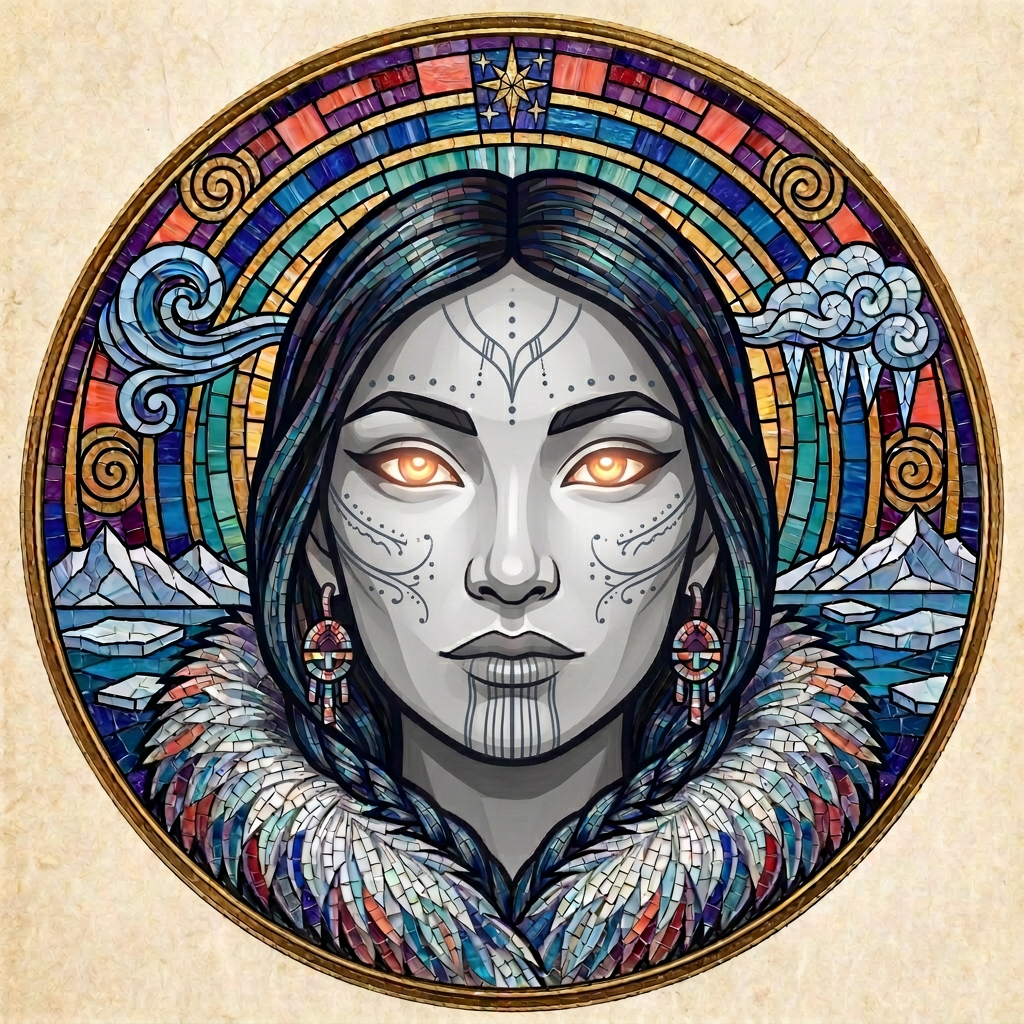
Sedna
Inuit / Arctic
Mother of the Sea, Mistress of the Animals
Domains
The seaSea mammalsHuntingReciprocityConsequenceSymbols
Seal · Narwhal · Sea ice · Long unbraided hair · Comb
Lore
Without hands she cannot comb her own hair, and when people break the rules of the hunt her hair tangles with their offences and she withholds the animals. The angakkuq travels down to comb it out. …
Inuit tradition across the Arctic; living tradition

Sekhmet
Ancient Egypt
The Powerful One, Lady of Plague and Healing
Domains
WarPlagueHealingRighteous rageProtection of orderSymbols
Lioness · Solar disc · Arrows · Red linen · Beer dyed red
Lore
Sent by Ra to punish humanity, she could not be called back; the gods flooded the fields with beer dyed red, she drank it believing it blood, slept, and woke as gentle Hathor. Her festivals kept that memory: rage is real, and it is stopped by satisfaction, not by scolding.
Egypt, Old Kingdom through Ptolemaic period

Selu
Cherokee (Aniyunwiya)
Corn Mother, First Woman
Domains
CornAgricultureProvisionHousehold knowledgeSacrifice for familySymbols
Ears of corn · Corn silk · Storehouse · Seven grains · Mortar and pestle
Lore
When her sons spied on her and learned her secret, the easy abundance ended and corn had to be planted, tended and harvested by hand. The lesson is direct: curiosity broke the gift, and labour is how it is kept alive.
Southeastern Woodlands; living Cherokee tradition

Sequana
France / Gaulish Celtic
Lady of the Seine's Rising Spring
Domains
Rivers and springsHealingPilgrimageRiver tradeReleaseSymbols
Duck-prow boat · Spring source · Votive limbs in bronze · Reeds · Torc
Lore
Her sanctuary is one of the richest healing sites in Gaul: whole families came, camped, bathed in the spring and gave a likeness of the hurt to the water. Her bronze shows her standing in a boat shaped like a duck — the river carries what you hand it, and she asks that you actually let go of the model.
Gaul (France), Iron Age through Roman period, c. 300 BCE–400 CE

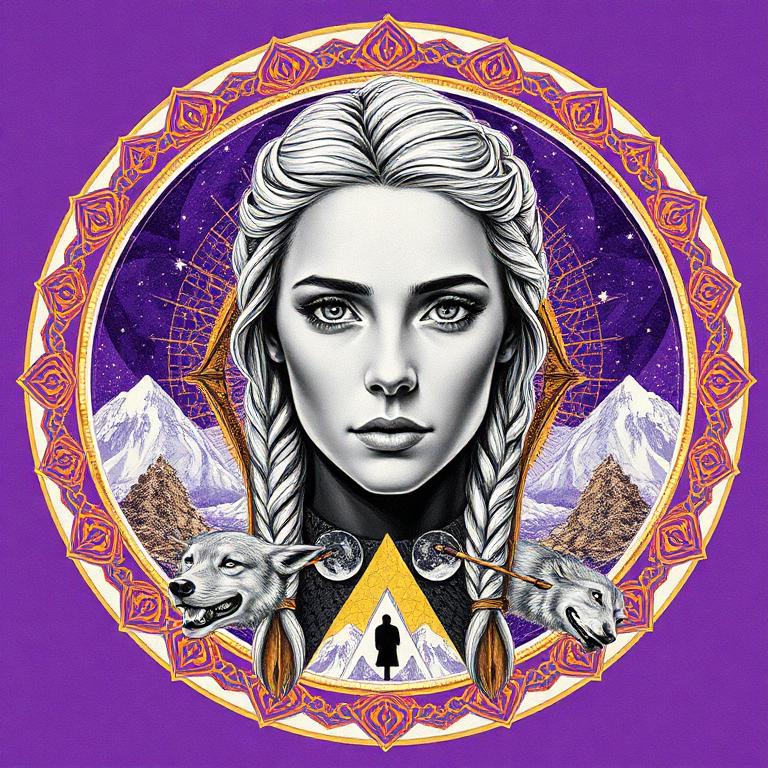
Skaði
Norse / Sámi-adjacent Scandinavian
Ski Goddess of the Winter Mountains
Domains
WinterMountainsHuntingIndependenceFair termsSymbols
Skis · Bow and arrows · Snow peak · Wolf · Snowshoe
Lore
The marriage failed on geography: she could not sleep for gulls, he could not sleep for wolves, and after trying both homes they separated amicably and she went back to her mountains to ski and hunt. She is the goddess of negotiating your own terms and then, when the terms do not suit, leaving.
Scandinavia, Viking Age and earlier

Sky Woman
Haudenosaunee (Iroquois)
She Who Fell from the Sky
Domains
CreationLandFalling and landingCooperationGratitudeSymbols
Great Turtle · Handful of seeds · Water birds · Tobacco · Strawberry
Lore
She did not build the world alone — every animal contributed something, and the world exists because of that pooled effort. Her descendants owe the land thanks, not ownership.
Northeastern Woodlands; living Haudenosaunee tradition

Sól
Norse / Swedish
Sunna, Driver of the Sun Chariot
Domains
SunTimeEnduranceLight in winterContinuitySymbols
Sun disc · Chariot wheels · Two horses · The wolf Sköll · Radiating rays
Lore
Her defining quality is that she keeps going while being chased. In the far north the sun is not a given — it withdraws almost entirely and returns by effort. …
Nordic Bronze Age sun cult through the Viking Age

Spenta Armaiti
Persian (Zoroastrian)
Holy Devotion, Guardian of the Earth
Domains
DevotionEarthSteadfastnessHumilityRight careSymbols
Fire altar · Earth and soil · Winged disc · Cypress · Barsom twigs
Lore
She is called the daughter of Ahura Mazda and the patron of those who cultivate land honestly. In her theology, tending the earth well is worship; neglect is a moral failure, not just a practical one.
Iran, from the Gathic period through the Sasanian era

Spider Grandmother
Hopi / Native American
Kokyangwuti, Weaver of the World
Domains
CreationWeaving and craftCounselEmergenceWisdom of eldersSymbols
Spider web · Spun cotton thread · Clay figures · Corn · The sipapu opening
Lore
She is famous for whispering. Heroes hear her voice from behind an ear or from under a stone, and the advice is never grand: take the other trail, carry water, be polite to the ant people. …
Hopi mesas of the American Southwest; oral tradition carried into the present

Tanit
Carthage / North Africa
Face of Baal, Lady of Carthage
Domains
The cityMoonFertilityProtectionCivic fortuneSymbols
Sign of Tanit · Crescent and disc · Palm frond · Pomegranate · Dove
Lore
Her sign — a triangle, a bar, a circle — is one of the most persistent emblems in the Mediterranean, still turning up in Tunisian jewellery and doorways. She belonged to the city as a whole rather than to individuals: her business was civic survival, harvests, safe harbours and the continuation of a people who were, by geography and history, always negotiating with a larger power.
Carthage and the Punic North African coast, c. 5th century BCE to 146 BCE; her sign survives in Tunisian folk art

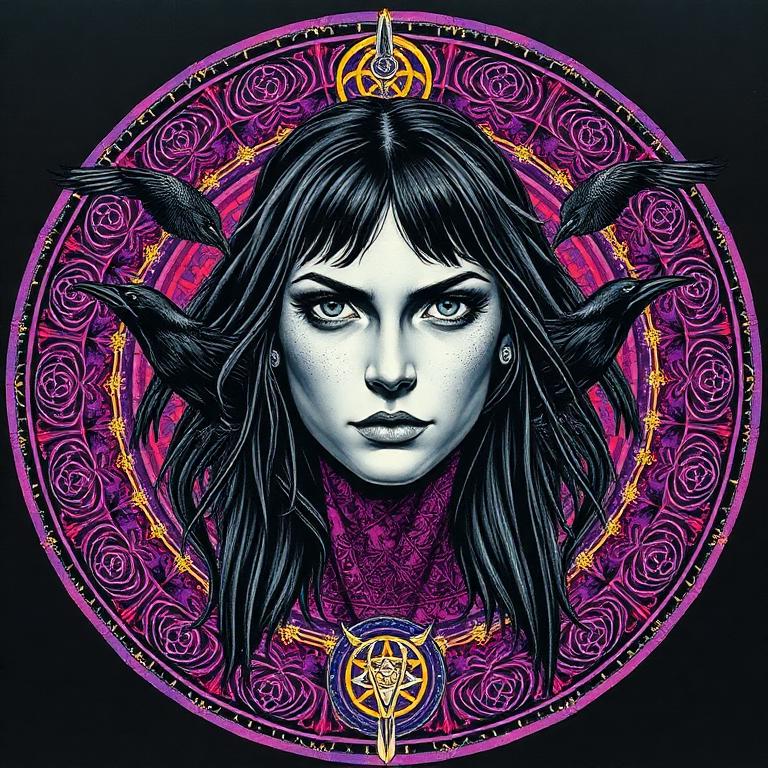
The Morrígan
Irish / Gaelic
Great Queen, Phantom of the Battlefield
Domains
BattleProphecySovereigntyFateBoundariesSymbols
Raven · Crow · Spear · Ford of a river · Washed bloody armour
Lore
She meets Cú Chulainn and offers herself; he refuses her, and she fights him in animal forms for the rest of his life, washing his armour at the ford before his death. Her great prophecy after Mag Tuired describes peace and then, unflinchingly, the ruin that follows. …
Early medieval Ireland; earlier Iron Age roots

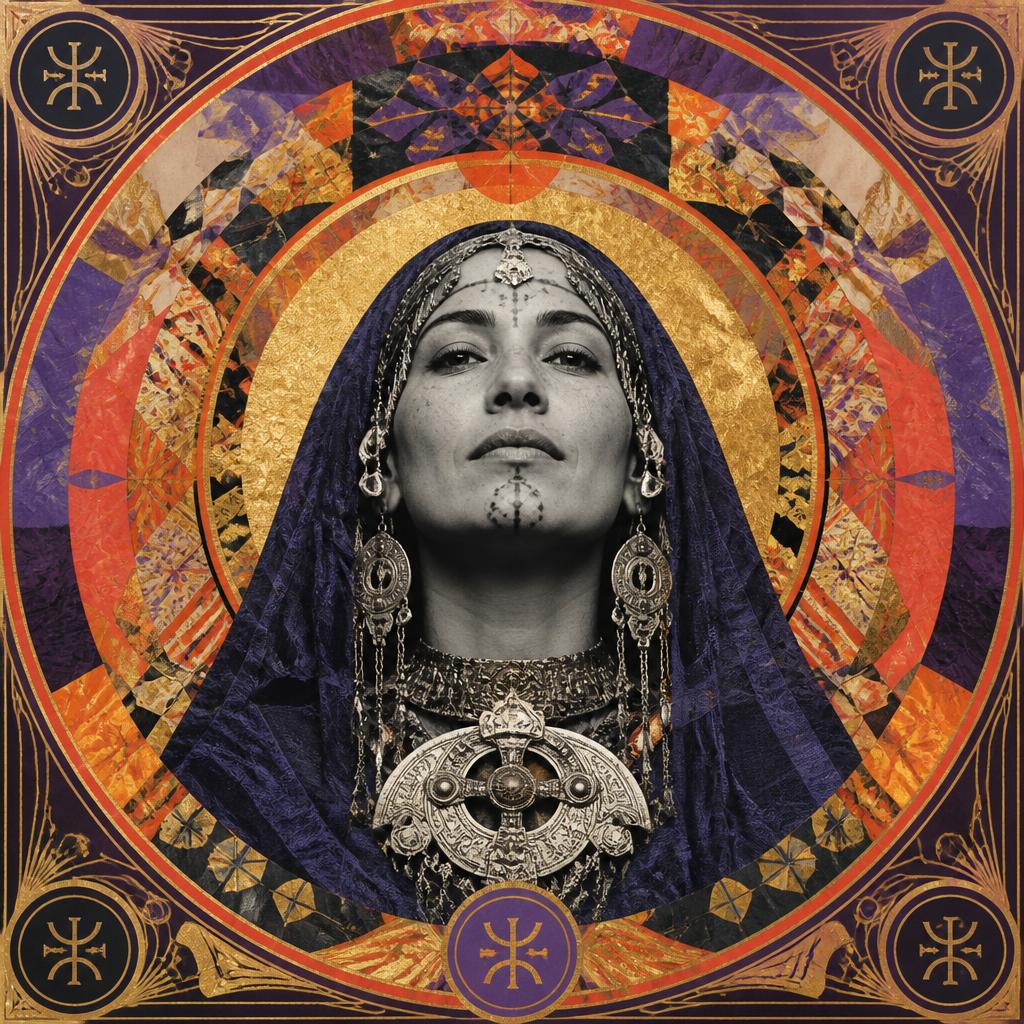
Tin Hinan
Morocco / Amazigh
Mother of Us All, Queen of the Sands
Domains
Ancestry and lineageDesert crossingMatriarchal authoritySilver and craftHospitalitySymbols
Indigo veil · Silver fibula · Yaz (ⵥ) glyph · Date palm · Well in the sand
Lore
Her name is read as 'she of the tents' or 'she who came from far'. Amazigh tradition keeps inheritance, tattoo motifs and silver patterns as her legacy: what she carried across the sand was not gold but the knowledge that lets a people continue. …
Maghreb and the Sahara — Morocco, Algeria, the Tuareg confederations; c. 4th century CE into living Amazigh memory

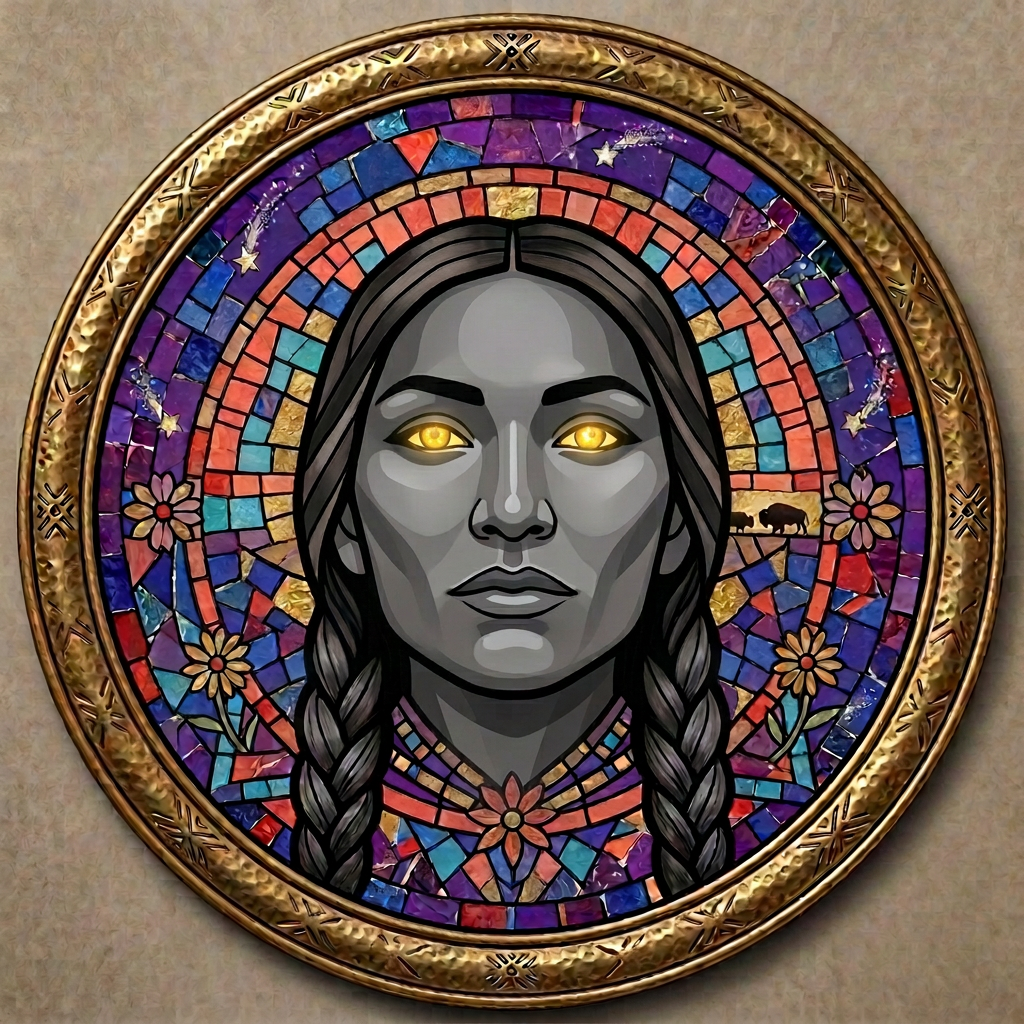
White Buffalo Calf Woman
Lakota / Native American
Ptesáŋwiŋ, Bringer of the Sacred Pipe
Domains
Sacred lawRight conductPeaceCeremonyKinshipSymbols
The sacred pipe · White buffalo calf · Red willow bark · Circle of the nation
Lore
Everything about her story turns on conduct. The gift is real, but it only lands where there is respect — and the instructions she left are not mystical secrets, they are rules for how relatives treat each other. …
Northern Plains, pre-contact into the present as living Lakota tradition

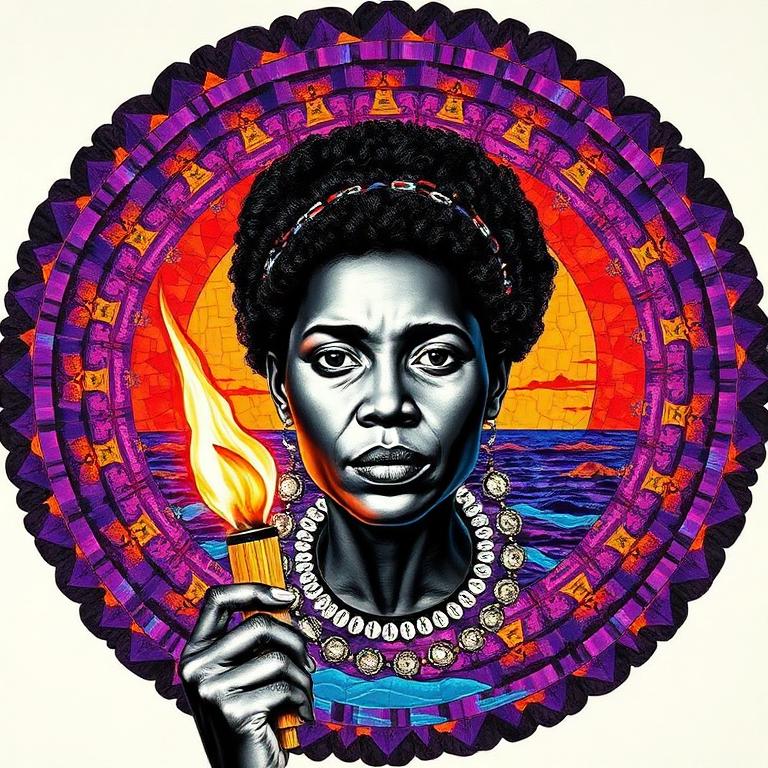
Wuriupranili
Tiwi Islands, Aboriginal Australia
The Sun Woman with the Torch
Domains
Sunrise and sunsetDaily labourOchre and colourEnduranceTimeSymbols
Bark torch · Red and yellow ochre · Sea horizon · Dawn fire
Lore
The extraordinary detail is the return trip. Her day does not end at dusk — she walks all night in the dark to be in position by morning. …
Tiwi Islands, northern Australia; living oral tradition

Xi Wangmu
China
Queen Mother of the West
Domains
ImmortalityBoundaries and thresholdsPlague and pardonInitiationFateSymbols
Peaches of immortality · Jade · Tiger and leopard · Kunlun mountain · Phoenix
Lore
Emperors travelled to her gate and were usually found wanting. Her banquet is by invitation, her peaches cannot be stolen without consequence, and her transformation from tiger-toothed plague-bringer to serene queen is the point: the same power gives and withholds. …
China, from Shang-era oracle references and Han tomb art through Daoist tradition to today

Yemayá
Caribbean / Afro-Cuban
Mother of All, Owner of the Sea
Domains
The oceanMotherhoodProtectionDreamsSurvivalSymbols
Blue and white beads · Cowrie shells · Fan and boat · Watermelon · Seven skirts
Lore
The seven skirts are the seven seas and the seven layers of her temperament. She is remembered as the one who held people together through the Middle Passage — which is why her comfort is never soft. …
Yorùbá West Africa carried to Cuba and the Caribbean through the slave trade; actively worshipped today

Yhi
Aboriginal Australia (Karraur)
The Sun Who Woke the World
Domains
SunlightAwakeningCreationPlants and animalsMovementSymbols
Sunrise · Wildflowers · Footprints · Open eye · Warm stone
Lore
Her creating is done by walking. Nothing in her story is made from a distance or by decree — she covers the ground, and life follows her feet. …
Aboriginal Australia; among the oldest continuous story traditions on earth

Zorya
Slavic / Russian
The Auroras, Guardians of the Dawn
Domains
Dawn and duskProtectionWarriors' blessingThresholdsVigilanceSymbols
Morning star · Veil · Golden gates of the sky · Chained hound · Red sky
Lore
Soldiers asked the morning Zorya to spread her veil over them, and healers spoke dawn charms at the exact moment the sky reddened, when the gate stood open. The sisters' work is night watch: nothing dramatic happens as long as they keep doing it, which is precisely the point.
East Slavic folk tradition