Maiden
What you need to sow
Begin the thing you want openly, without apologising for wanting it.
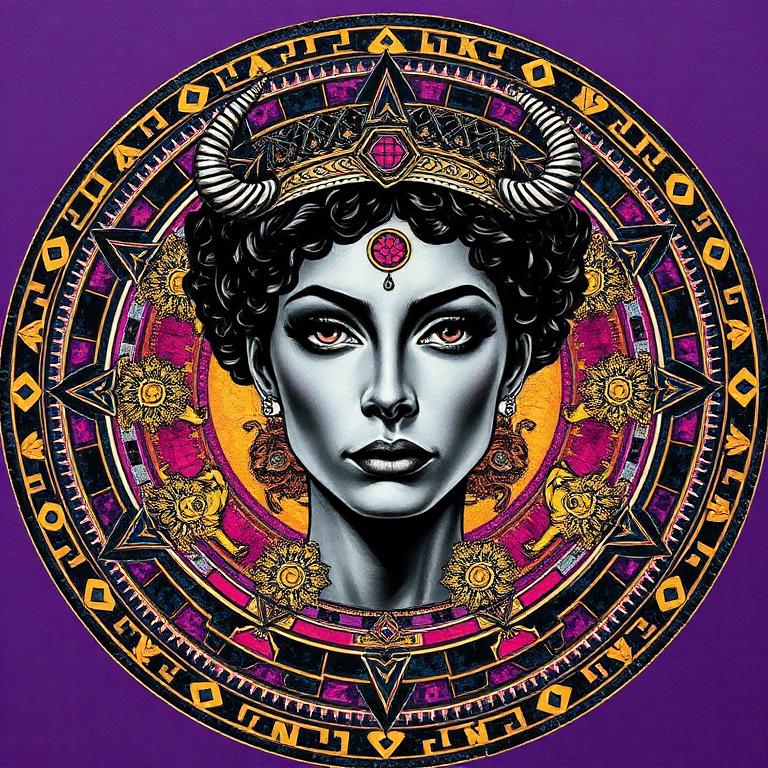
Sumerian / Mesopotamian
Queen of Heaven, Lady of the Morning Star
Sumer and Akkad, c. 4000–1750 BCE
Her story
goddess · Sumer and Akkad, c. 4000–1750 BCE
Inanna ruled Uruk's great temple as goddess of desire and of battle — the two never separated in her. Her priestess Enheduanna, daughter of Sargon, wrote hymns to her that are the oldest signed poetry in the world.
Her defining myth is the descent: she goes down to the underworld to her sister Ereshkigal, and at each of seven gates surrenders a garment, a jewel, a piece of her authority, arriving naked and dying there. She returns — but only because someone else takes her place. Nothing comes back up for free.
In the oracle
What you need to sow
Begin the thing you want openly, without apologising for wanting it.
What you need to grow
Nurture your own appetite. Desire kept alive is what keeps you moving.
What you need to know
You cannot pass through this gate holding everything. Something is being asked of you.