Maiden
What you need to sow
Begin with what you actually want, stated plainly and without apology.
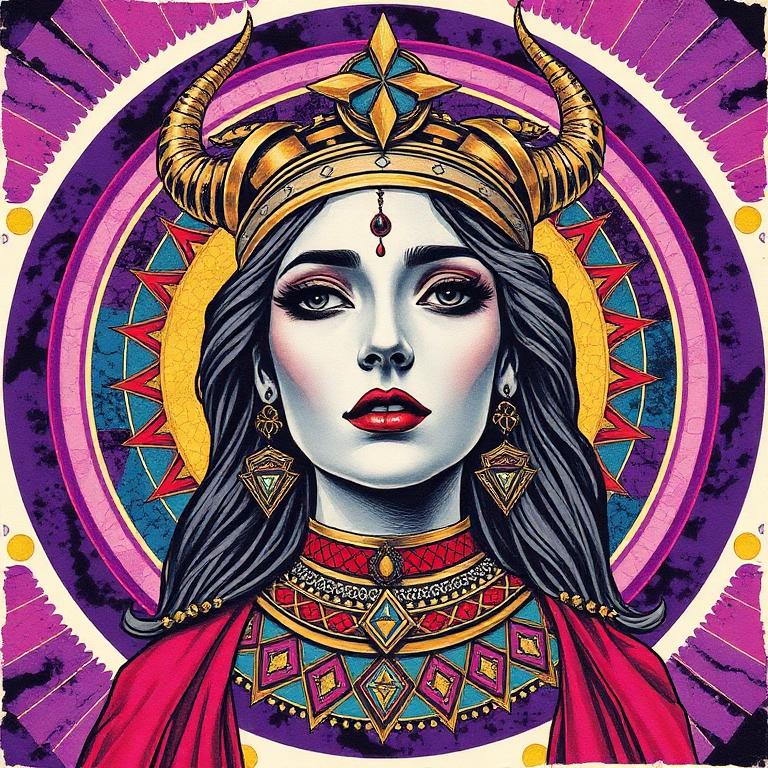
Mesopotamian (Akkadian / Babylonian)
Queen of Heaven, Lady of Love and Battle
Mesopotamia, c. 2300 BCE through the Neo-Babylonian period
Her story
goddess · Mesopotamia, c. 2300 BCE through the Neo-Babylonian period
Ishtar, heir to Sumerian Inanna, held both love and war without contradiction. Her temples stood at the centre of Babylonian cities, and kings claimed her favour as the source of legitimacy.
She descended to the underworld, passing seven gates and surrendering an ornament at each until she stood stripped and was killed — then rose. Her myth is the clearest statement in the ancient world that desire and death share a road.
In the oracle
What you need to sow
Begin with what you actually want, stated plainly and without apology.
What you need to grow
Nurture your appetite and your power together. Neither is shameful.
What you need to know
Know that going down is part of the route. What is stripped from you can be returned.