Maiden
What you need to sow
Begin something with and for your community, not alone in your room.
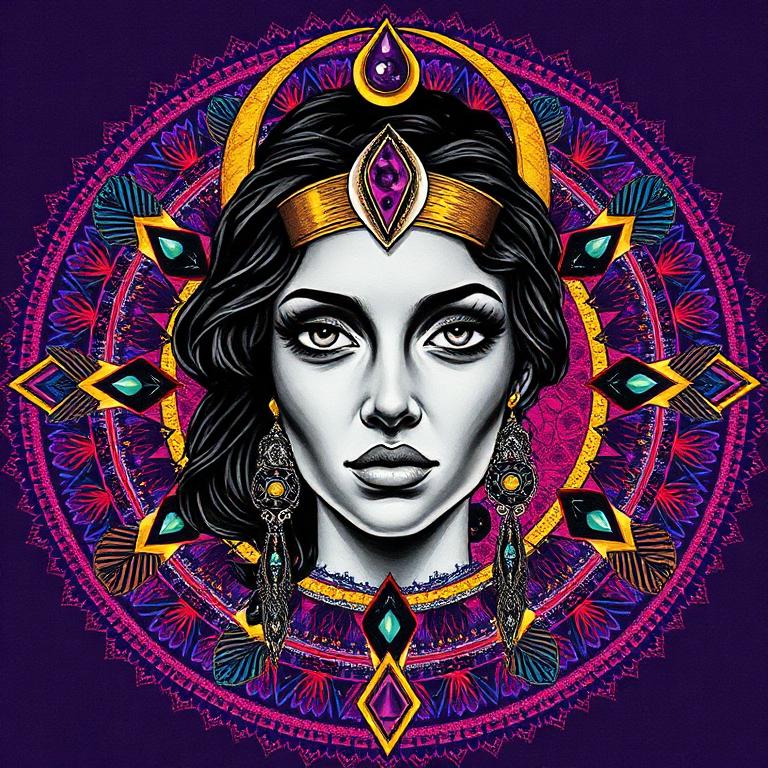
Carthage / North Africa
Face of Baal, Lady of Carthage
Carthage and the Punic North African coast, c. 5th century BCE to 146 BCE; her sign survives in Tunisian folk art
Her story
goddess · Carthage and the Punic North African coast, c. 5th century BCE to 146 BCE; her sign survives in Tunisian folk art
Tanit was the presiding goddess of Carthage, her simple stick-figure sign carved on thousands of stelae. When Rome levelled the city her cult did not vanish; the Romans rebranded her Juno Caelestis and North Africa went on honouring her for centuries.
Her sign — a triangle, a bar, a circle — is one of the most persistent emblems in the Mediterranean, still turning up in Tunisian jewellery and doorways. She belonged to the city as a whole rather than to individuals: her business was civic survival, harvests, safe harbours and the continuation of a people who were, by geography and history, always negotiating with a larger power.
In the oracle
What you need to sow
Begin something with and for your community, not alone in your room.
What you need to grow
Nurture your city, your street, your local circle. Belonging needs maintenance.
What you need to know
Symbols outlive institutions. What you stand for can survive the loss of the structure that housed it.